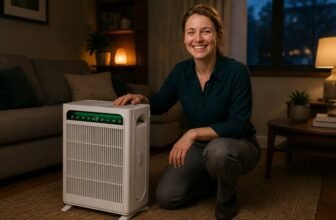
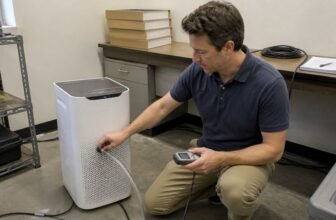
Automatic air purifiers take the guesswork out of cleaner indoor air by sensing pollutants and adjusting fan speed on their own.
If you are dealing with dust, pollen, pet dander, or smoke, this hands free operation is a real help, provided you match the machine to your room size and primary pollutant.
This article walks you through what to look for in an automatic model, including coverage area, noise levels, and the airflow rating that tells you how effectively it cleans.
Choose a unit that fits your room dimensions and targets the specific particles you want to remove for the best everyday results.
Editorial Highlights
Pick the purifier with AHAM verified CADR that matches your room’s square footage, since that number tells you the real airflow.
Program bedroom units for sleep mode under 30 dB, because auto sensors can slow the fan without waking you up.
Let a PM2.5 sensor with a color coded AQI display trigger the fan speed whenever dust or smoke drifts in.
Switch to eco mode on clean days to cut electricity use while the purifier still guards against sudden pollen spikes.
Check coverage claims against 4.8 air changes per hour, and ignore the box’s “up to” numbers.
| KNKA Air Purifier for Home (APH4000 Black) | Best For Large Spaces | Certification: AHAM Verified | CADR Rating: 226 CFM smoke, 244 CFM pollen | Coverage Area: Up to 1,695 sq ft (1 ACH) | SEARCH BEST PRICE | Read Our Analysis | |
| Levoit Core300-P Air Purifier for Pets Allergens | Best Overall | Certification: AHAM VERIFIDE, FCC, ETL, CARB | CADR Rating: 143 CFM smoke, 153 CFM dust, 167 CFM pollen | Coverage Area: Up to 1,073 sq ft (1 ACH) | SEARCH BEST PRICE | Read Our Analysis | |
| WINIX 5510 Air Purifier with App Support (True HEPA) | Smart Connectivity Pick | Certification: AHAM Verified, UL Certified | CADR Rating: Not specified (AHAM Verified at 392 sq ft) | Coverage Area: Up to 1,882 sq ft (1 hour) | SEARCH BEST PRICE | Read Our Analysis | |
| KNKA Pet Air Purifier for Large Rooms (APH2500P) | Best For Pet Owners | Certification: AHAM Verified | CADR Rating: 119 CFM smoke, 123 CFM dust, 147 CFM pollen | Coverage Area: Up to 893 sq ft (1 ACH) | SEARCH BEST PRICE | Read Our Analysis | |
| Levoit Core Mini-P Air Purifier for Bedroom Pets | Best Compact Pick | Certification: AHAM VERIFIDE | CADR Rating: Not specified | Coverage Area: Not specified | SEARCH BEST PRICE | Read Our Analysis | |
| LEVOIT Smart Air Purifier for Large Rooms | Best For Whole-Home Use | Certification: AHAM VERIFIDE | CADR Rating: 250 CFM smoke, 254 CFM dust, 289 CFM pollen | Coverage Area: Up to 1,875 sq ft | SEARCH BEST PRICE | Read Our Analysis | |
| WESTHEY H13 HEPA Air Purifier for Home | Best For Allergies | Certification: Not specified | CADR Rating: Not specified | Coverage Area: Up to 1,650 sq ft | SEARCH BEST PRICE | Read Our Analysis | |
| DREO Air Purifier for Home HEPA Sleep Mode 338 | Best Energy Efficiency | Certification: AHAM Verified, ENERGY STAR | CADR Rating: 115 CFM | Coverage Area: Up to 856 sq ft (1 ACH) | SEARCH BEST PRICE | Read Our Analysis | |
| MOOKA Air Purifier H13 True HEPA for Large Rooms | Best Value | Certification: CARB, ETL, DOE, FCC | CADR Rating: Not specified | Coverage Area: Up to 2,200 sq ft | SEARCH BEST PRICE | Read Our Analysis | |
| VOOPNU Air Purifier for Home (DH-JH12) | Budget-Friendly Pick | Certification: DOE, ETL, FCC, CARB, CE, ROHS | CADR Rating: Not specified | Coverage Area: Up to 1,076 sq ft | SEARCH BEST PRICE | Read Our Analysis |
More Details on Our Top Picks
KNKA Air Purifier for Home (APH4000 Black)
The KNKA APH4000 is best for a large, open floor plan where you need to move a lot of air quickly. Its main strength is its AHAM-verified CADR of 226 CFM on smoke and dust, which means it can scrub a 350 sq ft room nearly five times per hour. It also uses dual front and back intakes to pull in pollutants from two directions at once.
The honest limitation is filter upkeep. You will need to swap the filters every three to six months, which is an ongoing cost you have to budget for. This model stands apart from smaller purifiers in the roundup through its PET Mode, which boosts airflow to tackle pet dander, and its ECO Mode that reduces power draw when the air is clean.
In a bedroom, you can switch to sleep mode, which operates at a low 22 to 24 dB noise level. The unit gives you that high air changes per hour performance without being disruptive overnight. If you are looking for an air purifier for pet dander or smoke in a spacious main living area, this is the one to pick, but do keep the filter replacement schedule in mind.
- Certification:AHAM Verified
- CADR Rating:226 CFM smoke, 244 CFM pollen
- Coverage Area:Up to 1,695 sq ft (1 ACH)
- Sleep Mode Noise Level:22–24 dB
- Filtration Type:3-stage (pre-filter, high-efficiency, activated carbon)
- Air Quality Monitoring:Real-time AQI display with color-coded lights
- Additional Feature:Dual front-and-back cartridges
- Additional Feature:PET Mode refreshes quickly
- Additional Feature:ECO Mode extends filter life
Levoit Core300-P Air Purifier for Pets Allergens
The Levoit Core300-P is the best air purifier for pet owners who prioritize sleep, and its quiet operation is its main strength. Sleep mode drops to 24dB, so it will not disturb you, though you might hear your cat snore over it.
It traps 99.97% of dander and dust down to 0.3 microns, which is lab verified, but its limitation is that it only uses official Levoit filters since off-brands can wreck the motor. This model covers a 222 square foot room with a 143 CFM CADR, delivering nearly five air changes per hour, which differs from other picks by offering a simple timer system with 2, 4, 6, or 8 hour options instead of automatic modes. It is also AHAM Verifide and CARB compliant, so you know the clean air delivery claims are independently checked.
- Certification:AHAM VERIFIDE, FCC, ETL, CARB
- CADR Rating:143 CFM smoke, 153 CFM dust, 167 CFM pollen
- Coverage Area:Up to 1,073 sq ft (1 ACH)
- Sleep Mode Noise Level:24 dB
- Filtration Type:HEPA-grade (99.97% at 0.1–0.3 μm)
- Air Quality Monitoring:Not specified
- Additional Feature:56W high-performance motor
- Additional Feature:QuietKEAP Technology sleep
- Additional Feature:Timer options 2–8 hours
WINIX 5510 Air Purifier with App Support (True HEPA)
The WINIX 5510 is best for anyone who wants app control without giving up raw cleaning muscle. It delivers an AHAM verified room coverage of 392 square feet, but can push through 1,882 square feet in a single hour, which sets it apart from the other smart models in this roundup.
Its True HEPA filter captures 99.99% of allergens down to 0.01 microns, while the activated carbon prefilter handles cooking odors effectively. The main limitation is that the app, while useful for remote monitoring and adjusting fan speeds, adds setup steps that simpler units skip. At 23.5 dB on the lowest setting, it runs quieter than most refrigerators, making it a strong air purifier for a bedroom.
The particle sensor feeds live data to the app, and automatic mode adjusts airflow without input from you. This model stands out because it pairs smart features with a high CADR, where many connected purifiers sacrifice airflow for convenience. If you want remote control and serious air changes per hour, this is the pick.
- Certification:AHAM Verified, UL Certified
- CADR Rating:Not specified (AHAM Verified at 392 sq ft)
- Coverage Area:Up to 1,882 sq ft (1 hour)
- Sleep Mode Noise Level:23.5 dB
- Filtration Type:True HEPA (99.99% at 0.01 μm) + carbon + pre-filter
- Air Quality Monitoring:Built-in sensor, LED indicator, app support
- Additional Feature:Smart App remote control
- Additional Feature:Light Automated Sleep Mode
- Additional Feature:Washable Fine Mesh Pre-Filter
KNKA Pet Air Purifier for Large Rooms (APH2500P)
This air purifier is best for cat owners who are tired of finding fur on every surface. Its six way bottom intake pulls in hair and debris with strong suction, and the reusable prefilter captures the largest particles before they reach the main filter. The oval HEPA filter then traps dander and fine dust, while the AHAM verified clean air delivery rate refreshes a 184 square foot room almost five times per hour.
One honest drawback is that the machine relies on its sensors to adjust speed, so it may not react to odors as quickly as it does to particles. It differs from other purifiers in this roundup because its top is flat enough to double as a cat perch, which many pets will appreciate. Auto mode adjusts airflow based on the particle sensor, and Eco mode reduces power consumption when air quality is good.
Sleep mode keeps the unit quiet for a bedroom, but the child lock and filter reminder are the most useful details for daily ownership. Pet mode boosts airflow the moment your cat becomes active, which helps capture dander before it spreads through the room. The main limitation is that it lacks an activated carbon layer for odors, so it is not the best choice if litter box smells are your primary concern.
This is a solid air purifier for pet dander in a large living space, and its build encourages your cat to sit on top. If you need odor control, you would need to pair it with a separate carbon filter unit.
- Certification:AHAM Verified
- CADR Rating:119 CFM smoke, 123 CFM dust, 147 CFM pollen
- Coverage Area:Up to 893 sq ft (1 ACH)
- Sleep Mode Noise Level:Not specified
- Filtration Type:Pre-filter + oval-shaped high-efficiency filter
- Air Quality Monitoring:Built-in air quality sensor
- Additional Feature:6-way bottom air intake
- Additional Feature:Built-in aroma compartment
- Additional Feature:Sturdy top for cats
Levoit Core Mini-P Air Purifier for Bedroom Pets
Best for tight spaces like a bedroom nightstand or dorm desk, the Levoit Core Mini-P is the compact pick for anyone fighting pet hair and dander in a small room. It carries the AHAM VERIFIDE seal, so independent tests back its cleaning power rather than just marketing hype. Its prefilter and main filter handle pet hair, dander, smoke, and odors, giving you a low-maintenance air purifier for pet dander in rooms up to roughly 180 square feet.
One clear drawback is that the filter replacement cadence is shorter than on larger Levoit models, so you will buy new filters more often. It differs from others here by focusing purely on small spaces, not covering larger living areas. Sleep mode and an auto-off display make nighttime use easy, and it runs quieter than a whisper, so you will not be disturbed while sleeping.
Levoit has shipped 6.5 million units in six years, which shows they are not newcomers to the category. For a small bedroom with a furry roommate, this is your low-drama fix when space is the main constraint. On a dorm desk, it takes up minimal footprint and still delivers steady airflow on low speeds. The tradeoff is that you sacrifice higher CADR and whole-room coverage, so choose it only for small, enclosed spaces.
- Certification:AHAM VERIFIDE
- CADR Rating:Not specified
- Coverage Area:Not specified
- Sleep Mode Noise Level:Not specified (quieter than a whisper)
- Filtration Type:Pre-filter + main filter
- Air Quality Monitoring:Not specified
- Additional Feature:Aromatherapy function included
- Additional Feature:Auto-off display feature
- Additional Feature:Sold 6.5 million units
LEVOIT Smart Air Purifier for Large Rooms
Best for anyone who needs one unit to cover a whole house, from a large living room down to a basement. Its 1875 square foot coverage means you will not need to shuffle machines between spaces, and with a CADR of 250 CFM for smoke, 254 for dust, and 289 for pollen, it clears the air fast.
The U shaped inlet is a standout design choice because it pulls in more air while resisting clogs from pet hair. If you have a shedding dog or cat, this is a major practical advantage that keeps the air purifier for pet dander working without constant cleaning.
Quiet operation is another key reason to consider it for a bedroom. At 27dB in sleep mode, it runs softer than a refrigerator, so you can keep it running all night without noise complaints.
One honest drawback is that its size and power make it less convenient for small, single rooms. You are paying for high capacity that a compact space simply does not need, and the unit takes up more floor space than a smaller bedside model.
It differs from the other picks because of its AHAM Verifide certification and the raw airflow numbers behind that rating. The device also comes with a prefilter that you can wash, plus a true HEPA and activated carbon layer for odors and gases, so replacement costs stay predictable.
This is the best air purifier for allergies when you are tired of moving a smaller unit from one room to another. It handles airborne dust, pollen, and smoke without design sacrifices, though you will need to keep the prefilter clean to maintain that high airflow over time.
- Certification:AHAM VERIFIDE
- CADR Rating:250 CFM smoke, 254 CFM dust, 289 CFM pollen
- Coverage Area:Up to 1,875 sq ft
- Sleep Mode Noise Level:27 dB
- Filtration Type:Not specified (targets allergens, pet hair, dander)
- Air Quality Monitoring:Not specified
- Additional Feature:U-shaped additional air inlet
- Additional Feature:27dB quiet bedroom operation
- Additional Feature:289 CFM pollen CADR
WESTHEY H13 HEPA Air Purifier for Home
The WESTHEY H13 is best for allergy sufferers who want cleaner air without constant adjustments, and its standout strength is the smart auto mode that reads the room. The main drawback is that filter replacements every three to six months are on you, which adds a recurring cost to the upkeep.
This air purifier for allergies covers up to 1,650 square feet, but you will get six air changes per hour in a 275 square foot room, making it a solid fit for bedrooms or smoky kitchens. The H13 true HEPA filter captures 99.98% of 0.3 micron particles, so pet dander and wildfire smoke are handled effectively, and the activated carbon layer helps with odors.
A PM2.5 particle sensor drives the automatic fan speed adjustments, with a color display shifting from green to yellow to red so you know exactly when air quality dips. Sleep mode drops the noise level to a whisper quiet 15 dB, which suits light sleepers, and the aromatherapy pads let you add a light scent if you want one.
Unlike purifiers with fixed fan speeds, the WESTHEY reacts to real time conditions, so you are not wasting energy on high airflow when the air is clean. The tradeoff is that you need to monitor the filter life yourself, since there is no smart reminder to tell you when the HEPA filter is spent.
- Certification:Not specified
- CADR Rating:Not specified
- Coverage Area:Up to 1,650 sq ft
- Sleep Mode Noise Level:15 dB
- Filtration Type:H13 True HEPA (99.98% at 0.3 μm)
- Air Quality Monitoring:PM2.5 digital display with color prompts
- Additional Feature:360° surround air intake
- Additional Feature:PM2.5 digital display
- Additional Feature:Colorful ambient lighting
DREO Air Purifier for Home HEPA Sleep Mode 338
Best for budget conscious people who want clean bedroom air without a big power bill. Its ENERGY STAR rating keeps yearly energy use near 125 kWh, so operating costs stay low. The AHAM verified 115 CFM airflow refreshes a 178 sq. ft. room every 12.4 minutes.
The real time PM2.5 sensor shows the air quality index on a color coded LED, blue for clean and red for polluted. Sleep mode turns off all lights and lowers fan noise to nearly silent, so it suits light sleepers.
A drawback is that max room coverage of 856 sq. ft. requires slower fan speeds, meaning large spaces get filtered at a gentler pace. Unlike pricier units in this roundup, it lacks a carbon prefilter for volatile organic compounds, so it targets particles like dust and pollen, not odors. Its low yearly power draw and whisper quiet sleep mode set it apart from higher wattage competitors aimed at whole house use.
- Certification:AHAM Verified, ENERGY STAR
- CADR Rating:115 CFM
- Coverage Area:Up to 856 sq ft (1 ACH)
- Sleep Mode Noise Level:Not specified
- Filtration Type:3-in-1 (pre-filter, high-efficiency, activated carbon)
- Air Quality Monitoring:PM2.5 sensor, LED display (AQI 1–999), 4-color RGB
- Additional Feature:TurboPure spiral airflow
- Additional Feature:4-color RGB indicator
- Additional Feature:ENERGY STAR certified
MOOKA Air Purifier H13 True HEPA for Large Rooms
The MOOKA PR1 is best for pet owners with large, open living areas. Its main strength is aggressive Pet Mode, which specifically targets urine smell and dander, and the H13 True HEPA filter gives you a 4 stage system that grabs hair, smoke, and odors without clogging quickly.
Coverage is up to 2,200 square feet, so you get oversized power that lets the unit run quietly and slowly in a normal living room. The automatic mode uses a PM2.5 sensor to adjust fan speed, and sleep mode hits 26 dB, which is quieter than your fridge’s hum.
A real limitation is that you must remember to clean the particle sensor and swap the filter every 3 to 6 months for it to work properly. Unlike other picks focused on bedrooms or allergy seasons, this one stands out for handling serious pet chaos, and it has a child lock and timer for foolproof daily use.
It is certified safe with no ozone or UV, but the air quality sensor needs occasional wiping to stay accurate. For a big space with furry destruction, this is a practical buy that keeps maintenance simple and the air fresh.
- Certification:CARB, ETL, DOE, FCC
- CADR Rating:Not specified
- Coverage Area:Up to 2,200 sq ft
- Sleep Mode Noise Level:26 dB
- Filtration Type:H13 True HEPA, 4-stage
- Air Quality Monitoring:PM2.5 sensor, real-time display
- Additional Feature:4-stage filtration system
- Additional Feature:Pet Mode for odors
- Additional Feature:Aroma function included
VOOPNU Air Purifier for Home (DH-JH12)
The VOOPNU DH-JH12 is the best automatic pick for apartment dwellers on a budget, combining real performance with a small footprint. It scrubs up to 1,076 square feet per hour and can refresh a 250 square foot room every 15 minutes, making it a tiny dynamo under seven inches wide that tucks into any corner.
Its 360 degree intake pulls air through a triple layer filter that catches 99.97% of pollen, smoke, and pet dander. The main drawback is filter maintenance, since you must stick to official replacements, as off brand filters risk damage or lost efficiency.
One tap cycles three fan speeds, and the timer handles the rest, so you won’t fuss over controls. At 22 dB, it’s whisper quiet for sleep, and a tray for 3 to 5 drops of aromatic oil adds a subtle scent.
What sets it apart is the balance of certified performance and low price, with DOE and CARB approvals backing its clean operation. For a small space, this budget friendly workhorse is the one you’ll actually rely on, just skip the aftermarket parts.
- Certification:DOE, ETL, FCC, CARB, CE, ROHS
- CADR Rating:Not specified
- Coverage Area:Up to 1,076 sq ft
- Sleep Mode Noise Level:22 dB
- Filtration Type:Triple-layer (99.97% capture)
- Air Quality Monitoring:Not specified
- Additional Feature:360° surround air intake
- Additional Feature:Built-in essential oil tray
- Additional Feature:Compact 6.69-inch footprint
Factors to Consider When Choosing Automatic Air Purifiers

Match an automatic air purifier to your room, your ears, and your electric bill by checking four core specs. Start with the air quality sensor’s accuracy, since that device tells the machine when to raise fan speed, then look at the filtration system, which may use a HEPA filter for fine particles, activated carbon for odors and volatile organic compounds, or a combination of both.
Noise level, measured in decibels, matters most if you sleep light, because a quiet fan at night beats a powerful one that keeps you awake. Power consumption also deserves attention, because a fan that runs continuously can quietly raise your utility costs, a lesson I learned after paying for a month of clean air that exceeded my coffee budget.
Air Quality Sensors
Every automatic purifier relies on its sensor to detect airborne concentration in real time, usually with an optical or laser based PM2.5 detector that counts fine particles. The sensor drives the AQI reading and color coded lights, and in Auto Mode it adjusts fan speed by ramping up when air quality drops and easing off when it improves.
Placement matters because a unit near walls, vents, or obstructions may misread local air quality, and some models need preheating or calibration on startup. Look for a PM2.5 sensor with a detection range like 1 to 999 AQI, and clean the sensor inlet regularly to keep readings reliable.
A good sensor makes automation trustworthy, so without one you are just guessing at the room conditions. Choose a purifier with a responsive sensor if you want consistent auto operation that balances energy use with cleaning performance.
Filtration System Types
The sensor might be the brain of an automatic purifier, but the filtration system is the muscle that does the heavy lifting. You want a True HEPA filter because it catches 99.97% of those 0.3 micron particles, which are the hardest size to trap.
A washable prefilter grabs pet hair and lint first, which extends the life of your main filter. Dry it completely before reuse, or mold will grow.
Activated carbon handles odors and volatile organic compounds from cooking or smoke, which HEPA cannot touch. This layer is what keeps the air smelling fresh.
Most filters need replacement every 3 to 6 months, and the indicator light will tell you when. Pair a HEPA filter with activated carbon, and you have full coverage for particles and gases.
Room Size Matching
Choose an air purifier by matching its Clean Air Delivery Rate (CADR) to your room’s size, not by picking the largest unit available. Calculate your room’s square footage and look for a CADR at least two thirds of that area, since CADR measures the volume of filtered air per minute.
For standard 8 foot ceilings, a 4.8 air changes per hour rating covers a room roughly equal to your CADR divided by 30. Higher ceilings shrink that coverage, so measure your ceiling height before settling on a model.
Run the purifier on its maximum fan speed when evaluating coverage, because lower speeds cut the effective CADR. A unit that fits your space will clean the air adequately without wasting energy or money on excess capacity.
Noise Level Ratings
Noise ratings tell you how an air purifier will sound at each fan speed, so check the decibel level for the setting you plan to use most. Sleep mode typically produces 15 to 26 dB, quieter than a whisper, while higher speeds can reach over 50 dB, similar to a quiet conversation.
A lower clean air delivery rate (CADR) unit usually generates less noise, trading purification power for acoustic comfort. Brushless DC motors and aerodynamic intakes can cut perceived sound by 10 to 20 dB without reducing airflow, but real world noise varies with dirty filters and room size.
For a bedroom, choose a model that stays under 30 dB on its sleep setting. For a living room, you can tolerate a louder hum, so match the noise level to the room’s purpose rather than relying on the quietest number in the spec sheet.
Energy Consumption
Energy consumption varies widely between air purifier models, with some certified units using as little as 0.34 kWh daily while others draw over 50 watts on maximum fan speed. Match the clean air delivery rate (CADR) to your room size so you do not waste electricity on more power than you need.
Use ECO mode when the air is already clean, since it automatically reduces power to standby levels. Auto mode beats fixed high speeds because sensors adjust fan output only as needed, and sleep mode cuts motor power and noise at night.
Check the annual kWh specification before purchase rather than only the upfront price, since a unit consuming 125 kWh per year costs pennies daily while a power hungry model can double your electric bill. Select an efficient model, and your wallet will benefit from lower monthly costs.
Smart Automation Modes
Smart automation modes use sensors to adjust fan speed for you, so you do not need to fiddle with controls. Auto Mode tracks fine particles with a PM2.5 sensor, raising airflow when pollutant levels climb and lowering it when the air clears, though the sensor needs about one minute to warm up after power on.
ECO Mode switches to standby when the air is clean, then wakes only when needed, which cuts power consumption and extends filter life. Sleep Mode runs quietly at a low noise level, turns off all indicator lights, and suits light sleepers.
Light aware automation shifts the purifier to quiet operation overnight and returns to Auto Mode at dawn. For everyday use, pick a model with Auto and Sleep modes and skip extra features you will not adjust.
You can rely on these modes to handle routine changes in air quality without manual intervention. The fan responds to real conditions, so you get steady filtration without watching the display.
Filter Maintenance Costs
Filter replacements turn an air purifier into a recurring expense. Most units need a new filter every three to six months, so check the annual cost before you commit to a model.
Choose a purifier with a washable prefilter to extend the main HEPA filter’s life. Clean the prefilter instead of replacing it, and the HEPA will clog more slowly.
Activated carbon layers wear out quickly in homes with pets, especially if you have a smelly dog. A high clean air delivery rate often means larger cartridges, which cost more upfront but last longer per swap.
Run Auto Mode to throttle fan speed and slow filter clogging. Factor in two years of replacements before you buy, because that recurring bill is part of the real price.
Coverage Area Efficiency
Match your air purifier to your room’s square footage using Clean Air Delivery Rate, or CADR, which shows the airflow a machine actually delivers. A 226 CFM unit reaches 4.8 air changes per hour in a 350 square foot room, which is the target for effective cleaning.
A 250 CFM model can cover a 1,875 square foot open plan, but at only one air change per hour it is too slow for allergy relief. That level works for background freshening, not for removing pollen or pet dander.
Bigger rooms require higher airflow or a 360 degree intake design to move air evenly. Read the CADR specification rather than trusting the “up to” coverage number on the box.
Aim for 4.8 air changes per hour, and your machine will clean the right volume of air for your space. This approach keeps your filter budget tied to actual performance, not to extra features you do not need.
Frequently Asked Questions
How Often Should I Replace the HEPA Filter?
How Often Should I Replace the HEPA Filter?
Plan on replacing your HEPA filter every 12 to 18 months, but check it monthly instead of relying only on the calendar. Heavy daily use or dusty rooms shorten that interval significantly. When the filter loads up, your purifier’s airflow drops and it stops cleaning the air effectively. Watch for a clogged filter by listening for a strained fan sound or noticing weaker airflow from the outlet. Replace it as soon as you see either sign to keep particle removal strong.
Can These Purifiers Remove Pet Odors Effectively?
A quality unit with a working activated carbon layer will actively capture odor particles and pet dander as air passes through it. You are effectively erasing lingering scents, but only with continuous operation on a consistent schedule.
The purifier must run daily to keep up with new pet odors, so place it where airflow is unobstructed. Regular filter replacements are the key to maintaining that freshness, as a saturated carbon layer stops trapping odors effectively.
Do They Have a Sleep Mode That’s Quiet?
Most models offer a true sleep mode that drops the fan speed to near silent levels, often under 25dB. That is quieter than a whisper, so you will not lose sleep. Check the spec sheet for exact noise ratings before you buy.
Are Filters Washable or Replaceable Only?
Are Filters Washable or Replaceable Only?
Whether you can wash a filter depends on its type. The HEPA filter is not washable and must be replaced when the indicator tells you. A prefilter often rinses clean under water, so check your manual for its specific care instructions.
Your user guide states exactly which parts are washable and which require replacement. Treat the HEPA filter like a consumable part that captures particles over months of use. The prefilter protects the HEPA filter, and keeping it clean extends the main filter’s life. Follow the manufacturer’s guidance on the proper schedule for your model.
Will the App Work With Alexa or Google?
Most models pair seamlessly with Alexa or Google, but you should verify this on the spec sheet before you commit. Compatibility can vary by model, so confirm it supports your assistant of choice.
If you skip this check, you may be limited to the app for control, which reduces convenience. Always review the product’s connectivity details to avoid disappointment. Look for the assistant logo on the box, as this is your clearest indicator. That way, you get the hands free control you expect.
Before finalizing your air purifier selection, make sure you verify the True HEPA certification grade. Empirical CADR measurements prove that airflow resistance directly impacts fan motor lifespan and clean air delivery.
To ensure optimal filtration efficiency over time, review our lab benchmarks in Do Air Purifier Apps Track Real-Time VOCs or Just Particulate Dust. We also strongly recommend studying VOC Gas Sensors in Smart Purifiers: Metal Oxide Semiconductor (MOS) Tech to optimize replacement schedules.
Rounding Up
Choose a model with an automatic sensor if you want quiet, hands free operation in a living space. Pick a manual unit instead if your main concern is targeting pet dander in a specific corner.
Room size and the type of pollutant change this advice, so check the stated coverage area before you buy. Filter condition also matters, so follow the manufacturer’s instructions for cleaning and replacement intervals.
Place the unit away from walls and keep airflow clear for best results. If you notice symptoms that do not improve, consult a qualified medical professional for guidance.