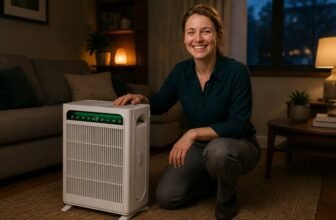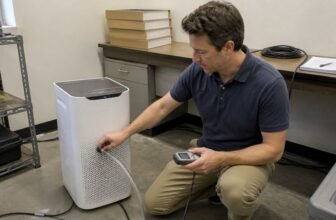
Wondering if your filter is the real deal? The answer depends on a few visible and physical details, and the core facts you need are covered in this guide.
You want reliable filtration for dust, pollen, and everyday allergens, so verifying authenticity matters before you install anything.
This article walks you through the four checks that confirm a genuine filter, including pleat quality, the hologram, packaging weight, and the barcode scan.
It also clarifies which purifier models the filter fits and how the reset process works after replacement.
Match your replacement to your machine’s label to keep airflow consistent and avoid regret.
Air Purify Highlights
Check the stamped code on your old filter frame against the new part number before buying.
Match the model label to Blue Pure 311 Auto, since other Blueair models won’t fit.
Tilt the hologram to see it shift from blue to green, as a static seal signals a fake.
Weigh the box near 1.2 pounds, because lighter knockoffs often indicate a counterfeit.
Scan the barcode for the specific code, since generic 12 digit numbers fail authenticity.
How to Verify Your Filter Code Before Ordering F311PACF105618

Check the code printed on the old filter frame before ordering a replacement. That stamped code confirms the filter is the genuine OEM part, so a matching number on the new filter ensures it fits your Blue Pure 311 Auto model.
Find the model number on the rating label, located on the bottom or back of the unit, and cross reference it with the filter code. This quick verification prevents the hassle of a return and confirms you are buying the correct replacement.
Why the 311 Auto Filter Won’t Fit Your Other Blueair
The replacement filter for the Blue Pure 311 Auto fits only that model, so check the rating label on the bottom or back before ordering. The manufacturer’s compatibility list excludes the 211+ Auto, 411 Auto, and the plain 311, even though the cylindrical shape looks similar.
Forcing this filter into another Blueair model leads to poor sealing and bypassed airflow because the 311 Auto’s airflow channels and sensor alignment differ from its siblings. Verify the model number first, since a wrong purchase costs money and adds frustration.
The filter’s internals are not universal, and guessing based on appearance is a common mistake. Match the filter part number exactly to the model listed on your unit’s label to ensure proper sealing and sensor function.
4 Physical Checks for a Genuine 311 Auto Filter
Inspecting the filter itself before installation is the fastest way to avoid a counterfeit, and four quick physical checks will settle most doubts. Check the pleats first; genuine ones are crisp and evenly spaced, while fakes look wavy like a sloppy accordion.
- Visual inspection: Pleats should be uniform and tight, not wavy or compressed.
- Hologram seal: Tilt the box under light; the genuine seal shifts from blue to green, not a static sticker.
- Packaging weight: OEM box feels hefty, around 1.2 pounds, while knockoffs are noticeably lighter.
- Barcode scan: Use any phone app; real units scan to a specific code, not a generic 12 digit number.
None of these checks beat the old filter’s printed code, but they are solid armor for the purchase price. Skip any box that fails two checks.
What the 311 Auto Filter’s Carbon Layer Traps and Tests
The carbon layer is the odor-busting workhorse of this filter, pulling in smoke and cooking smells through a bed of activated charcoal. Testing covers PM2.5 for 90 minutes, plus ELISA checks for pollen, pet dander, and dust mite matter on the media itself.
When the red light pops at six months, that layer is likely spent. Delay the swap and you are basically running a fancy fan with no nose.
Activated Carbon Layer
The activated carbon layer inside the multilayer cylinder handles everyday household odors such as smoke and cooking grease. This porous charcoal works by trapping odor molecules, but its effectiveness fades gradually over about six months, which matches the filter replacement reminder light.
Carbon dust can release during handling, so wipe the frame gently instead of shaking it. The carbon layer targets odors only; particle filtration for allergens is the separate filter’s job.
A spent carbon layer simply recirculates stale air, so budget for replacements. The replacement schedule keeps odor removal working, and replacing the filter costs $39.99 for the OEM part.
Captured Particle Types
The carbon layer captures fine particles and lighter organic vapors, but it does not remove heavy fumes or industrial grade chemicals. The OEM media targets PM2.5, pollen, dust mite matter, and pet dander, which are the four main indoor allergens.
Pollen removal works by physically trapping grains in the fiber, while lab testing confirms that dander proteins like Fel d1 and Can F1 bind to the surface through an enzyme linked assay. The carbon component adsorbs mild cooking or smoke odors, and it functions best when a prefilter handles larger debris first.
This layer is tested for 90 minute PM2.5 capture, so its role is particulate control and light odor reduction. Choose this filter for allergen management rather than for air freshening or heavy smoke removal.
Odor Neutralization Testing
Odor neutralization claims depend on two factors: what the activated carbon layer actually traps, and how the testing is conducted. The 311 Auto’s carbon layer captures light household smells like smoke, cooking, and pet mustiness, but it does not remove ammonia or heavy chemical fumes, and independent scent longevity trials remain sparse, with no published third‑party results for duration.
Buyers can infer several limitations from the available information. Carbon mass is modest, so odor capture fades before particle filtration does.
Scent longevity trials typically run for days, not months, in real rooms, and test standards vary widely because no universal odor removal metric exists. The filter’s six month replacement cycle assumes carbon exhaustion aligns with particle loading, which is optimistic.
Expect decent short‑term kitchen smell relief, not a heavy duty deodorizer. For persistent odors, a dedicated carbon prefilter helps, so swap the filter on schedule and keep expectations grounded.
Reset the Red Light: 6-Month Cycle and the Button Hold
The main filter runs on a six month cycle before the red replacement light appears. After swapping the filter, press and hold the center button for 7 to 10 seconds to clear the indicator, though some units need up to 30 seconds.
A reset delay of a few seconds is normal, and a blink before the light fades does not mean failure. If you ignore the light, you lose track of filter health, so complete the hold to keep the air clean.
- Unplug the unit.
- Replace the filter.
- Plug the unit back in.
- Hold the button until the red light fades.
Buy the Genuine Filter in Australia and the US
Once the red light resets and the six month cycle restarts, the next step is finding a genuine replacement filter without buying a counterfeit. In Australia, price tracking shows A$79.00 as the lowest regular price, while the US official store lists the same part at $39.99, so compare prices daily and stick to authorized retailers or the manufacturer’s own site.
Seller reliability matters because third party listings often sell compatible knockoffs that do not meet the original filtration standard. To confirm the correct part, verify the code F311PACF105618 on the old filter frame and check the model label under the top cylinder instead of guessing.
Watch for sudden price dips or fake deals by checking listings each day, and avoid any seller that offers zero return policy, since that signals a defective or wrong item risk. Paying a little more for an authorized purchase gives you peace of mind, because a substandard filter will need replacement sooner than the red light indicates.
Frequently Asked Questions
Can I Wash and Reuse the 311 Auto Filter?
Can I Wash and Reuse the 311 Auto Filter?
No, the 311 Auto filter is not washable. Washing will damage the filter media and its carbon layer, which quickly breaks down the structure and shortens its useful life.
The damage from water reduces the filter’s ability to trap particles and absorb odors, so its effectiveness drops after just one rinse. You need to replace the filter every six months instead, as the manufacturer specifies. Check your filter indicator or manual for the exact replacement schedule that fits your usage.
Does the Red Light Reset Automatically After Replacement?
The red light reset is not automatic. You must press the center button manually after replacing the filter, since the sensor does not clear the indicator on its own.
Hold the center button until the light powers off completely. This confirms the new filter is registered and the reminder cycle restarts. Manual reset prevents false alerts and ensures the indicator tracks actual filter life accurately.
Will Using a Compatible Filter Void My Warranty?
Using a compatible filter may void your warranty, but only if Blueair proves the filter caused the damage. That decision is case specific, so your best protection is to keep your proof of purchase and your original filter’s part number handy.
Before installing any replacement, check the part number against Blueair’s official list and verify the filter’s seal is intact. If you have any doubt, contact Blueair support directly and ask about warranty coverage for that exact filter. Their official guidance overrides any general advice, so follow their instructions to stay covered.
How Do I Dispose of the Old Filter Responsibly?
Old filters should be checked for local recycling programs, since the carbon layer may be compostable in some municipal systems. Municipal e waste facilities often accept the whole unit or its parts.
Detached disposal prevents landfill accumulation, so separate the filter media from the plastic frame before recycling. Contact your local waste authority for specific drop off rules, as programs vary widely by area. Responsible environmental handling starts with checking what your community actually collects.
Can I Run the Purifier Without the Carbon Layer?
Yes, but only if you keep the particle layer installed. Removing the carbon layer means airflow stays nearly the same, yet odor and gas removal stops completely.
Particle filtration continues to capture dust, pollen, and smoke, but the filter may clog faster without carbon preloading. Run the purifier this way only when odor control is not a priority for your space.
Rounding Up
Check the filter label before buying, and match the exact model number printed on the side of your unit if you want a proper seal. Your advice changes if you only run the machine in a small bedroom, since a tight fit matters less there than in a larger living space. Always follow the manufacturer’s instructions for replacement timing and for resetting any service indicator light. Those steps differ by model, so do not guess from memory or online photos. Replace the filter every six months unless you notice a drop in airflow sooner. The main condition that changes this schedule is heavy dust or smoke exposure.