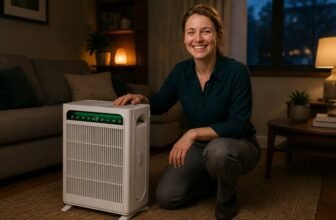
Can an air purifier help with eczema triggered by airborne allergens? Yes, it can reduce the airborne load of common triggers like dust mite droppings, pollen, and cat dander. The honest answer depends on how well you also manage surfaces and repair your skin barrier.
This article explains how aeroallergens exploit a broken skin barrier and fuel the itch scratch cycle. We will cover the top five culprits and how HEPA filtration eases that cascade.
Choose a purifier matched to your room size and primary pollutant for the best practical effect.
Air Purify Highlights
Broken skin lets dust mites, grass pollen, and ragweed slip past your barrier and stir up immune reactions.
Put a HEPA filter in your main living area to cut airborne allergen load and lower flare risk.
Allergens can trigger nerve fibers and histamine release before any rash shows up on your skin.
The itch scratch cycle gets worse each time repeated exposure trains your skin to overreact.
Keep windows shut on high pollen days so outdoor aeroallergens don’t reach your bare skin.
Why Aeroallergens Trigger Eczema Through Broken Skin

Aeroallergens worsen eczema because broken skin gives airborne particles a direct route into the body. Dust mite droppings and similar particles land on the compromised barrier, pass through the cracks, and stimulate nerve fibers and histamine release, which drives the itch-scratch cycle.
The public health burden is substantial, as this reaction leads to countless doctor visits. The pediatric sensitization window, from infancy to roughly age three, is the most critical period for this process.
A baby’s vulnerable skin acts as a doorway for these allergens, and repeated exposure during this time can train the immune system to develop lifelong sensitivities. The eczema itself is what creates the broken barrier in the first place, making the condition self-perpetuating.
An air purifier with a HEPA filter can capture fine particles like pollen and pet dander before they reach the skin. Reducing the airborne load of these aeroallergens in the bedroom or living area can lower the frequency of contact with broken skin.
The Top 5 Aeroallergens Proven to Worsen Eczema
Five airborne allergens have solid clinical evidence for worsening eczema flare ups. House dust mites lead the list, with sensitization rates near 50 percent and provocation studies that directly induce flares.
Grass pollen shows a clear severity correlation, and chamber tests worsen atopic dermatitis. Ragweed sensitizes 15.9 percent of patients, with severe cases showing a significant spike, while cat epithelium reaches 18.2 percent and links to moderate to severe disease.
Target these five triggers before debating air purifier features such as HEPA filtration or clean air delivery rate. Mites dominate the evidence, but pollen and pet dander contribute meaningfully, so check your exposure to each one.
- House dust mite: 50 percent sensitization; provocation induces flares.
- Grass pollen: severity correlation; chamber tests worsen symptoms.
- Ragweed: 15.9 percent sensitized; severe cases spike.
- Cat epithelium: 18.2 percent rate; linked to moderate to severe disease.
How Aeroallergens Cross the Skin Barrier and Spark Itching
The skin barrier is not a passive shield, and it becomes a leaky sieve when eczema is present. Aeroallergens like dust mite particles slip between keratinocytes on that compromised surface and reach the dermis directly.
This process triggers neural pathway activation before any visible rash appears, hitting sensory nerve endings and sending an itch signal. Those nerves then signal local immune cells, prompting a mast cell response that releases histamine and prostaglandins, which swell the area and drive the scratch cycle.
Keeping allergens off the skin matters more than treating the itch afterward, because this nerve and immune reaction fuels chronic flares. A HEPA filter can reduce airborne allergens such as dust mite particles and pollen before they settle on the skin, lowering the chance of this cascade starting.
Clinical Testing Options and Barrier-Repair Strategies for Aeroallergen Sensitivity
Allergy testing identifies the specific aeroallergens that trigger your symptoms, using either skin prick tests or serum specific IgE blood tests. Atopy patch tests can better assess delayed eczema reactions when standard testing is inconclusive.
Once identified, the focus shifts to allergen avoidance, such as encasing mattresses against dust mites or keeping pets out of the bedroom. These measures reduce exposure but do not fully restore skin health on their own.
Barrier repair is the cornerstone of managing aeroallergen sensitivity, as a strong skin barrier blocks allergens from penetrating and triggering inflammation. Moisturizers with ceramides and prescription topical steroids quiet the inflammatory response and allow the skin to heal.
Barrier repair is the cornerstone; strong skin blocks allergens, while ceramides and steroids calm inflammation for healing.
A repaired barrier means fewer allergens sneak in, less itching, and a slower progression of the atopic march. Test smart, avoid what you can, and repair the barrier, since this approach keeps the skin resilient against indoor allergens such as pollen and pet dander that may circulate in your home air.
Frequently Asked Questions
Can Air Purifiers Reduce Eczema Flare-Ups From Allergens?
Can Air Purifiers Reduce Eczema Flare-Ups From Allergens?
Air purifiers can reduce eczema flare ups by lowering airborne allergens, especially when placed correctly. HEPA filter effectiveness is well documented for capturing particulates like dust mites and pet dander. Direct clinical evidence for eczema remains limited, but cutting your allergen load is a practical step. Use a purifier with a true HEPA filter in the room where you spend the most time. Position it so the air intake and outlet stay clear of walls, furniture, and curtains. Run it continuously on a moderate fan speed to maintain cleaner air around the clock. The effect on your skin will depend on how much of your exposure is airborne rather than from direct contact with surfaces.
Do Aeroallergen Allergies Ever Cause Eczema on the Face?
Yes. Aeroallergen allergies can cause facial eczema, especially through direct contact with pollen. Seasonal flares often show up on exposed skin, where the weakened skin barrier lets allergens penetrate and triggers itching and inflammation.
Reducing allergen contact is your best first step. Wash your face after spending time outdoors and change pillowcases often. Indoor air filtration can help lower the overall particle load in your home, which may ease facial flare ups during peak allergy seasons.
How Long After Exposure Do Skin Symptoms Usually Appear?
Skin symptoms usually appear within minutes to hours after direct contact with an allergen. A delayed flare up can also emerge 24 to 48 hours later, and this later response is often detected with atopy patch testing.
Your individual timing depends on how sensitized you are and the specific route of exposure. If you suspect a reaction, monitor the contact area closely and consult a qualified clinician for proper diagnosis and care.
Can Allergen Immunotherapy Cure Aeroallergen-Triggered Eczema?
Allergen immunotherapy for aeroallergen triggered eczema is not proven to cure the condition, though long term remission is possible in select cases. The strongest evidence supports avoidance of the specific allergen and consistent barrier repair, not a permanent fix.
For most people, a cure is unlikely, but sustained improvement can occur with an individualized treatment plan. Combining immunotherapy with filtration to lower indoor aeroallergen load and following your clinician’s guidance gives the best chance for lasting relief. Focus on reducing exposure at the source and maintaining a healthy skin barrier.
Does Washing Bedding in Hot Water Prevent Dust Mite Reactions?
Hot water soaking bedding eliminates mite fecal matter and dust mites, reducing allergen exposure. This lowers skin contact with aeroallergens, but it does not replace comprehensive eczema management or allergen avoidance strategies.
Keep using hot water washes as part of your routine, not as a standalone cure. Pair this with dust mite covers and regular vacuuming for a more complete approach to reducing triggers.
Rounding Up
Start with the highest fan speed you can tolerate, since more airflow moves more air through the filter. If the room is larger than the purifier’s rated coverage, or the ceiling is higher than eight feet, that speed will need to stay on longer to matter. Replace the filter only as often as the manufacturer’s instructions say, and check those instructions for any safety warnings about ozone or ionizer modes. For persistent allergy symptoms, ask a doctor whether your triggers are actually airborne or surface based, since that changes your cleaning routine. Keep windows shut on high pollen days, and place the unit away from walls to avoid blocking intake.