Heavy metal dust from factories is a real lung hazard, not just a cleaning chore. The honest answer for protecting your home depends on whether your filtration can capture PM2.5, the fine particles that carry arsenic and lead deep into your body.
Check your windowsills for gray streaks as a first sign of metal buildup, then focus on indoor defense. Use HEPA filters rated for PM2.5, seal door gaps, and keep windows closed at dawn when pollution peaks.
This article covers practical steps to filter the air, not just the dust, in your living space. To finish, choose an air purifier that matches your room size and the specific pollutant you face.
Air Purify Highlights
Factories send metal laden PM2.5 deep into your lungs, so guard your breathing air.
Gray streaks in dust tests mean metals, while sandy grit points to silicates.
Run HEPA filters rated for PM2.5 to trap those toxic particles indoors.
Shut your windows at dawn and dusk when factory emissions peak.
Keep garden beds at least 15 feet from the factory facing fence to cut fallout.
Why PM2.5-Bound Metals Are Deadlier Than You Think
PM2.5 carries metals like arsenic, lead, and cadmium past the nose and throat directly into the alveoli, where they trigger inflammation and oxidative stress. Studies near Indian industrial sites link these metals to elevated cancer risks, with smaller particles penetrating deeper and heavier metals persisting longer in lung tissue.
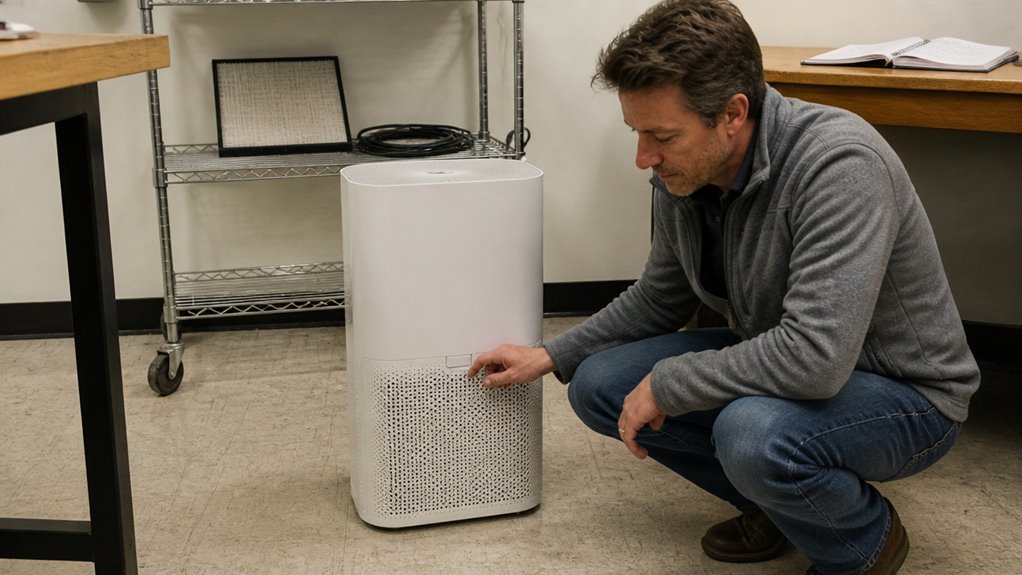
Monitoring fine particle fractions, not just total dust, is essential for protecting workers. Air purifiers with HEPA filters can remove these fine particles, though the filter must be rated for PM2.5 to be effective. A prefilter captures larger debris, extending the HEPA filter’s life while the main filter handles the dangerous submicron fraction.
Where Heavy Metals Originate and How They Spread
Heavy metal sources include metallurgical plants, cement kilns, and power stations burning heavy fuel oil, each releasing arsenic, cadmium, and lead attached to fine particles. These metals travel on wind currents for kilometers, and finer particles deliver a stronger chemical punch because they lodge deep in lung tissue.
Regional dust composition varies sharply, with one site showing lead dominance and another showing manganese, depending on local soil and industrial activity. Desert steppe studies found zinc and cadmium accumulating downwind of parks or along highways, so wind direction matters more than simple distance.
Check prevailing wind patterns before assuming distance equals safety, and use a HEPA filter or prefilter to capture fine metal particles indoors. Activated carbon can address any associated odors, but it does not remove metals, so particle filtration remains the primary defense.
How to Identify Fallout in Your Home Before You Test
You can identify fallout in your home by observing the dust before any lab test. The texture and color of the film on surfaces like windowsills give the first clues about what is settling indoors.
Run a damp finger across a gritty layer to check for streaks. Gray or rust colored marks indicate heavy metals such as iron or manganese, while a sharp, sandy feel points to silicates or fly ash.
- Gritty film: rough and abrasive, likely from silicates or fly ash.
- Dark streaks: gray black lines, likely from carbon or soot.
- Orange tint: rust colored dust, likely from iron oxide.
- Sticky residue: clings to glass, likely from oil bound particles.
- Uniform layer: even coating reappearing daily, likely from industrial deposition.
If the dust reappears within hours of cleaning, that repetition documents active deposition rather than poor housework. Observe these patterns first, then sample the material for testing.
Immediate Steps to Cut Exposure to Your Lungs (And Then Your Garden)
Close your windows during peak factory hours, typically dawn and dusk, when particulate matter settles low. Seal gaps under doors with a draft stopper; it is ugly but works.
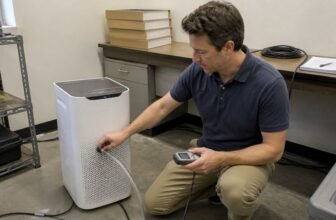
A HEPA filter unit catches fine particles that sneak indoors. Place it in your bedroom, since you spend eight hours breathing there.
Put raised garden beds at least fifteen feet from the fence line facing the factory. Plant tall sunflowers as a natural barrier, though they will not stop cadmium.
Wash produce thoroughly with no shortcuts. Focus on indoor air first, then garden placement.
Frequently Asked Questions
Can Air Purifiers Remove Heavy Metals From Dust?
Yes, air purifiers capture heavy metal laden dust through HEPA filtration and electrostatic precipitation. Washable prefilters only trap larger particles, so fine metal dust requires a robust main filter to be removed effectively.
Removal efficiency depends on filter media quality and regular maintenance. A clogged or dirty filter loses airflow and lets particles escape back into the room, so replace or clean it as the manufacturer directs.
How Often Should Industrial-Area Homes Replace HVAC Filters?
For most industrial-area homes, replace HVAC filters every 1 to 3 months, especially when you notice visible dust buildup on the filter surface. Heavy airborne dust from nearby industrial activity clogs filters faster than typical residential conditions, so treat the standard 90 day interval as a maximum, not a baseline.
Choose a filter with a MERV-13 minimum rating to capture fine particulates and heavy metal dust. Plan filter changes around seasonal dust peaks, such as after late summer, when pollen and industrial fallout combine to overload the system.
Replacing filters regularly is your first line of defense, and it costs less than frequent professional duct cleaning. Both methods reduce heavy metal exposure, but filter swaps address the source before contaminants settle deep in your ductwork.
Do Indoor Plants Help Reduce PM2.5 Metal Exposure?
Indoor plants modestly reduce PM2.5 metal exposure by trapping particles on leaf surfaces and absorbing some metals through their tissues. However, their impact on particulate toxicity is limited compared to source control and mechanical filtration.
For meaningful metal removal, rely on a HEPA filter purifier to capture fine particles, and place plants as a supplementary air quality benefit. Focus on reducing indoor sources of metal laden dust. No plant replaces active ventilation or filtration.
What Masks Actually Block Fine Metal-Bearing Particles?
N95 and FFP2 masks block fine metal bearing particles effectively. They capture at least 95% of PM2.5, so they handle most common exposure levels.
Filter standards like EN149 guarantee sub micron filtration for everyday use. If your site exceeds 1,600 µg/m³, you need higher grade protection, so upgrade your respiratory gear based on official occupational exposure guidance.
Are Children More Vulnerable to Metal-Laden Dust Exposure?
Children are more vulnerable, as developmental windows amplify susceptibility to metal laden dust. Their bodies absorb and retain these toxins at higher rates than adults, which raises long term health concerns.
Fine particulate bound metals pose a greater carcinogenic risk for children because their lungs and immune systems are still maturing. Exposure biomarkers in pediatric studies confirm this increased retention.
To reduce that risk indoors, focus on HEPA filtration and a clean air intake to capture fine dust before it settles. Use a purifier sized for the child’s room and keep the fan running during active play or sleep.
For specific exposure concerns, check your local health agency’s guidance on soil and dust near industrial areas. A qualified clinician can also help interpret any biomarker testing results.
Rounding Up
Start with the dust test kit for your sill, because knowing your contaminant load drives every other decision. That result tells you if you need a filter with a higher rating or if sealing gaps matters more.
If you have a large open floor plan, one unit will not manage the whole area, so focus on the room where you spend the most time. Keep the unit away from walls and change the filter per the manufacturer’s instructions, not your calendar.
For any electrical or ozone concerns, follow the official safety guidance that came with the unit. The main condition that changes your approach is airflow, so place the unit where it gets steady circulation.