Is a Dyson air purifier worth it? For most people, the honest answer is no, because you are paying primarily for design rather than a major difference in cleaning ability.
The real question is whether your room size and specific pollutants justify a premium purchase, as budget models often move comparable air for a much lower cost.
This article breaks down the value of airflow, ongoing filter upkeep, and the modest health gains you can realistically expect from your investment.
Your best next step is to choose an air purifier that matches your room’s square footage and the particular particles you want to target.
Air Purify Highlights
Buy one only if your home is small and you care about modern design over raw airflow.
Cheaper units move five times more air for the dollar, so most rooms get cleaned faster for less money.
Your lungs may benefit from real PM2.5 reduction, but visible health improvements stay modest for many users.
Budget for a new filter every year, since replacement costs add up and sensor accuracy fades after twelve months.
Skip the premium price and grab an inexpensive model if dust and smoke removal matter more than looks.
Reddit’s Verdict on Dyson Air Purifiers: Poor Value, Reliable Hardware
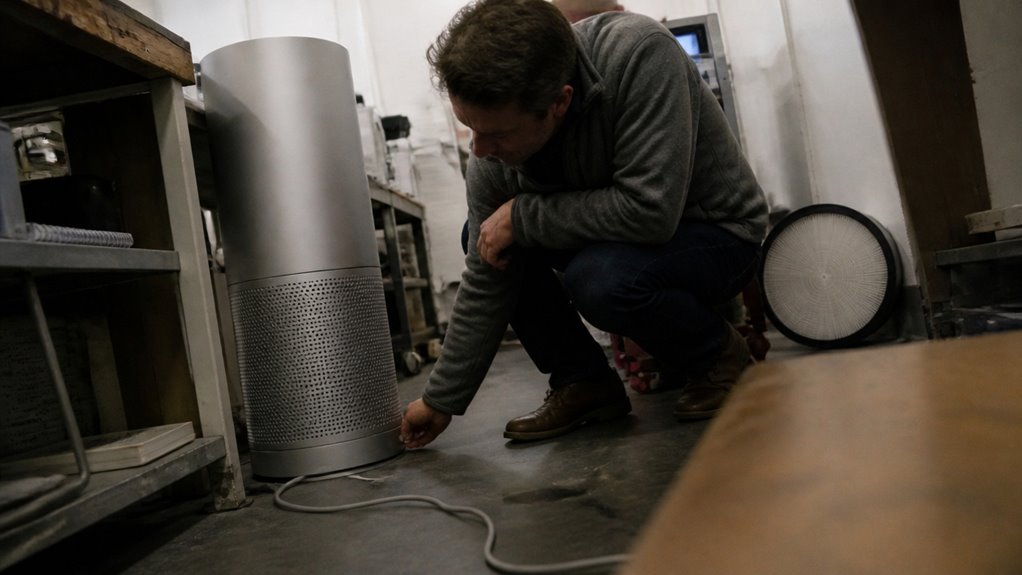
Reddit reviewers generally find Dyson air purifiers reliable but overpriced. Positive sentiment sits at 67%, though praise often comes with a caveat about cost.
Hardware reliability shows up in reports like a sensor failing at nine months and being replaced under warranty, but that does not soften the sticker shock. Users describe the build as solid and the fan as quiet enough, then compare the price to simpler machines.
A hoop style model costs $300 to $400, while a $80 GermGuardian moves similar air, which turns the comparison into a math problem rather than a feature win. Filter replacement adds $70 or more per year, where competitors stay under $50 with comparable effectiveness.
Clinical Data vs. User Reports: Efficacy Contradictions
Clinical trials do show that this purifier category reduces fine particle levels, but health improvements remain modest. A 78 week study found real PM2.5 reduction while asthma scores barely changed, which suggests owners may lose motivation once they cannot see or feel the effect.
Clinical trials confirm particle reduction, but health gains stay modest, and motivation fades without visible results.
The gap between measured performance and user satisfaction often comes down to long term maintenance. Filters require replacement at a recurring cost, sensors can act unpredictably, and the financial toll accumulates, so many owners come to view the device as a regular fan rather than a medical tool.
Community feedback on forums focuses on build quality and design appeal rather than measurable health wins. That pattern aligns with the possibility that initial enthusiasm fades as routine upkeep and operating costs become the dominant experience.
For asthma support, a more affordable unit with higher airflow may deliver better value because clean air delivery rate and room coverage matter more than aesthetics. Choosing a purifier should start with airflow and filter efficiency for your room volume, not with a brand name or visual charm.
Dyson Air Purifier CFM: What $300–$1,100 Actually Buys
Airflow capacity tops out at 200 cubic feet per minute across Dyson’s largest models, while the cheaper hoop style units deliver about half that rate. The flagship price does not increase purified air volume; it only pushes the same airflow farther across a room, which feels premium but changes nothing about the actual filtration rate.
Compare the numbers with a simple airflow check. A budget hoop model moves roughly 100 cubic feet per minute, similar to many basic units that cost a fraction of the price, while the top tier reaches 200 cubic feet per minute, still below what several mid priced competitors manage for far less money.
You are paying for a distinctive turbine design and a filter mounted inside, not for superior clean air delivery rate or higher air changes per hour. The purchase makes sense only when the visual style matters more than raw airflow, particle filtration, or filter replacement cost, since the fan and filter combination does not outperform less expensive alternatives.
Cost Per CFM: Dyson vs. $80–$160 Competitors
Clean air per dollar varies sharply across price points. A hoop style purifier costing $300 to $400 delivers roughly 100 CFM, or about $3 to $4 per CFM, while a $80 unit that outputs 130 CFM lands near $0.62 per CFM, and a $160 model hitting 250 CFM comes in around $0.64.
Larger, quieter units priced at $900 to $1,100 offer 200 CFM, translating to $4.50 to $5.50 per CFM. A $160 competitor beats that output by more than five times on raw airflow, though the premium product does include a more refined fan design.
If purification is the primary goal, the lower cost options deliver better value per cubic foot of air moved. The high priced choice works best for those who prioritize the visual and structural appeal over efficiency metrics.
Dyson Maintenance Costs: Filters, Watts, and Warranty Risks
Ongoing Dyson upkeep costs can surprise owners, with filter replacements ranging from $70 to $170 each time. High mode on tower models draws about 23 watts, while some competitors use under 10 watts, so energy expenses stay modest but add up over years of daily use.
Dyson upkeep adds up fast: filters cost $70–$170, and even modest energy use compounds over years.
Warranty coverage often determines whether a failure becomes a repair bill or a free replacement. A Reddit user reported a sensor failure at nine months, and the service center shipped a new unit only because the one year warranty was still active, suggesting that sensor reliability beyond that period is uncertain.
Carbon filters need swapping every two years, while HEPA filters last five years, creating recurring costs that resemble late fees. Power consumption adds pennies per day, yet over a decade that incremental draw becomes a meaningful amount.
Post warranty claims involve paperwork and patience rather than guaranteed coverage. Budget for filter replacements and possible repairs, or choose a simpler unit that costs $160 and requires less ongoing attention.
Frequently Asked Questions
Do Dyson Purifiers Reduce Asthma Symptoms in Real-World Use?
Real world efficacy depends on your specific environment and symptom triggers. Clinical trials show no significant asthma symptom improvement, but physical filtration does reduce particulate matter.
That reduction can help some people, while others see little change. Reddit anecdotes report mixed results, so clinical benefit is variable and not guaranteed.
Focus on reducing dust, pollen, and pet dander with a HEPA filter, and place the unit where airflow reaches your breathing zone. For asthma management, always follow your clinician’s guidance alongside any air cleaning strategy.
How Should I Position a Dyson Purifier for Best Airflow?
Place the purifier at least three feet from walls and furniture, with the hoop facing the open center of the room. For best circulation, position it near a doorway or window inlet so clean air can push outward.
Corner placement and room sizing dictate efficiency; the hoop purifier’s airflow works best within 100 to 150 sq ft at maximum speed. Positioning near an inlet, not a wall, maximizes circulation, yet noise rises to 59 dB. Run it on high only when you need fast cleaning, then switch to a lower fan speed for daily use.
Does Dyson’s Air Projection Technology Make Filters Last Longer?
Dyson’s air projection does not extend filter lifespan; airflow efficiency remains unchanged per independent tests. Filter replacement schedules stay identical because they depend on particle load, not projection design.
The technology offers no maintenance advantage for your filter. Instead, focus on the dust and pollutant levels in your room, which actually drive when the filter needs changing.
Check your filter indicator and follow the manufacturer’s replacement guidance based on your usage, not on marketing claims about airflow. That gives you the most accurate maintenance schedule.
Can I Use Third-Party Filters in My Dyson Purifier?
Third-party filters will physically fit, but they can void your warranty and may deliver noticeably worse filtration. Official parts protect your guarantees, with cheaper alternatives risking reduced capture of dust, pollen, and smoke particles.
The real trade off is cost savings versus long term air quality. A clone can clog faster or let pollutants slip through, compromising the protection your Dyson is designed to provide. For full performance and peace of mind on support issues, stick with official replacements.
Is a Used Dyson Purifier Better Value Than a New Competitor?
A used unit carries hidden wear risks that usually outweigh the upfront savings, especially without a warranty. New competitors offer dependable filtration and lower filter costs, which is why they are the safer value.
You trade the allure of a bargain for the confidence of a fresh, factory tested product. That guarantee of reliable airflow and clean air makes the new purchase the more practical investment.
For a direct question: A used Dyson is only better value if you can verify its filter history and accept the repair risk. Otherwise, a new competitor with equal airflow and a warranty provides more predictable long term costs. The peace of mind from a guaranteed clean performance beats the gamble of hidden wear. Choose the new unit for reliable, low maintenance operation.
Rounding Up
Choose a unit with a clean air delivery rate that matches your room size, and place it where airflow is not blocked. This advice changes if you are targeting smoke, dust, or odors, or if you are sensitive to fan noise at night. For filter cleaning or replacement, follow the manufacturer’s instructions and any safety warnings. If symptoms persist, ask a qualified medical professional for guidance. End the day by running the unit on a lower setting while you sleep. The main thing to remember is that the unit only helps when its filter is maintained and the room is reasonably enclosed.