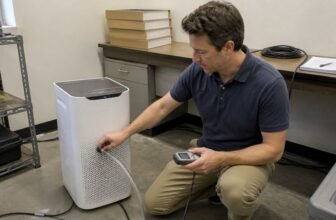
Can an air purifier actually clean the dust, pollen, pet allergens, and smoke you breathe at home? Yes, when it is sized appropriately for your room.
The honest answer depends on your space and the specific pollutant you want to target.
This article explains how air purifiers work with filtration and airflow. It covers what they can realistically capture, how to match one to your room size, and simple steps for maintaining clean air.
You will also learn about filter upkeep and the right placement for better circulation.
Choose a purifier that fits your room volume and the kind of particles you want to reduce.
Air Purify Highlights
- Tracked-in dirt costs retailers about $800 per pound to clean up.
- Put a 15 to 25 foot mat system at every entrance to catch nearly all debris.
- Sweep the sidewalk weekly to cut soil entry by 66 percent.
- Clean mats every two hours with a vacuum and spot clean sticky spots.
- Replace mats when fibers crush or backing cracks, which lasts 3 to 5 years.
Why Store Entrances Are the Real Dust Hotspot (and Where Matting Fits)

Store entrances accumulate dust faster than any other zone because every shoe deposits gritty silica, pollen, and micro debris from sidewalks before shoppers reach the aisles. These sharp particles act like sandpaper on floor finish, which is why the entrance is the hotspot.
Matting materials reduce the dirt load before it becomes a cleaning bill. A coarse scraper mat outside grabs large chunks, while a softer wiper mat inside catches fine dust, and sizing the system generously cuts tracked in soil effectively.
How Much Dirt Walks In: and What It Costs You Per Month
Dirt tracked indoors is a measurable monthly cost, not just a cosmetic problem. Studies show that roughly 1,000 shoppers can bring in up to 24 pounds of soil over 20 days, and removing that grit once it is inside costs about $800 per pound, totaling nearly $20,000 for a single period.
About 80% of that expense is preventable, so the real savings come from stopping the mess at the door rather than cleaning it off the floor later. A high efficiency prefilter or a dedicated entryway mat can capture much of that soil before it becomes airborne, which reduces the load on your main HEPA filter and lowers the frequency of filter replacement.
The Hidden Cost
Tracked in soil costs retailers roughly $19,200 per month for every 1,000 customers, assuming 24 pounds of dirt at $800 per pound for removal. Seasonal variability, such as spring mud or winter slush, can raise that cost by 30 percent without warning.
Prevention is cheaper than cure. A matting system five to fifteen feet long captures up to 100 percent of shoe bottom soil, so store managers should think of it as a prefilter that stops debris before it enters the building.
- Dust and dry debris: $6,400 per month
- Grease and oils: $4,800 per month
- Grounds materials: $4,200 per month
- Tar and liquids: $2,300 per month
- Miscellaneous particulates: $1,500 per month
These figures illustrate why floor care relates directly to indoor air quality, since resuspended fine particles from soil affect the air you breathe. Choosing a matting system now reduces the monthly burden on your budget and on your cleaning staff.
24 Pounds Tracked
Those 24 pounds of soil, the amount a heavy bag of dog food weighs, is what 1,000 customers track in over just 20 days, per ISSA data. That gritty sand, greasy grime, and sticky residue costs an estimated $600 to $800 per pound to remove once it is inside, so the cleaning bill reaches $19,200 every three weeks.
Soil weight sneaks up on your budget, silently grinding into floors and finishes, and it becomes a brutal monthly expense for a mid sized store. That cash could instead cover payroll or inventory for your operation.
Track that filth, or it tracks your profits out the door. Measure the soil load first, then manage it with regular cleaning and maintenance schedules.
Prevention Saves Money
Each pound of soil that crosses a store threshold costs $600 to $800 to clean up, and the average store lets in about 24 pounds every 20 days. That equates to roughly $19,200 a month spent on mops and labor, but a simple preventive budget changes the math.
A soil origin analysis identifies whether the dirt comes from sidewalk grit, parking lot tar, or rain soaked carts, so you can stop it before it enters. Install 15 to 25 feet of scraper mats at the door, which captures nearly all shoe bottom debris, and sweep the walkway daily.
Spending on mats now avoids paying for deep cleaning crews later, and the approach resembles how a prefilter protects a HEPA filter in an air purifier. The prefilter traps larger particles so the main filter lasts longer, just as the mats trap coarse soil so the floor stays clean with less effort.
The 25-Foot Matting Rule: Stopping Soil Before It Spreads
Longer entry mats capture far more tracked‑in soil than a short one at the door. A five‑foot mat stops only about a third of debris, while a 15 to 25 foot system removes nearly all of it.
- 5 feet: 33% debris captured
- 10 feet: 52% debris captured
- 15 to 25 feet: ~100% debris captured
- 8 feet: ~40% debris captured
- 20 feet: ~90% debris captured
Adding length directly protects your floor maintenance budget. Each 1,000 visitors can track in 24 pounds of dirt, and removing that soil costs $600 to $800 per pound.
Measure your entryway and extend the mat system to the full walking path. That extra length stops soil before it spreads, saving on cleaning labor and floor finish repairs.
Why Weekly Sidewalk Sweeping Boosts Your Matting’s Effectiveness
Weekly sidewalk sweeping cuts tracked in soil by 66% before it reaches your mats, which means each pound of dirt stopped outside saves roughly $600 to $800 in indoor removal costs. By keeping abrasive grit off the mat fibers, sweeping also extends mat lifespan, so the mat traps more, wears less, and pays for itself over time.
Sidewalk Soil Sources
Sidewalk soil sources defeat entryway matting before it can do its job. Loose gravel, dried leaves, soda spills, and winter sand ride shoes and wheels from curbs to your first line scraper, and that debris becomes cross contamination that bypasses the mat entirely.
Grit grinds into mat fibers and destroys absorbency, while dampness turns dust into mud slicks that are hard to remove. Weekly sweeping of the sidewalk cuts tracked soil by 66 percent, and that reduction means the mat only needs to trap what remains.
Clean sidewalks allow a prefilter effect: the mat acts like a coarse prefilter for footwear, catching the larger particles so the interior floor sees far less fine particle load. If you want the mat to perform like a true entryway filter, keep the source clean first.
Consider airflow and maintenance the same way you would for an air purifier: a heavily loaded prefilter reduces performance, and in matting, that prefilter equivalent is the walkway itself. Sweep the walk, and your matting becomes a functional barrier rather than a decorative surface.
Preventive Cost Savings
Preventive sweeping is the most cost effective way to control how much soil enters a store. Removing one pound of soil from inside costs roughly $800, while keeping it on the sidewalk costs pennies.
Weekly sidewalk sweeping reduces soil entry from 24 pounds to 8 pounds per 1000 visitors. Daily sweeping drops that to 3 pounds, and combining sweeping with matting holds it below 1 pound per 1000 visitors.
For a store with 5000 weekly visitors, this cuts monthly tracking costs from $19,200 to under $800. That savings directly frees budget for cleaning supplies and maintenance rather than damage repair.
Sweeping also makes matting more effective by removing heavy, gritty soil before it reaches the mat. The result is a cleaner floor with less effort from the filtration system.
Mat Lifespan Extension
Weekly sweeping removes coarse grit before it grinds into fibers, sparing your mat’s backing from premature wear. This habit also limits embedded dirt, which reduces the need for deep cleaning and can double a mat’s useful life.
- Sweeping cuts abrasive load by two thirds, preserving fiber loft.
- It reduces dampness trapping, preventing mildew and odor.
- Consistent care lets you stretch a rotation schedule safely.
- Replacement costs drop by half annually per mat with regular care.
A clean entryway works as cheap insurance because routine care prevents costly replacements. Sweep weekly, rotate monthly, and mats will outlast your patience.
Daily Cleaning Tactics for Front-of-Store Floors and Mats
Front of store floor care depends on stopping soil at the entry point before it spreads across the sales area. Crews should sweep entry mats every two hours using a fixed walking path that covers every section without retracing steps.
Vacuum dry soil first, then spot clean sticky residues on mats with a damp cloth. A preplanned spill response prevents dropped soda from forming a film that attracts lint throughout the day.
For hard floors, a dry microfiber mop collects dust before it can scuff the surface. Check checkout lanes mid morning because carts pull in pebbles quickly.
Rotate mats weekly to distribute wear but keep them flat overnight. Ten minutes of mapped cleaning effort prevents the need for extended scrubbing later.
Is Your Entry Matting Past Its Prime? Here’s How to Tell
Entry matting fails quietly long before it looks worn, so age alone is not a reliable gauge. A mat that is kept up can outperform a newer one, but most mats lose their function without obvious damage.
Check for lifting edges that trip carts, crushed fibers that let soil slide inside, cracked rubber backing that sheds crumbs, and odor retention after cleaning. Each of these signals a mat past its prime, and any two together mean replacement is due.
Proper care extends mat life to three to five years, but poor habits shorten it. Use flat rack storage to prevent curling, and vacuum daily to keep the surface effective.
Frequently Asked Questions
Can Too Many Mats Create a Trip Hazard?
Yes, too many mats can create a trip hazard, especially when edges curl or layers shift underfoot. Raised edges and uneven thicknesses disrupt normal foot traffic and increase the chance of stumbling.
Choose dense, properly sized mats with beveled edges to keep transitions smooth and flat. Avoid stacking multiple thin mats, since each layer adds a new edge that can catch a shoe or cane. Manage mat density and layering carefully, and check that every mat lies flush against the floor before use.
How Often Should Entry Mats Be Professionally Washed?
Professionally washing entry mats every four to six weeks is the right cadence for heavy traffic areas. This schedule protects the mat fibers from embedded soil that can otherwise grind them down and shorten their lifespan.
A consistent washing plan keeps the mats performing their protective job at the entrance, which also justifies the cost of a rental service. Stick to a fixed timeline so hygiene and durability stay predictable, rather than waiting until the mat looks dirty to act.
What’s the Best Mat Color for Hiding Dirt?
Brown tones with patterned loops are the best choice for hiding dirt. The pattern breaks up the visual line of the eye, so tracked in soil and lint blend into the design rather than standing out.
This colorway keeps a professional look between cleanings while reducing the appearance of daily buildup. Choose a mat with a multicolor loop construction to minimize the frequency of visible maintenance needed.
Do Mats Need to Be Replaced After One Winter Season?
Mats do not need to be replaced after one winter season. Their lifespan depends on the material, how much foot traffic they see, and how well you maintain them.
Investing in a durable mat is cost effective because it can last for several winters. Regular cleaning and proper drying are the key actions that extend a mat’s useful life substantially. Routine care matters far more than the calendar when it comes to replacement timing.
Can Floor Finish Be Restored Without Stripping Everything?
Yes, floor finish can be restored with a scrub and recoat, which avoids full stripping. This works best when the existing finish is intact and only shows light wear or scuffs.
Burnishing helps maintain the gloss between coatings, but heavy foot traffic will eventually require a deeper recoat. Periodic recoats preserve the floor’s protective layers, so complete removal only becomes necessary when buildup or adhesion problems appear.
Always check the finish manufacturer’s guidelines for compatible recoating products and proper preparation steps. This approach extends the life of your floor while keeping maintenance manageable.
Rounding Up
Start by placing your air cleaner where you spend the most time, such as your main living area. This single step gives you the greatest benefit for the least effort.
If your room is large or your ceilings are high, you may need a stronger unit, so check the clean air delivery rate for your specific space. For homes with pets or recent renovations, run the unit longer to address dust and odor particles.
Always follow the manufacturer’s instructions for filter changes and cleaning to keep the device safe and effective. If you have a health condition like asthma, talk to your doctor before relying on the unit alone.
End your session by keeping the unit on low overnight in the bedroom, since that is where you spend hours breathing continuously.