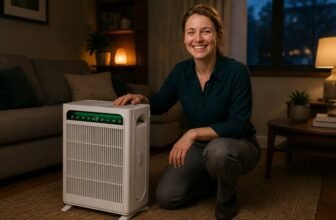
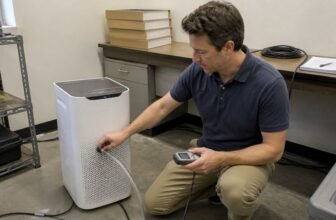
Wondering where to put an air purifier in a large great room starts with a blunt truth: one unit is usually not enough for the whole space.
The honest answer depends on your room’s total square footage and the level of dust, pollen, or smoke you are fighting.
For a single purifier to work well, place it near the center, at least a foot from any wall, so it can draw air from all directions. Corners can cut coverage by up to 30 percent, and a 600 square foot room needs a 390 CFM smoke CADR rating to keep up.
This article covers the zone by zone breakdown for placement and sizing. Choose an air purifier that matches both the room size and the main pollutant you want to address.
Air Purify Highlights
Put the air purifier at the room’s midpoint instead of a corner for better airflow.
Divide a large great room into smaller zones, each with its own purifier unit.
Keep the unit one to two feet away from walls and clear of furniture or curtains.
Match the purifier’s CADR to your room’s volume so the smoke rating fits the space.
Set the unit three to six feet from where you sit to avoid a direct draft.
When a Single Air Purifier Fails Your Open Floor Plan

A single air purifier in a large great room often becomes a paperweight with a fan. Furniture like sofas, islands, and half walls blocks the airflow, creating dead zones where fine particles settle untouched.
Placement mistakes, such as shoving the unit into a corner or behind a plant, choke its intake and can cut efficiency in half. Even a premium model rated for 500 square feet covers only a fraction of a 900 square foot open space.
Poor placement can choke your purifier’s intake, cutting efficiency in half—even a premium model falls short in large, open spaces.
You end up with clean air right next to the unit and stale air everywhere else. The fix is to place two smaller units at midpoint positions instead of relying on one hero machine.
Splitting the room into coverage zones works better than hoping for a miracle. Check the clean air delivery rate, or CADR, on each smaller unit to match the airflow to each zone.
Calculate CADR for Your Full Square Footage
Calculate the CADR from your room’s actual dimensions, not the label’s suggestion. Measure length times width to get the floor area, then multiply by a ceiling height factor, since vaulted ceilings add volume that needs more airflow.
For a 600 square foot room with standard 8 foot ceilings, aim for a smoke CADR rating of at least 390 CFM, because that rating addresses the smallest particles. A larger unit running on a low fan setting will operate more quietly than a smaller one struggling at maximum speed.
Air Purifier Placement: Center Beats Corners in Great Rooms
Place an air purifier near the center of a great room to get the best coverage, because a wall blocks airflow on one side and reduces practical performance. Corner placement forces the unit to draw air from a confined pocket, which can cut effective coverage by up to 30 percent in open layouts, so a 600 sq ft clean air delivery rate claim may not hold up. Pull the unit at least 1 foot away from any wall and set it near the room’s midpoint, where air circulates freely instead of pooling in a dead zone.
Center Placement Wins
Center placement wins for portable air purifiers in a large great room. Corners choke airflow, so a central spot gives the unit open space on all sides to pull pollutants from every direction.
A unit near the coffee table catches cooking smells from the kitchen and pet dander from the couch. It avoids wall hugging and curtain contact, leaving intake and output unobstructed for the room’s full volume.
Cleaning a 600 square foot sweep, it covers the whole great room in one pass. A corner placement only addresses a fraction of that space, leaving the rest untouched.
You may trip over it twice, but that is the trade off for air that actually moves. Set it center floor, clear a foot of space around it, and let the airflow do the work.
Clear-Air Circulation Zones
Center placement creates the most effective clear air circulation zone in a wide open great room. Corners produce dead air pockets where dust settles and particles linger, while a central position lets the unit push a steady stream across the whole space and shuttle pollutants toward the intake.
Corner placement also chokes the intake, forcing the unit to work harder for less payoff, like trying to breathe through a straw. For a 600 square foot great room, a clean air delivery rate of 390 cfm works, but center placement reduces that need in practice.
Park the purifier mid room, a foot from furniture, and let the moving air bubble do its work. Your lungs will thank you.
Keep It 3–6 Feet From Seats, 1 Foot From Walls
Keep the air purifier 3 to 6 feet from seating so it captures the air people actually breathe, not just room center volume. Leave at least 1 foot of clearance from walls and furniture on every side, because that space is the minimum needed for the intake and output to draw and push air without obstruction.
Distance From Seats
Keep the air purifier three to six feet from your seating area. This distance lets the unit pull in room air without blowing a constant stream of air at you.
Couch armrests block the intake vent, so do not tuck the purifier beside them. Coffee tables invite clutter, so place the unit on the floor instead.
A gap of six feet gives you cleaned air without a noticeable breeze. Setting it closer can stir settled dust during movie night.
Positioning too far away means the purifier only decorates a corner. Positioning too close turns the space into a wind tunnel.
Wall Clearance Minimum
The wall clearance minimum is one foot for most portable units, and rear intake models do better with two feet. Keeping the purifier flush against a wall chokes the intake, pulling dirty air from a tiny pocket instead of the whole room.
This clearance lets the unit draw from all sides, mixing room air properly so the clean air delivery rate works as intended. The CADR rating assumes open airflow, so skimping on clearance means paying for performance you never get.
Measure that foot, mark it with tape if you must, and give the machine room to breathe without gasping. Your lungs will thank you.
Airflow Clearance Zones
The clearance zone around your seating position determines whether the purifier captures particles effectively. A three to six foot gap from the unit lets the intake pull air from the room instead of pushing a draft onto you or pulling stale air from a corner.
Position the purifier mid room with the filter intake facing open floor, not a sofa back. Keep a six foot radius of open carpet clear of ottomans and dog beds so nothing blocks the airflow path.
Angle chairs slightly away from the unit so the air stream curves around your shoulders rather than hitting you directly. Route cords flat against the floor to avoid tripping hazards and to keep them away from the intake grill.
Measure the distance from your seat, not from the wall, because that gap determines how well the purifier pulls fine particles and pet dander toward the HEPA filter. The open space around the unit also keeps the prefilter from clogging early, which extends the time between filter replacements.
What Blocks Airflow: Curtains, Tables, and Closed Spaces
Placement mistakes quietly sabotage even the best air purifier, and the usual suspects are curtains, tables, and any cozy corner that feels like a hiding spot. Draped fabrics near the unit cause obstructed intake, where airflow gets strangled before it even reaches the filter.
Covered vents turn a powerful machine into a useless ornament, and cramped corners or hidden units tucked behind a sofa or under a side table choke the exhaust path completely. A purifier needs breathing room, roughly a foot of clear space on every side.
If a table’s legs block the front grill, that is a no-go, so pull the unit out into the open even if it looks less tidy. That exposed box works harder than any hidden one will, because clear space beats aesthetics every time.
When You Need Multiple Purifiers: Zone-by-Zone Strategy
A single air purifier cannot handle a sprawling great room, so divide the space into functional zones instead. Each purifier should serve its own area, with coverage mapping identifying dead-air pockets near kitchen islands or vaulted corners.
Place a 400 CADR unit by the seating pit, where people linger for hours, and a smaller 200 CADR model near the kitchen prep zone to catch cooking fumes. Add a quiet unit by the home office nook, running on low, and a high-output model near the sliding patio door to battle pollen surges.
This approach spreads the workload across multiple machines, so each unit runs at medium speed, stays quieter, and filters evenly. Count the functional zones, measure each for coverage mapping, and match clean air delivery rate to the room volume, because no single machine saves a sprawling room.
Moving One Purifier With You: Morning-To-Night Routine
A single portable purifier can follow one person through the day, moving from the kitchen counter to a desk and then to a seating area. This approach keeps the unit near the dominant occupant but leaves other rooms uncovered while it travels.
Choose a model with a clean air delivery rate around 390 cfm if you plan to use it in a great room of roughly 600 square feet. Expect to pay between $200 and $500 for such a machine, and treat the daily relocation as a deliberate habit rather than a permanent solution.
Frequently Asked Questions
How Often Should I Replace Filters in a Large Room?
For a large room, replace the filters every 6 to 12 months. Seasonal issues like wildfire smoke or heavy pollen can shorten that window, so check the filter monthly.
Inspect the filter visually and feel its surface; if it looks gray, clogged, or feels stiff, replace it early. Keep the air intake unobstructed to avoid premature clogging, and follow your unit’s filter indicator if it is available.
Can One High-Cadr Purifier Handle a Two-Story Great Room?
A single high CADR purifier struggles with a two story great room because the volume of air is far larger than the floor area suggests. A 600 square foot footprint with twice the height needs double the airflow to achieve the same air changes per hour.
Place the purifier on the upper level if that is where you spend most of your day, or use two units, one on each floor. Centered floor placement only cleans the level it sits on, while the other floor remains untreated because vertical airflow is naturally weak. Match the total airflow to the combined volume of both floors rather than the square footage alone.
Will Ceiling Fans Help or Hurt Air Purifier Performance?
Ceiling fans can help or hurt air purifier performance depending on their speed and your room’s layout. Strong ceiling fan airflow can push polluted air past the purifier’s air intake before it gets filtered, which lowers the cleaning rate.
At a low or medium setting, a ceiling fan improves reach by mixing cleaned air throughout the room. Keep the purifier’s intake at least a few feet away from the fan’s direct downward draft. Position the fan to assist, not oppose, the purifier’s airflow for the best balance.
What if My Great Room Has 12-Foot Ceilings?
Place the purifier where the room’s volume, not just its floor area, drives the load. Twelve foot ceilings roughly double the air volume compared to a standard eight foot room, so the same CADR that worked before will now fall short.
Choose a unit with a higher CADR, or run a second purifier, because ceiling height directly shrinks the effective coverage per air change. Position the intake away from walls and keep upward airflow from vents or ceiling fans in mind, since that rising current can push clean air out of your breathing zone.
Should I Run the Purifier on High All Day or Cycle?
Running high all day is unnecessary. Fan speed should align with air quality needs, not constant maximum output. Timer usage allows cycling to lower settings, reducing energy consumption and noise whilst maintaining adequate filtration.
Set the timer to match your activity patterns and let the purifier run lower when you leave the room. If dust or odors spike, switch to a higher fan speed temporarily, then drop back down. This approach keeps the large space filtered without wasting power or creating a constant hum.
Rounding Up
Start by measuring your great room and choosing a unit sized for that full square footage, not the biggest space you hope it covers. Place it centrally, at least three feet from seating and one foot from walls, since curtains and furniture block airflow.
If the room has separate living and dining zones, two smaller purifiers may work better than one large one, so split the space and set each unit near where you spend time. For heavy smoke or chemical odors, follow the manufacturer’s instructions on filter replacement to keep performance steady.
Check your unit’s manual for any cleaning or safety steps, especially if it uses an ionizer or ozone feature. End by moving the purifier closer to the source of the problem, such as a kitchen or fireplace, when the whole room feels clear.