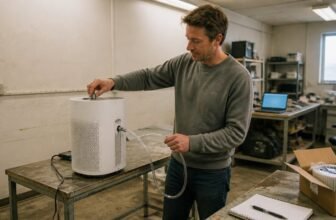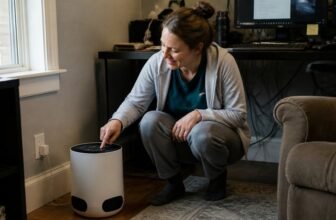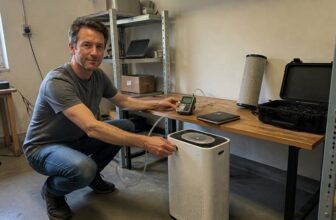
An air purifier staying on low fan speed usually points to a sensor reading the wrong signal, not a broken motor. The honest answer depends on whether the unit is near a heat source or a dirty sensor.
This article covers how to reset the unit, clean the sensor opening, and adjust placement for better airflow. You will also learn when a simple replacement part may solve the issue.
Match your purifier to the room size and the specific pollutant you want to tackle.
Air Purify Highlights
- Press the hood’s manual HIGH button or shift the pan to bypass a sensor misread.
- Flip the breaker off for 60 seconds, then on, to reboot stuck Auto logic.
- Clean the keypad sensor slit with degreaser and a swab to remove grease film.
- Turn off the Auto Breeze delay timer in settings or app to stop the low hum.
- Replace the heat sensor or call a technician if cleaning and reset fail.
Why Auto Mode Stays Low With a Hot Pan

Auto mode on your range hood stays at LOW when a hot pan keeps the sensor within its simmering detection range. The sensor near the keypad reads radiant heat, not steam, so it treats a warm induction cooktop as gentle cooking and never raises the fan speed.
Residual heat from a previous batch can also keep the sensor triggered, so letting the cooktop cool for a few minutes may restore normal auto behavior. For immediate results, move hotter pans to rear burners or switch the hood manually to HIGH.
Reset the Hood by Cutting Power at the Breaker
Cutting power at the breaker resets the hood’s control board when Auto mode stays stuck at low speed. This forced restart clears the glitchy logic that keeps the fan humming at minimum suction instead of responding to the cooktop. To perform the power cycle, flip the dedicated circuit breaker to OFF, wait 60 seconds, then flip it back ON and wait 10 seconds for the board to boot.
Test Auto mode with a cold cooktop after the reset; it should idle or stay OFF. A full 60 second wait matters because a rushed reset may not clear the sensor memory.
If low speed returns after the hard reboot, the cause is grease buildup rather than firmware. For now, the free reset avoids a service call, and cleaning the fan and filters remains the follow up step if the problem persists.
Clean Grease That Keeps Auto Mode at Low Speed
Grease buildup on the heat sensor or keypad blocks the temperature signals your range hood sends to the control board. A quick wipe with a degreaser on that sensor area often restores proper fan speeds.
Grease Film Insulation
A grease film on the range hood control panel can insulate the heat sensor and slow its response to cooking heat. That delay skews the condensation readings and leaves the fan stuck on low during a sear.
Clean the control panel weekly with a degreaser spray, then wipe it with a microfiber cloth. Focus on the sensor slit near the keypad, rinse with a damp cloth, and dry completely.
This five minute cleaning routine prevents a $150 service call caused by a greasy fingerprint. A bare sensor keeps the auto mode working as intended, without any special tools or spare parts.
Sensor Blockage Buildup
The panel wipe from earlier only handles the surface, since the sensor slit near the keypad collects grease over months and that residue builds up like a stubborn coat of armor. This buildup interferes with the sensor thermal mass, so heat from your pan takes longer to reach the sensing element and the board reads temperatures as cooler than they really are, which keeps auto mode stuck on low fan speed even during a sear.
That same layer also blocks the tiny airflow vents meant to cool the area, so cleaning the slit properly with a cotton swab dipped in degreaser and wiping it dry is a five minute fix. If the lag persists after that, the sensor is likely failed and a real service call is needed.
Disable Auto Shut-Off Timer to Stop Low-Speed After Cooking
Set your range hood’s auto shut off timer to zero if you want it to stop running after cooking. The setting is usually labeled “Auto Breeze” or “delay off” and lives in the hood’s settings screen or companion app, not on the main fan buttons.
Open that menu, find the run time option, and reduce it to zero or disable the feature entirely for manual control. Save the change, and if the hood does not respond, cycle the power quickly to apply the new setting.
This stops the low speed hum as soon as you turn off the fan. Your hood is not faulty; it is simply programmed to keep moving air for a set period, and you can override that behavior with a few menu taps.
Why Auto Mode Still Sticks After Resets and Cleaning?
A stubborn low speed lockout after a reset and cleaning usually points to sensor calibration drift, a faulty control board, or a grease film in hard to reach spots. The heat sensor can lose accuracy over time and read a cold cooktop as slightly warm, which keeps the fan at its lowest setting.
A defective control board may ignore the sensor’s true readings entirely. An invisible grease film can insulate the sensor and keep it stuck in simmer mode, even after your cleaning effort.
Sensor Calibration Drift
The low speed that persists after cleaning and resetting points to a hardware fault, not a control setting. The heat sensor has drifted out of calibration, so it reads the cooktop as warmer than it actually is and keeps the fan running.
Drift builds up over years as grease vapor bakes onto the thermistor, and thermal lag makes the problem worse when the sensor sits farther from the cooktop surface. Cleaning cannot restore accuracy, because the drift is physical; only replacing the sensor recalibrates the reading.
- Drift accumulates from years of grease vapor baking onto the sensor.
- Thermal lag worsens when the sensor sits farther from the cooktop surface.
- A replacement sensor costs roughly $15 to $30, plus an hour of labor.
- Cleaning will not restore accuracy; only physical replacement recalibrates.
If resets have already failed, plan for a new sensor rather than another cleaning pass. That lingering low fan speed is bad hardware, and it will not correct itself. This is separate from filter replacement or airflow issues, so check the sensor first when the unit behaves this way. Consider the sensor as part of routine maintenance, just like a prefilter or activated carbon change, if you want to avoid the same ghost in the future. A new thermistor should bring the fan response back in line with the actual cooktop temperature, and you can verify the fix by watching the fan drop to idle once the surface cools. No amount of resetting will substitute for that physical replacement.
Control Board Faults
A control board reset only masks the problem when the air purifier sticks in auto mode, because the fault usually lives in the board’s aging memory rather than in the grime you cleaned away. A hard breaker flip clears transient errors, but corrupted temperature lookup data requires a firmware update that some manufacturers charge for.
If the board’s relays weld shut, no reset helps, since that is a hardware failure and not a software issue. A reset buys you a minute of hope, but repeated sticking means the logic board is failing and should be replaced unless a free firmware update is available.
- Fan stuck low, no heat: relay or triac failure, replace the control board.
- Resets work then reoccur: flash memory corruption, update firmware through the app.
- Auto mode ignores sensor: dead thermistor input, solder a bridge or swap the board.
Persistent Grease Film
Resets wipe the control board’s memory, but they do nothing for the grease film that sits on the heat sensor like a stubborn houseguest. That invisible layer insulates the sensor, making it read cooler than reality, so auto mode clings to low fan speed. Grease film removal isn’t optional; it’s the fix you skipped.
Wipe the sensor with a degreaser, not just soapy water. Use a microfiber cloth to avoid scratching.
- Clean monthly if you fry often; bacon counts.
- Apply a vapor barrier coating to prevent future buildup.
That coating costs about $10, lasts six months, and saves you from “why is it still stuck?” rage. After cleaning, test with a hot pan. If it still stalls, the sensor’s done; replace it.
Scrub the film, coat it, and auto mode behaves.
Call a Pro to Replace Sensor or Control Board
Every fix has a limit, and when your range hood refuses to leave LOW on a cold cooktop, that limit is the sensor or control board. A thermistor, the temperature sensing component, typically outlasts the motor, but its sensor lifespan shrinks when grease corrodes wiring or heat cycles fatigue solder joints.
If cleaning and a breaker reset fail, a pro’s multimeter will confirm the culprit. Replacement runs $150 to $350 for parts plus labor, but warranty coverage often swallows that cost if your hood is under five years old.
A burnt smell or flickering display means cut power immediately, because that signals a board frying rather than a quirk. DIY gambles here risk a $500 control module, so call a certified tech and verify the part number.
This repair affects airflow reliability and filter replacement cycles, since a faulty sensor can force continuous fan operation and increase power consumption. A professional fix keeps your auto mode behaving and preserves the unit’s clean air delivery rate for the room volume it serves.
Frequently Asked Questions
Will Manual Mode Override the Stuck Low-Speed Fan?
Manual override lets you select medium, high, or boost even when the low speed setting is stuck. However, the fan will not turn off until the motor cools down.
This protective logic overrides your command to prevent heat damage. You can still redirect airflow while the unit runs at a higher speed, but you must wait for the residual heat to dissipate before powering down.
Does Turning off Auto Mode Stop the Fan Immediately?
No, turning off auto mode does not stop the fan immediately. The fan limit switch can retain residual heat signals that keep the blower running briefly.
A manual override usually halts the automatic logic first, but a capacitor discharge may be needed to reset the control board’s memory if the fan keeps cycling. For any electrical reset, follow the manufacturer’s instructions and disconnect power safely before touching internal parts. If the fan continues after a reset, contact a qualified technician for diagnosis.
How Long Must I Wait After Cooking Before Resetting?
The cooldown wait is typically 20 to 30 minutes, but you must confirm the exact duration in your owner’s manual. The thermostat reset only happens once internal temperatures return to normal, which then triggers the auto off response.
If you skip this cooldown, the sensor will keep the fan locked in low speed operation. This low speed mode protects the unit, yet it prevents a fresh startup cycle until the components cool.
Allow the full cooldown period after any cooking session. Patience here avoids a stuck sensor, and it keeps the auto off feature working as designed for your next use.
Can a Cool Kitchen Trigger the Auto Low-Speed Response?
No, a cool kitchen cannot trigger the auto low speed response. The temperature sensor only reacts to actual heat from the cooktop surface, not surrounding air temperatures or drafts.
Cold air from an open window or air conditioning will not influence the thermostat trigger. The sensor requires genuine surface warmth to activate the automatic fan setting, so a chilly room alone leaves the purifier in its current mode. If your unit is cycling unexpectedly, check for a warm pot or pan nearby before exploring other causes.
What Is the H4 Default Setting on My Automatic Hood?
The H4 default is the preset automatic fan speed on AEG hoods, acting as a mid level baseline for normal cooking. It seeks minimum airflow until heat rises, then it climbs in response to temperature changes.
This auto threshold logic means the hood stays quiet during gentle simmering and only boosts power when needed. For everyday use, leave it on H4 to balance noise and extraction.
Select a lower setting for brief tasks like boiling water, and a higher one for heavy frying or searing. The H4 default works best when you want hands free operation without constant adjustments.
Rounding Up
If the unit still runs at low speed only, skip the guesswork and call a qualified technician to inspect the control board and sensor together. This saves you from replacing a part that was never broken in the first place.
The advice changes if you have already cleaned the sensor and verified power is stable, since a failing motor can mimic the same problem. Follow the manufacturer’s instructions for any DIY checks, and let the pro handle electrical testing.
End with this: a service call confirms the exact fault before you spend money on parts. That condition, a confirmed diagnosis, is what truly decides your next step.