Carbon filters stop working early, not because they are full, but because the active zone reaches the outlet first. This is the break through point, and it decides how long your air purifier truly lasts.
The timeline depends on your specific conditions, mainly pollutant load and airflow through the unit. Heavier smoke or constant pet odors will push the filter to failure in weeks instead of months.
This article explains why the top of the carbon bed stays fresh while the bottom gives out, and how heel residue throws off every estimate.
Choose an air purifier sized for your room and the pollutant you actually need to tackle.
Air Purify Highlights
Breakthrough happens when the mass transfer zone moves all the way to the filter outlet.
Slow pore diffusion stretches that zone, so contaminants leak out before you expect them to.
Replace the filter before full saturation because its upstream carbon still has capacity left.
Test with your actual water so you can predict when the saturation front will arrive.
The zone leaves saturated carbon behind and fresh carbon ahead as it keeps moving forward.
Why Carbon Breakthrough Happens Before Full Saturation
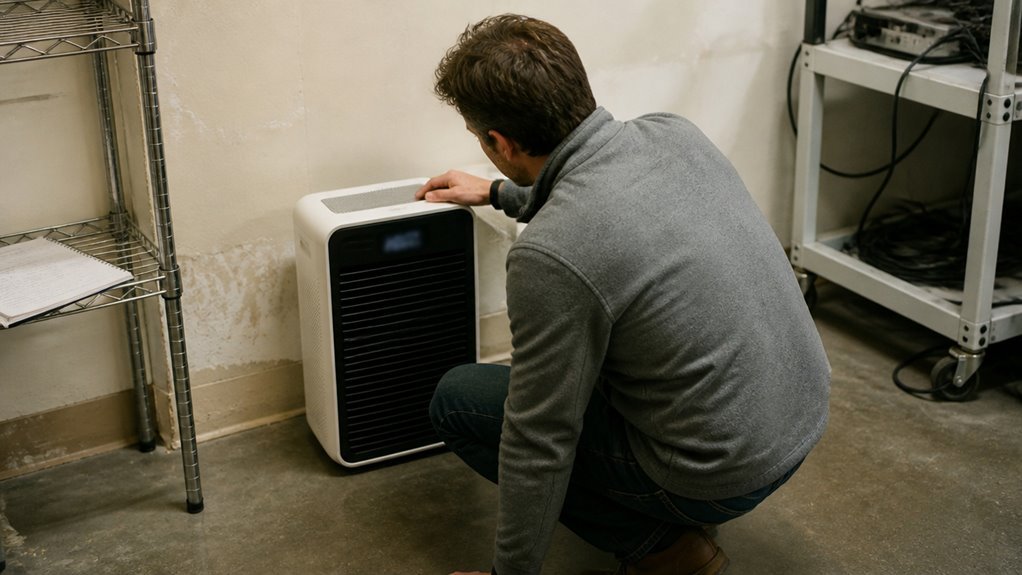
Activated carbon filters remove pollutants by adsorption, but the process happens in a narrow band called the mass transfer zone (MTZ). This zone crawls forward as air flows, leaving clean bed depth ahead and saturated media behind.
Breakthrough occurs when the MTZ reaches the filter outlet, even though upstream carbon still holds capacity. Pore diffusion kinetics slow the journey into tiny pores, stretching the zone and forcing early leak.
The race between airflow and adsorption chemistry often ends with an early breakthrough, so you replace the filter well before it is fully saturated. This trade off is the cost of effective odor and volatile organic compound removal in an air purifier.
How the Mass Transfer Zone Moves Through a Fixed-Bed Carbon Column
The mass transfer zone, the active band where carbon adsorbs contaminants, advances through a fixed bed like a slow wave rather than staying in place. Its leading edge contacts fresh carbon while its trailing edge leaves fully saturated media behind.
Measuring the zone’s width, often just a few inches for volatile organic compounds, tells you how thick that active band is. Sampling the bed at different heights reveals the saturation front moving steadily toward the outlet.
When the zone’s bottom edge reaches the column’s end, breakthrough occurs and untreated air passes through. For sizing a carbon filter, knowing this width helps you stack enough media so the zone does not exit early.
Respect the march of the mass transfer zone during filter replacement planning. A proper bed depth profile, taken from ports at various heights, shows exactly where the front sits at any time.
Predict Breakthrough Time From Flow Rate, Carbon Weight, and Concentration
Predicting breakthrough time starts with a simple arithmetic relationship: divide the mass of carbon in the bed by the product of flow rate and influent concentration to get a first order estimate of media life. Normalizing flow rate converts gallons per minute into pounds of contaminant per day, which feeds directly into the carbon usage rate, or how many pounds of carbon are consumed daily. For a typical VOC system, a 1,000 pound activated carbon bed at 100 gpm with 10 ppm influent might last a few weeks before the leading edge breaks, assuming ideal conditions. Real beds have quirks, but start here. A lower carbon usage rate means longer life, so reduce feed volume or cut concentration, and the math will hold. This estimate does not yet account for the spent carbon heel that remains in the bed, so treat it as a starting point for filter replacement planning.
Why Heel Build-Up and Competitive Adsorption Ruin Saturation Estimates
Heel heterogeneity and competitive adsorption distort saturation estimates, so the arithmetic rarely matches field performance. Heel heterogeneity leaves uneven residue in micropores after regeneration, and each grain of carbon then holds a different amount of trapped material, which makes any single capacity number unreliable.
Competitive adsorption occurs when multiple chemicals vie for the same pore space, and a heavier molecule can displace a lighter one, causing early breakthrough and a premature saturation reading. The bed may appear full, but the adsorbed mass has simply rearranged rather than reaching true capacity.
Because both effects depend on your specific contaminant mixture, only testing with your actual water or air composition can validate the saturation estimate. Without that test, you risk budgeting for a carbon bed whose performance is already overstated.
Frequently Asked Questions
Can Carbon Be Reused After Reaching the Break-Through Point?
Yes, carbon can be reused after the break through point. Thermal reactivation burns off the trapped contaminants, which restores its ability to adsorb gases and odors for another round of use.
This process happens after the carbon is saturated, so the material gets a renewed function for later adsorption cycles. Some capacity loss can persist, but reactivation remains a practical way to extend the life of your carbon media.
Follow the manufacturer’s reactivation guidelines to keep the process safe and effective.
How Often Should Carbon Beds Be Replaced in Practice?
Carbon bed replacement intervals range from several months to a few years in real world use. Your specific change out schedule depends on the air volume being treated and the concentration of gases or odors present.
Use breakthrough curve modeling and the properties of the specific adsorbate to set the replacement date. This approach ensures you keep the carbon working for pollutant control while staying compliant with your operational targets.
Does Higher Flow Rate Always Mean Faster Breakthrough?
Higher flow rates do not always mean faster breakthrough, because the adsorption process and flow regime control performance. The mass transfer zone depth stays roughly the same even when velocity changes, so speed alone does not shorten saturation time.
Faster airflow can cut contact time with the media, but the filter’s equilibrium capacity often sets the limit for how quickly it fills. Run the fan at a moderate speed if you need steady removal over a longer period. Match the airflow to the pollutant load in the room, not to a desire for quicker results.
What Is the Typical Lifespan of Activated Carbon?
Activated carbon lifespan ranges from weeks to years, with contaminant loading, flow rate, and carbon bed depth as the deciding factors. Heavier gas loads and higher airflow exhaust the media faster, while deeper beds extend service time.
Exhaustion occurs at breakthrough, when the mass transfer zone reaches the bed’s outlet. Watch for odor return or a rising sensor reading as practical signs the carbon is spent. Replace the media once breakthrough happens, since it will no longer adsorb volatile organic compounds effectively.
How Do You Measure Heel Buildup in a Carbon Bed?
Heel buildup is measured by extracting carbon cores from the bed at set intervals to analyze how much contaminant mass has adsorbed. This process, called bed profiling, requires careful timing of the core samples to line up with the breakthrough curve.
This correlation distinguishes reversible from irreversibly retained compounds, which is what separates temporary loading from true accumulated heel. The key is sampling at multiple depths to see where the adsorption front has traveled, giving you a spatial map of the buildup. Use the breakthrough data to schedule your sampling, so you capture the bed before and after the compounds begin to pass through.
Rounding Up
Check the filter’s remaining capacity indicator if your unit has one, and replace the media before that alarm sounds. Smaller rooms with steady pollution loads will exhaust the bed faster than spacious, well ventilated areas, so adjust the schedule based on your usage. For any cleaning, reseating, or disposal steps, follow the manufacturer’s instructions for your specific model. Treat the replacement date as a firm deadline, not a suggestion, and plan for early changeouts when smoke or dust levels run high.