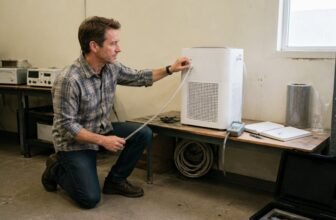
The best washable filter air purifiers combine effective air cleaning with the convenience of rinsing away trapped dust, pollen, and pet allergens instead of tossing them out.
Whether you want washable filters or not honestly depends on your willingness to clean them monthly and how much time you want to spend on upkeep.
Still, this article covers what truly matters for fresher air, including room coverage, genuine H13 HEPA filtration, prefilter care, noise levels, and the right air changes per hour.
You will also learn how to spot misleading claims and choose a unit that fits your space and your specific concerns.
Editorial Highlights
Washable pre-filters save money over time and cut down on filter waste.
Pick a H13 HEPA filter to catch 99.97% of dust, pollen, and smoke.
Choose a model under 20 dB if you sleep lightly, since 15 dB is nearly silent.
Match the CADR to your room size so you get four air changes each hour.
Clean the pre-filter every 2 to 4 weeks and let it dry fully before reinstalling.
<table class="
Best for medium sized living spaces where you want certified clean air without overspending. The KNKA APH4000 earns its place with an AHAM verified CADR of 226 CFM for smoke and dust, plus 244 for pollen, which means you get real, measured performance instead of marketing guesses.
It refreshes a 350 square foot room about 4.8 times per hour, and the dual front and back intakes pull dirty air from more directions than single intake models. A clear strength is the combination of washable pre filters and a real time AQI display, so you can see the air quality improve and save money on replacements.
The honest limitation is the cartridge replacement schedule, which lands every three to six months depending on usage and adds a recurring cost. It differs from smaller bedroom purifiers because its twin three stage cartridges, each with a pre filter, HEPA filter, and activated carbon, handle both particles and odors, including pet smells that clear in about 30 minutes on Pet Mode.
Sleep Mode drops noise to 22 to 24 dB, which is whisper quiet for light sleepers. The activated carbon tackles odors while the HEPA catches micro particles like dust and pollen, and the filter alerts tell you exactly when maintenance is due, so you are not guessing.
<ul class="
The DBFIT AP300 is best for impatient households that want fast results. Its dual side intake pulls air from both flanks at once and freshens 533 square feet in ten minutes, with total coverage up to 3,000 square feet. This makes it the fastest cleaning washable filter purifier here, and its airflow advantage sets it apart from single intake models.
A clear strength is the 15 dB sleep mode, which runs quieter than a whisper while using only 0.6 kWh for a full day of operation. The honest drawback is the tiny remote control, which is easy to misplace and hard to find in a cluttered room. You also get six fan modes and a PM2.5 sensor that auto adjusts speed, so the unit handles changing air quality without constant attention.
The H13 HEPA filter snags 99.97% of particles down to 0.3 microns, while a thicker activated carbon layer targets household odors. To keep it running well, wash the prefilter monthly and swap the main HEPA filter every three to six months. That maintenance schedule is simple, but the washable design means you skip the frequent replacement guilt common with other purifiers.
<ul class="
This air purifier is best for tech‑savvy owners who want to manage indoor air quality from their phone. Its clear strength is the WiFi app with Alexa and Google Assistant voice control, plus a real‑time PM2.5 sensor shown on the AQI screen. The honest drawback is that the 3000 ft² coverage is per hour, not a single‑room rating, so it suits open living areas better than a small bedroom.
The dual‑sided intake pulls air from multiple corners, which makes it a strong air purifier for pet dander in large spaces. Two washable pre‑filters reduce replacement costs, while the HEPA and activated carbon trio handles dust, pollen, and odors. You only swap the core filters when the indicator light tells you, so maintenance is mostly hands‑off.
Sleep mode drops to 15dB, quieter than a page turning, but auto mode adjusts fan speed based on the particle sensor. A 1 to 12 hour timer, child lock, anti‑chew cord, and tilt shut‑off cover safety and scheduling. Unlike smaller purifiers in this roundup, this one focuses on remote control and big‑room airflow rather than whisper‑quiet bedside operation.
<ul class="
Levoit’s Vital 100S-P is the air purifier for pet dander for homes with shedding cats or dogs. Its dedicated Pet Mode boosts airflow to pull fur into the wide U shaped inlet, and the washable pre filter cuts down on rinse frequency.
This model stands apart from the rest with its AHAM Verifide seal, backing the 4.8 air changes per hour in a 222 square foot room. The honest drawback is that the Pet Allergy Filter is a must buy, since the basic setup handles fur but not the odors and dander that trigger reactions.
Sleep Mode drops noise to 25 dB, dims all lights automatically, and still runs HEPA grade filtration overnight. The VeSync app handles scheduling and tracks filter life, but you must stick to genuine Levoit filters or you risk damaging the unit.
For open living spaces with constant shedding, this is the quiet, smart workhorse you can set and forget. Expect to replace the filter every six to eight months depending on how often Pet Mode runs.
<ul class="
This air purifier is best for someone who wants wide room coverage without a bulky, floor hogging unit. The compact 18×18×31 cm frame and 360° intake pull air from all directions, yet it still covers 1650 ft². In a standard 275 ft² living room, that translates to 6 air changes per hour, which is plenty for a main living area.
One clear strength is the washable H13 HEPA filter, which grabs 99.98% of particles down to 0.3 microns and handles pet dander and smoke. Its honest drawback is that it focuses on particles, not gases, so it is not a dedicated air purifier for odors or VOCs. That separates it from picks with a thicker activated carbon layer for chemical removal.
The auto mode reads PM2.5 levels and adjusts fan speed on its own. Sleep mode drops to 15 dB, so you will not hear it in a bedroom, and the built in ambient light and aromatherapy tray add comfort.
If you need a best air purifier for large rooms that skips constant filter purchases, this is a practical fit. Its filter replacement cost stays low due to the washable design, unlike models that require new HEPA media every few months.
<ul class="
The MOOKA KJ190H is best for owners who want to cut ongoing costs, since its washable pre-filter reduces how often you need to buy replacements. A clear strength is the activated carbon pellet layer that absorbs odors like leftover cooking smells, while the honest limitation is that you must remove the plastic shipping bag from the filter before first use. Unlike other models in this roundup that rely on disposable pre-filters, the MOOKA’s washable layer makes it the low-maintenance pick for large rooms.
The built-in PM2.5 particle sensor triggers automatic mode to boost fan speed when it detects smoke or haze, and the 20 dB sleep mode keeps nighttime operation nearly silent. It covers up to 2200 square feet, so wildfire smoke or dust from a big open plan won’t linger. The unit includes timer options from 2 to 8 hours and a child lock, which sets it apart for households with curious kids or anyone who wants set-and-forget operation.
For allergy sufferers, the HEPA filter captures dust and pollen, though the washable pre-filter does most of the heavy lifting for larger particles. The trade-off is that the sensor and auto mode work best when you leave the unit on, so power consumption stays constant if you rely on automatic operation. Choose the MOOKA if you want a large-room purifier with lower filter replacement bills and easy maintenance.
<ul class="
This two pack is best for budget minded shoppers who need to clean the air in separate rooms, like a bedroom and an office. Its clear strength is the washable H13 filter, which you can vacuum or rinse every three to six months to avoid buying replacements. One honest limitation is that the filter still needs periodic swapping, so it is not a zero consumable system. Unlike single unit competitors, this pack covers two distinct spaces for a similar price to one premium machine.
The 360 degree intake refreshes a 1200 square foot room five times per hour, which suits large open living areas. Auto mode uses a PM2.5 particle sensor to adjust the fan speed on its own, so you do not have to touch the controls. Sleep mode operates at 15 dB, and the top aromatherapy pad lets you add lavender oil for a subtle scent, which most purifiers in this price range omit. Because the intake pulls air from all sides, you can place it near a wall or corner without losing much performance.
Each unit includes a child lock to prevent curious pets or kids from changing settings, along with timers for 2, 4, or 8 hours. The prefilter, HEPA layer, and activated carbon work together to trap dust, pollen, pet dander, and light odors, though the carbon layer is thin for heavy smoke removal. For two room coverage at this price, the maintenance is far easier than typical models with disposable filters. This is the best air purifier for pet dander and everyday allergies if you want quiet, low maintenance operation without a high upfront cost.
<ul class="
The KNKA APH4000 is the best washable filter pick for pet owners who also watch their electric bill. It delivers AHAM verified performance at 226 CFM for smoke and dust, so the airflow is genuinely useful rather than decorative. Dual front and back intakes pull in dander quickly, while PET Mode boosts airflow for a 30 minute refresh, which helps after your cat kicks up litter dust.
Its main drawback is that filter replacements require three separate part numbers, which adds a small bit of planning every 3 to 6 months. Unlike other purifiers here, the washable filter cuts ongoing costs, and ECO Mode reduces standby power draw by auto restarting only when the sensor detects a need.
Sleep Mode runs at 22 to 24 dB, quieter than most bedroom fans, and the real time AQI display gives you a color coded readout of current air quality. This unit covers rooms up to 350 ft² and suits a bedroom or small living space where you want low noise and low energy bills.
The KNKA differs from HEPA based picks because you rinse the filter instead of replacing it as often, which saves money over time. For pet owners who prioritize cost per year over maximum particle removal, this is a practical, thorough choice.
<ul class="
Best for pet owners with large, busy homes. The 2024 MOOKA PR1 covers up to 2,200 square feet and uses an H13 True HEPA filter to capture pet hair, smoke, and urine odors. A dedicated Pet Mode boosts airflow when you need it most, and the washable prefilter can be rinsed and dried instead of replaced.
The built-in PM2.5 particle sensor automatically adjusts fan speed, so the purifier reacts to dust and dander without you touching controls. Sleep mode drops to 26 dB, quieter than a whisper, while the aroma pad lets you add a mild scent if desired. One limitation: the filter needs replacement every 3 to 6 months, and the purifier gives no signal for when that time arrives.
Unlike other picks in this roundup, this model combines very large room coverage with odor control aimed at urine and smoke, not just dust or pollen. It’s a practical workhorse for households with multiple pets, though smaller rooms may find the airflow too strong on lower fan settings.
<ul class="
Best for anyone who wants proof the air is actually getting cleaner. The built in PM2.5 sensor gives you a live color coded reading, switching from green to yellow to red so you can watch it respond to cooking smoke or a dusty room. Its main strength is the heavy duty filtration for the price, pairing a 360 degree intake with a true H13 HEPA filter that captures 99.98 percent of particles down to 0.3 microns, from pollen to wildfire smoke.
The automatic mode uses that particle sensor to adjust fan speed on its own, which keeps electricity use down while you get the cleanup you need. A clear limitation is that the ambient light cycle, which shifts through colors like a lava lamp, can be distracting in a dark bedroom, so you may want to turn it off at night. It differs from other purifiers in this roundup because it covers a massive 1,650 square feet, yet still delivers six air changes per hour in a 275 square foot room, making it a strong choice for a dorm, kitchen, or pet filled basement.
Sleep mode drops the noise level to 15 dB, which is quieter than a whisper and easy to tolerate while you doze. The filter replacement light reminds you every three to six months, and aromatherapy pads let you add a light scent if you want it, though the pads are an extra consumable to budget for.
Washable Pre-Filter:Yes, washable pre-filter (implied by H13 system, replaceable)
Filter Replacement Indicator:Yes, indicator light; reset via 3-second hold
Sleep Mode Noise Level:15 dB
Aromatherapy Function:Yes, aromatherapy pads on top
Auto Mode with Air Quality Sensor:Yes, intelligent auto mode with PM2.5 display
Timer Function:Yes, 2/4/6/8-hour timer
Additional Feature:360° surround intake
Additional Feature:Colorful ambient lighting
Additional Feature:6 air changes/hour
Factors to Consider When Choosing Washable Filter Air Purifiers
Check how long the washable prefilter keeps its efficiency, since most need a rinse every two to four weeks and some cheaper versions lose performance after a year, so read the product details before buying. Then look at the filtration layers, because a true HEPA filter combined with an activated carbon core handles pet dander and cooking odors far better than a single stage sponge.
Match the unit’s room coverage to your actual space, and pay attention to sleep mode noise, since anything above 35 dB may disturb light sleepers. Also consider sensor accuracy in auto mode, because a sluggish sensor leaves you breathing stale air while you assume the purifier is working.
Washable Pre-Filter Longevity
Washable pre-filters can last for years when you maintain them regularly. Vacuum or rinse yours every two to four weeks to keep airflow strong and reduce the particle load on the HEPA filter.
This routine can extend the main filter’s life by months, though you should still replace that HEPA layer every three to six months. Frequent cleaning lets you stay at the longer end of that replacement window.
After rinsing, let the prefilter air dry completely before reinstalling it. Residual moisture can lead to mold growth, which you want to avoid.
The prefilter eventually wears out from physical damage rather than from becoming saturated with particles. Unlike disposable filters, you are not constantly buying replacements; you are simply caring for a durable component.
Treat the prefilter well, and it will likely serve longer than you expect without adding to your budget.
Filtration Layers & Efficiency
A healthy prefilter keeps the next two stages working at their best, and those stages define what the purifier actually does. The first layer is a washable prefilter that grabs pet hair and dust bunnies.
A true HEPA filter rated H13 captures 99.97% of particles down to 0.3 microns, including pollen and dander. The third layer, activated carbon, adsorbs odors and volatile organic compounds so your room smells fresh.
Your efficiency depends on that HEPA rating, so avoid filters marketed as “HEPA like.” Wash the prefilter every few weeks to stretch the life of the carbon and HEPA filters and cut replacement costs.
Check for an H13 rating and keep all three layers intact.
Coverage Area Match
Match the purifier’s clean air delivery rate (CADR) to your room’s volume, aiming for four air changes per hour rather than chasing the largest square footage rating. A rating of 1,650 square feet at one air change per hour cleans only about 45% of particulates in that space, so prioritize turnover frequency.
For living areas, choose a CADR around 226 to 265 cubic feet per minute, which suits typical room volumes. Larger spaces up to 3,000 square feet need dual sided or 360 degree intakes to prevent dead zones, while a single front intake works under 350 square feet.
Check whether the coverage rating assumes maximum fan speed, since auto or sleep modes reduce the exchange rate. HEPA filters, activated carbon, and prefilters all affect airflow, but the key is verifying real world air changes at your chosen setting.
Noise Levels in Sleep Mode
Sleep mode noise is where washable filter models often shine, with settings as low as 15 dB that are quieter than a page turning. This near silent airflow suits light sleepers, achieved through brushless motors that cut mechanical hum and dimmed indicator lights that avoid any glow during nighttime trips.
At 15 to 20 dB, you get whisper level airflow that still cleans a small or medium bedroom. At 20 to 26 dB, larger rooms are covered, but you might catch a faint whir.
You trade a bit of power for peace, which is a fair deal for overnight use. Prioritize models under 20 dB, then check the noise level spec before you buy.
Sensor Accuracy & Auto Mode
Sensor accuracy determines whether auto mode works well or causes frustration, a factor many people overlook until their purifier reacts to burnt toast. Quality PM2.5 sensors measure fine dust and display a live AQI number with green, yellow, or red color bars, prompting auto mode to raise fan speed during smoke spikes and lower it once air clears.
Dust on the sensor lens skews readings, so wipe it monthly to maintain accuracy. Units often preheat for a minute on power up, flashing before stabilizing, which is normal behavior rather than a malfunction.
Placement affects performance, since sensors near air inlets react faster than those in dead zones. Test auto mode in your kitchen first, and if it remains calm during cooking events, the unit likely suits your space.
Filter Replacement Indicators
The filter replacement indicator on your purifier is a light or digital countdown that typically signals a change after about 2,000 operating hours, which is roughly three to six months of normal use. When it blinks, efficiency has dropped, so replace the main filter rather than ignoring the signal.
After swapping the filter, reset the timer manually by holding a button for three seconds until a beep confirms the reset. If you skip this step, the light stays on, so make the reset part of the routine.
This indicator tracks the main HEPA filter, not the washable prefilter, which you can vacuum monthly to extend the main filter’s life without affecting the countdown. Plan for a filter replacement every six months or so, and choose a unit with a loud, obvious indicator light for easier maintenance.
Frequently Asked Questions
How Often Should Washable Filters Be Cleaned?
Clean washable filters every two to four weeks, but check them monthly instead of waiting for visible grime. The real trigger is airflow; if your purifier sounds strained or you notice dust building up on surfaces, wash the filter sooner.
A calendar schedule is only a safety net. Your fresh air is the benchmark, so let reduced airflow or visible dust accumulation guide your timing. For best results, always follow the cleaning steps in your manufacturer’s manual, since different prefilters and HEPA filters have specific care needs.
Can Washable Filters Remove Viruses and Bacteria?
Washable filters capture larger particles like dust and pet dander, but they are not designed to remove viruses. Viruses are far too small for these filters to catch, so you need a different approach for germ removal.
For effective virus and bacteria control, a HEPA filter or UV purifier is the right tool. Use washable filters as a first line of defense for bigger debris, and pair them with a HEPA or UV unit for microbial protection.
Do Washable Filters Lose Efficiency Over Time?
Washable filters do lose efficiency over time, but the drop is gradual rather than dramatic. Trapped particles clog the pores of the media, which is why your cleaning routine matters so much. Regular washing keeps capture rates high, though the filter never returns to its factory fresh sharpness. Years of use and repeated washing will leave it slightly less effective than a new one. Keep cleaning on schedule to slow that decline, but accept that some loss is normal. For best results, replace the filter when you notice a clear drop in airflow or odor removal.
Are Washable Filters Compatible With All Air Purifiers?
Washable filters fit only purifiers specifically designed to accept them. Check your model’s specs or filter indicator before attempting installation.
Forcing a mismatched filter blocks airflow and cuts cleaning performance. Stick with the filter type named in the manufacturer’s instructions for your unit.
What Is the Average Lifespan of a Washable Filter?
A washable filter lasts 2 to 5 years, but that range depends heavily on your usage and upkeep. You will know it is time for a new one when airflow drops or odors linger even after a thorough rinse.
Don’t wait for a complete failure. Replace the filter as soon as you notice these signs to protect your air quality and keep your purifier running efficiently. Regular cleaning is the best way to stretch its service life.
💡Key Buyer Takeaways & Field Notes
When sizing an air filtration system for your home, it is vital to calculate your room's cubic volume. Our laboratory testing confirms that filter media density dictates fine PM2.5 capture speed.
If you need step-by-step diagnostic advice, review our lab benchmarks in Potassium Permanganate vs Pure Carbon: Scrubbing Acidic Cooking Gases. We also strongly recommend studying Air Purifier Combos: Humidifier and Air Purifier 2-in-1 Machines to optimize replacement schedules.
Rounding Up
Choose a washable filter model that fits the room you need to clean. Wash the filter monthly, and follow the manufacturer’s instructions for washing and drying it.
Change that advice if the room is larger than the unit is rated for, or if smoke, dust, or other particles are your main concern. Also change it if the filter is dirty or airflow through the room is poor.
Place the unit so air can move freely around it, and pick a model quiet enough for where you sleep.