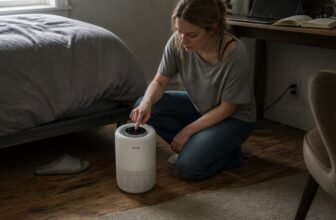
Wondering if a high airflow air purifier is the right call for your stuffy bedroom or pet filled living area? It can be, but only if compact spaces and fast cleanups are your top priority.
This article explains how raw airflow cleans a small room quickly, what that power costs in daily noise, and how often you will need to change filters.
It also covers what you give up, like smart controls, when choosing this type of machine. Match the purifier to your room size and main pollutant for the best results.

Powerful airflow for quick cleaning of small rooms.

Energy-efficient and quiet, ideal for continuous use.

Washable prefilter saves on replacement costs.
See today's best deals onAir Purifiers
Air Purify Highlights
- Choose the Honeywell HPA200 when you need fast whole room cleaning on turbo mode.
- Replace the carbon prefilter every three months because it saturates quickly with dust and odors.
- Expect louder operation at 69.6 decibels, so run it during the day rather than while sleeping.
- Skip this model if you want remote control or app access, since it only has firm press buttons.
- Pick a more energy efficient air purifier like the Coway Mighty if electricity use matters to you.
Is the HPA200 Worth It for Your Room Size?
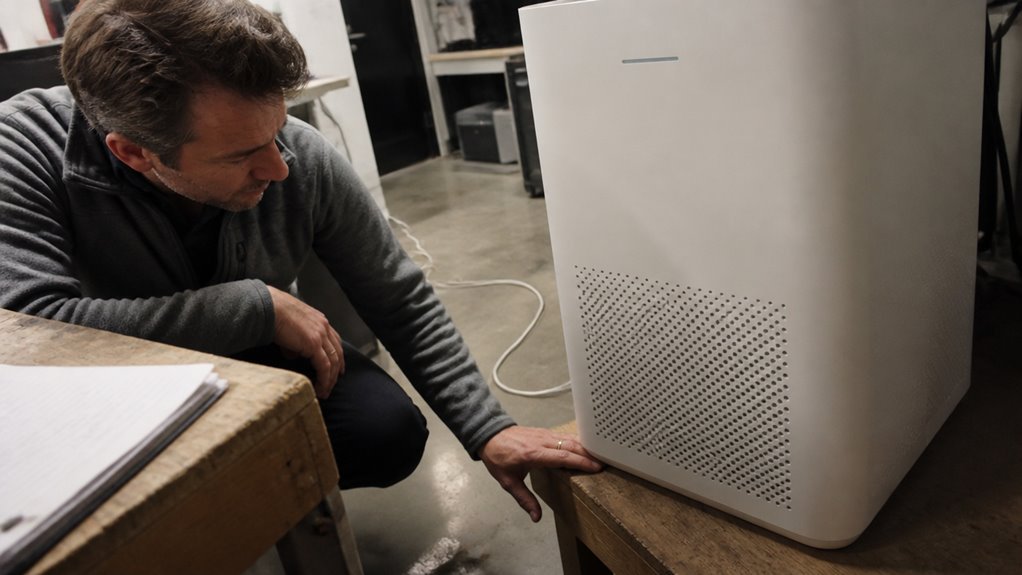
The HPA200’s performance depends on matching it to your room’s square footage, so it works well only in smaller spaces. The Energy Star rating says 310 square feet, but the actual coverage levels tell a different story: turbo mode handles 250 square feet, high drops to 200, medium hits 150, and low manages just 100.
Room sizing is the whole game here. For small rooms from 100 to 150 square feet, the unit performs well even on medium; for mid sized rooms around 200 square feet, it runs fine but you will need high constantly; for large rooms at 250 square feet or more, coverage becomes a stretch.
- Small rooms (100–150 sq ft): Excellent, even on medium.
- Mid rooms (200 sq ft): Fine, but you will run high constantly.
- Large rooms (250+ sq ft): Stretching it, honestly.
Push it beyond 250 square feet, and the HPA200 just recirculates stale air slowly. That outcome is a mismatch, not a failure, so choose it for cozy spaces rather than open living areas.
Where Does the HPA200 Win on Speed and Power?
The HPA200 wins on raw air movement, pushing up to 200 CFM in turbo mode for fast cleanup of a 250 square foot room. That output comes with a loud 69.6 dB noise level, similar to a raised conversation, and lower fan settings are too weak for larger spaces.
This machine suits quick, heavy duty cleaning sessions where speed matters more than quiet operation. Expect to replace the filter set annually at roughly $50 total, which adds a real maintenance cost to the performance advantage.

Keeps your HPA200 performing at peak efficiency.
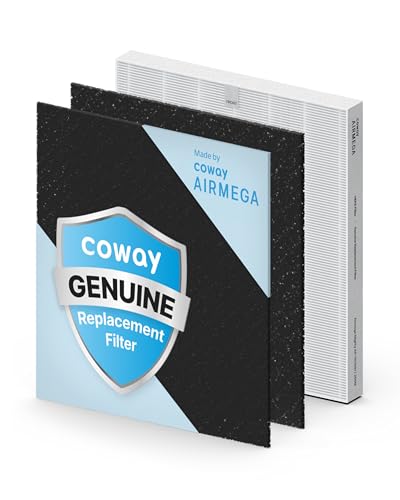
Restores clean air output for your Coway.

Maintains filtration with a washable prefilter.
Browse discountedReplacement Filterson Amazon
How Does the HPA200 Compare to the Coway Mighty and Winix?
The Honeywell model moves more air per minute than the Coway Mighty or the Winix 5500 2, but it finishes a room cleaning more slowly because its carbon prefilter saturates quickly. That prefilter needs replacement every three months, raising maintenance costs to roughly fifty dollars per change, while the Winix uses a washable prefilter that lowers long term spending.
Energy efficiency and noise comfort also favor the rivals. The Honeywell operates at 3.1 cfm per watt, trailing both competitors, and its maximum noise level of 69.6 dB exceeds the Coway’s 66.1 dB at higher output.
Side handles make the Honeywell easier to carry from room to room. Choose it when raw airflow matters more than operating cost or quietness, and pick the other units when you value efficiency and a softer sound profile.
What Are the HPA200’s Real Drawbacks?
The HPA200’s main drawbacks are its filter costs and noise at high fan speed. The prefilter contains activated carbon, so it saturates quickly with pet hair or smoke and needs replacement every three months at roughly $80 per year, which pushes five year ownership costs to $390.
At the turbo setting, noise reaches 69.6 dB, which can drown out a television, while airflow per decibel trails a quieter competitor. Cleaning a room also takes 10 to 20 minutes longer than rival models on dust.
There is no remote or app, only a timer and buttons that require firm presses. With those tradeoffs, this unit suits a small space but not someone who wants quiet operation or easy controls.

Track particle levels to verify purifier effectiveness.

Monitor CO2 to ensure proper ventilation at home.
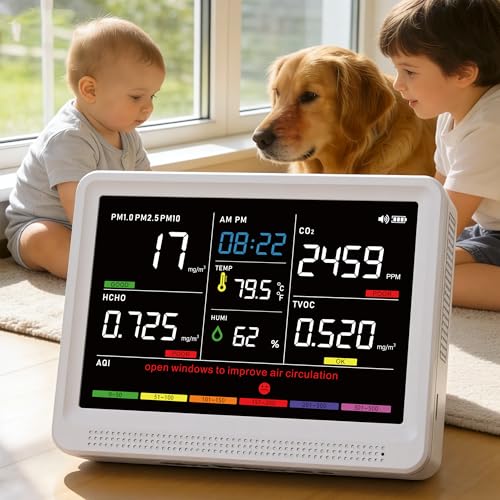
Check humidity and temperature for comfort.
Check discounted items inAir Quality Monitors
Frequently Asked Questions
How Often Must the Carbon Pre-Filter Be Replaced?
The carbon pre-filter must be replaced every three months. This schedule is essential because the filter saturates quickly with large particles, which reduces efficiency if ignored.
Replacing it on time keeps your main HEPA filter working at its best. Watch for reduced airflow or visible buildup on the filter surface as signs that replacement is due.
Can the Control Panel Lights Be Turned off Completely?
Yes, the control panel lights can be turned off completely, which helps create a dark room for light sleep. The off state relies on manual button presses, since the unit has no smart home or app control.
Dimming and full shutdown are handled directly on the device, so you will need to press the button each time you want to change the light level. This works well for bedrooms, but you cannot schedule the lights to turn off automatically.
Does the HPA200 Come With a Remote Control?
No, the HPA200 does not come with a remote control. You will operate the unit directly through its manual controls on the device itself.
Manual operation is the only option, so you will need to be within arm’s reach to change fan speed or power settings. This design limits convenience for wireless management, but it does keep the interface straightforward and dependable for everyday use.
What Is the Annual Energy Cost in Kilowatt-Hours?
The annual energy cost is not a fixed number. It is calculated by multiplying your 376.98 kilowatt-hours by your local electricity rate. Your actual usage will vary based on fan speed and how many hours you run the unit each day. This figure gives you a reliable baseline for comparing operating expenses. Check your utility bill for the exact per kilowatt-hour charge to find your specific annual cost.
Is the HPA200 Energy Star Certified for Efficiency?
Yes, the HPA200 carries Energy Star certification, but that label means it meets a minimum efficiency bar, not that it leads its class. It still filters particles very well, yet its airflow per watt is below average for similar units.
For everyday use, the filtration performance remains strong for dust, pollen, and smoke particles. However, if your main concern is keeping electricity bills low, you may get better efficiency from another certified model. Run it on a lower fan speed when you are away from the room to cut energy use without losing basic filtration.
When sizing an air filtration system for your home, make sure you verify the True HEPA certification grade. Particle counter data demonstrates that filter media density dictates fine PM2.5 capture speed.
To ensure optimal filtration efficiency over time, see our empirical guide on Inertial Impaction and Interception in HEPA Media. Additionally, learn how to prevent common airflow issues in Mechanical HEPA vs Electrostatic Media: Lab Tests.
Rounding Up
Choose the HPA200 when you need strong, forceful airflow to clear a large room quickly. It works best in big, open spaces where noise is less of a concern than raw cleaning power. If you are sensitive to sound or plan to use it in a bedroom, its high speed clatter may be a problem. Place it centrally and away from walls to let that heavy duty blower work at its best. For filter changes and safety checks, follow the instructions included with the unit. Your main condition is tolerance for noise over sheer performance.