HEPA filters are rated to capture 99.97% of particles at their hardest to trap size, which is around 0.3 microns.
That sweet spot, called the Most Penetrating Particle Size, is where diffusion and impaction are both weakest, which is why the standard exists.
Your real concern is likely dust, pollen, or smoke, and the filter’s performance shifts between 120 and 300 nanometers depending on your unit’s airflow.
Slowing the fan speed can dramatically reduce particle penetration, pushing performance closer to higher grade filtration.
This article explains how the three capture mechanisms work together and why matching your filter to your actual face velocity matters most.
Choose an air purifier that fits your room size and the pollutants you care about, and you will get the clean air you expect.

Traps 99.97% of airborne particles; ideal for bedrooms, allergies, and smoke.
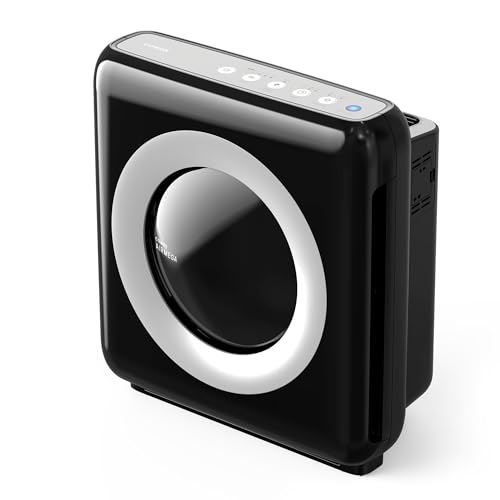
Quiet, energy-efficient true HEPA unit with four-stage filtration for whole-room freshness.
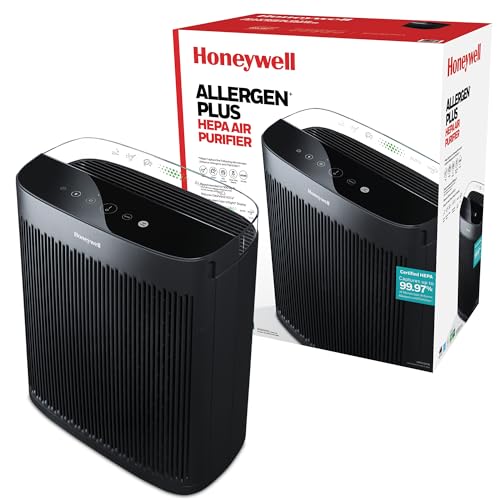
High-clean-air-delivery HEPA purifier for large rooms; helps reduce dust and pollen.
Check discounted items inHEPA Air Purifiers
Air Purify Highlights
- HEPA filters catch the fewest particles around 0.3 microns, where two main capture forces weaken.
- Slow down your fan speed to cut particle penetration nearly tenfold from standard HEPA media.
- Dust and smoke get trapped by impaction, interception, and diffusion working together on each fiber.
- The most penetrating particle size shifts between 120 and 300 nanometers as airflow and fiber width change.
- You can predict filter performance with single fiber equations instead of running endless lab tests.
Why 0.3 Microns Is the Hardest Size for HEPA Filters
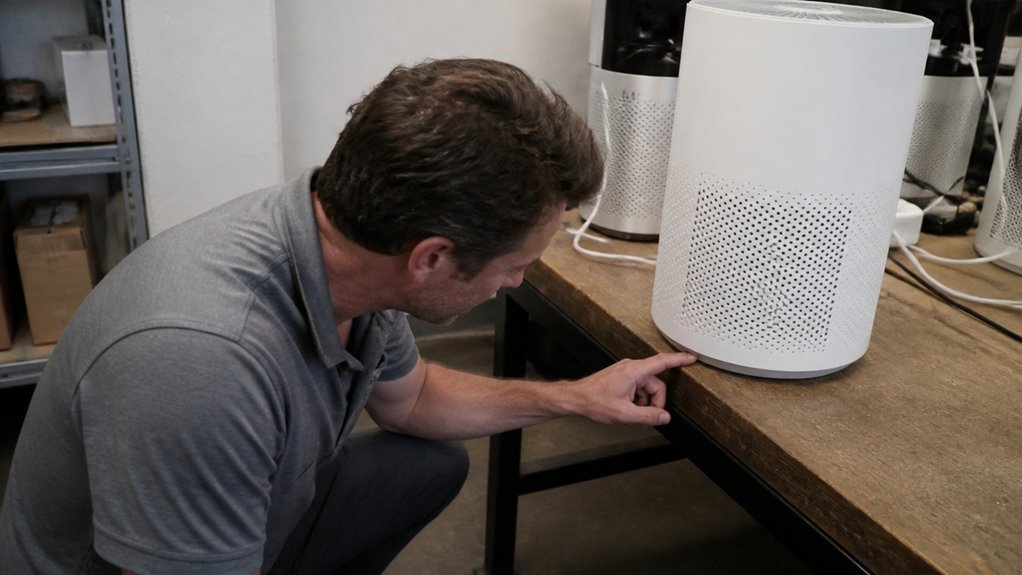
At 0.3 microns, a HEPA filter hits its lowest capture efficiency, which is why that size is the industry benchmark. Smaller particles are caught by diffusion, while larger ones are stopped by impaction, but at 0.3 microns neither mechanism works as well.
This efficiency valley is a physical limitation of the fiber matting, not a flaw in the filter design. Practical effects like pressure drop from loading remain a routine cost, and at low airflow, thermal rebound can push a few tiny particles past the fibers.
A standard HEPA filter rated at 99.97% is adequate for typical home use, and you do not need to pay extra for higher performance. For most rooms, that filter handles fine particles, pollen, and pet dander well enough to keep indoor air clean.
The Three Capture Mechanisms: Impaction, Interception, and Diffusion
The efficiency curve dips where the three main capture mechanisms all lose their grip, and each one fails at a different particle size. Impaction handles large particles like dust or pollen, which are too heavy to follow sharp airflow turns around fibers and instead slam straight into them. Interception catches mid sized particles that follow the airflow but drift close enough to a fiber’s surface to get snagged by touch, with no momentum required. Diffusion captures tiny particles under 0.1 microns, which bounce around randomly due to gas molecule collisions, and this zigzag motion raises their odds of hitting a fiber.
Fiber packing matters because tighter weaves boost impaction, interception, and diffusion together. Charge effects can provide a temporary static assist, but they fade over time, so they should not be relied on for long term performance.
Choose a filter that balances all three mechanisms rather than favoring one. A HEPA filter typically achieves this balance through dense fiber packing, which supports each capture method across a broad range of particle sizes.
Single-Fiber Efficiency Equations: Predicting Real-World Filter Performance
Single fiber efficiency equations turn filter performance into numbers you can predict before building a physical test rig. The key is isolating each capture mechanism, impaction, interception, and diffusion, then adding their contributions together.
Impaction matters most for larger particles, which skip streamlines and collide with fibers headfirst. Interception ratio sensitivity catches particles that ride airflow close enough to brush a fiber edge, and that ratio, particle size divided by fiber diameter, is squared, so small fiber changes produce outsized effects.
Impaction catches larger particles headfirst; interception ratios square the stakes, making fiber size a lever with outsized influence.
Diffusion covers the smallest particles, completing the picture for fine particle capture at sizes around 0.2 microns. The math replaces extensive lab testing with a quick spreadsheet check, saving engineering time and budget while still guiding decisions on filter media and air purifier design.
Trust the equations for initial estimates, but back them with a physical test run to confirm real world behavior under actual airflow conditions. This approach ties directly to practical terms like clean air delivery rate, filter replacement schedules, and room volume, letting you compare options without overcommitting to hardware.
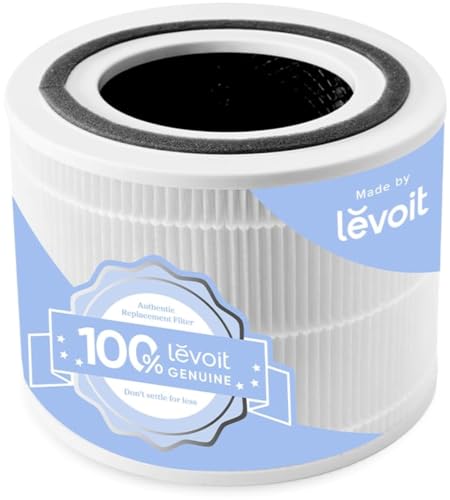
Restores 99.97% capture efficiency; keeps your air purifier performing at its best.
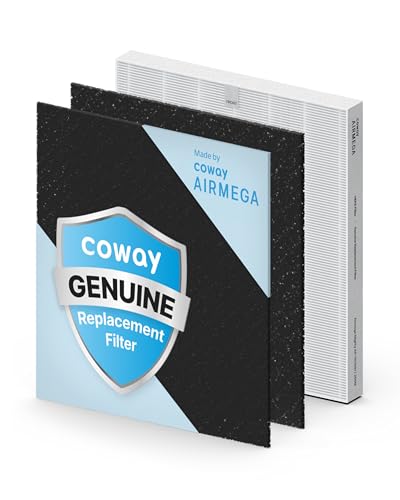
Genuine fit maintains airflow and filtration so your unit keeps cleaning effectively.

Replacement media helps sustain low pressure drop and consistent particle capture.
See deals onHEPA Replacement Filters
Why the MPPS Shifts From 120 to 300 Nm: and How to Find Your Filter’s Valley
Single fiber theory explains how filters capture particles, but it leaves out the efficiency curve’s low point, which shifts with operating conditions. The Most Penetrating Particle Size (MPPS) moves from 120 nm to 300 nm as flow speed and fiber diameter change, because diffusion dominates for tiny particles while impaction takes over for large ones.
To locate your filter’s valley, run empirical testing at your actual face velocity and plot penetration against particle size rather than just efficiency. Focus on the 100 to 400 nm range, where the valley hides, and retest after any media or pleat change because the dip shifts quietly.
- Run empirical testing at your actual face velocity.
- Plot penetration against particle size, not just efficiency.
- Check the 100 to 400 nm range, where the valley hides.
- Retest after any media or pleat change, since it shifts quietly.
Measure your filter’s weak spot directly instead of assuming its position. Knowing the valley’s location beats hoping it stays put.
Halving Flow Velocity: The Cheap Trick to Push Past ULPA Ratings
Halving the flow velocity shifts the most penetrating particle size and cuts pressure drop in half, while penetration falls nearly tenfold. That combination can push a standard HEPA filter past ULPA performance without exotic media.
The trade off hits your airflow budget, since slower air demands larger fans or more filter area. For a cleanroom retrofit, two HEPA panels at half speed often beat one ULPA panel at full speed, with similar cleanliness and lower energy bills.
Slower operation is not free, so measure duct capacity before committing. If you have the room, halving the velocity is a practical way to improve filtration while reducing power consumption.

Measures the MPPS range directly; verify your HEPA filter's real-world efficiency.
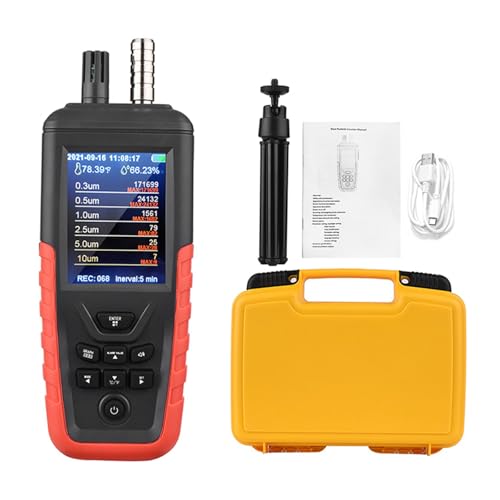
Tracks fine particle levels before and after filtration to confirm cleaner air.
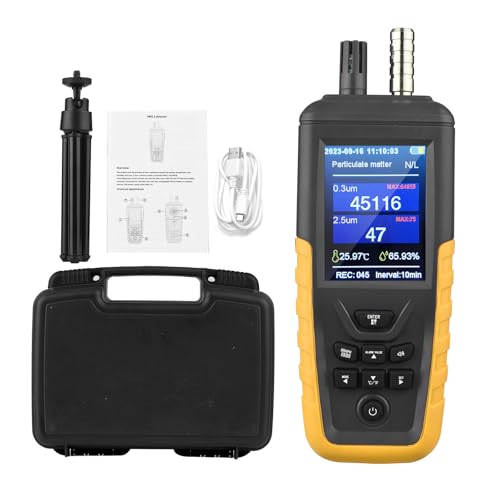
Portable testing tool helps locate the efficiency valley and monitor filter loading.
BrowseAir Quality Particle Counterson Amazon
Frequently Asked Questions
Does Filter Loading Change the MPPS Over Time?
Filter loading does shift the MPPS over time. As particles accumulate, media compaction and re-entrainment alter fiber geometry and flow paths.
This causes the efficiency valley to migrate, typically toward larger particles as loading progresses. The change affects the filter’s ability to capture the most penetrating particle size. For practical purposes, this means performance is not static, so periodic checks of filter condition are useful.
Can Electrostatic Charge Improve MPPS Capture Efficiency?
Can Electrostatic Charge Improve MPPS Capture Efficiency?
Yes, but only for a limited time. Electrostatic charge attracts smaller particles to the filter media, deepening the MPPS valley and boosting initial efficiency. Over time, charge decay shifts performance toward mechanical capture, so the filter’s weakest particle size range can shift. For long term performance, rely on the filter’s physical structure and follow the manufacturer’s guidance on replacement timing.
How Does Humidity Affect HEPA Filter MPPS Performance?
Humidity changes how your HEPA filter performs because water vapor makes many particles grow larger. Hygroscopic growth shifts the most penetrating particle size upward, which can actually improve how well the filter catches them overall.
Capillary forces also increase fiber adhesion, helping particles stick more firmly at the filter’s weakest efficiency point. However, high humidity can reduce electrostatic assistance, so the filter’s true mechanical capture matters more in damp conditions. Keep your filter dry and replace it on schedule to maintain steady performance.
Do Pleated HEPA Filters Alter Single-Fiber Efficiency Predictions?
Pleated HEPA filters change how air flows through the media, but the physics of capturing a single particle on a fiber stays the same. Local predictions hold up well because the fiber’s job does not change with the fold.
The problem appears at the whole filter level, because pleats redistribute airflow unevenly across the media surface. Some areas see more air, others less, so a global efficiency number based on smooth media will not match the real device. Theory gives you a starting point for design, while a practical test measures the actual result.
What MPPS Should I Use for Virus-Sized Particle Testing?
For virus sized particle testing, choose an MPPS of 120 nm because it matches regulatory filter standards for HEPA performance. This size represents the most penetrating particle size, where filters are least efficient at capturing contaminants.
Virus aerosol sampling usually targets particles between 100 and 300 nm, which falls directly within the HEPA filter’s most penetrating range. This makes the 120 nm MPPS a practical benchmark for evaluating how well a filter captures viruses. Focus on this metric when comparing filter performance data.
Rounding Up
Run your fan slower to cut the deepest particle penetration by a factor of ten without any new hardware. That single change matters most for normal room air, but the advice shifts if your space is very large or your filter is already clogged.
For any cleaning or filter care, follow the manufacturer’s instructions for your specific unit. If you have health concerns about dust or allergies, check with a qualified medical professional rather than relying on filtration alone.
Keep the fan setting low as your main tool, and only raise it for large rooms or heavy pollution episodes.