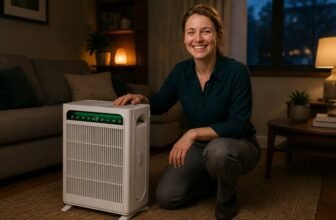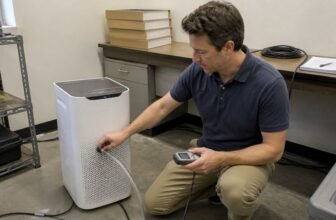
Placing an air purifier near an HVAC supply register usually wrecks its performance, so you need to know where to put the unit for the best air cleaning.
If you are dealing with dust or pet allergens, the vent’s forced air jet will deflect the purifier’s clean output sideways, making it less effective. This same airflow causes the sensor to sample a shifting mix of room air, which leads to false readings.
The simple fix is to keep the purifier at least 36 inches clear of the vent, angled parallel to the wall. This article explains the worst spots to avoid, including dead center in front of the vent, and why the three foot rule matters.
Match your purifier to the room size and the specific pollutant you want to address.
Air Purify Highlights
- Place the purifier at least 36 inches away from a supply register so its airflow doesn’t get pushed aside.
- Hold a tissue near a vent to spot the supply outlets before you decide where the purifier goes.
- Aim the purifier’s outlet parallel to the wall instead of straight into the vent’s airstream.
- Avoid setting the unit dead center in front of a vent, or its sensor may read false highs.
- Run the purifier with the HVAC fan both on and off to see which spot works best for dust and smoke.
Why Supply Registers Change Purifier Performance (and Sensor Readings)

A supply register can disrupt a well placed air purifier by pushing its clean air output sideways, a problem called airflow deflection. That jet can bounce off a wall or ceiling, so the purified stream never reaches the breathing zone where people sit or sleep.
The sensor also gets confused because it samples a shifting mix of room air and supply air, which makes its readings lag behind what is actually happening. That lag causes the purifier to ramp up or down without good reason, wasting energy and noise.
Moving the purifier about three feet away from the register and angling it away from the jet usually solves the problem. Keep the intake clear of obstacles and let the purifier work without fighting the ductwork.
Run a 5-Minute Blower On/Off Test to Identify Supply vs. Return Vents
Run the five minute blower test before moving any furniture, since guessing wrong can cost you an afternoon fighting the wrong vent. Flip the thermostat to “Fan On” and hold a tissue near each grille, watching for several full on/off cycles because airflow changes dramatically as the blower cycles.
If the tissue flaps toward the opening, that is a return vent, and if it flutters away, that is a supply vent. Supply vents push air with force even three feet away, while returns only pull hard right at the face, so this simple register identification takes five minutes and prevents mistakes like parking your purifier near a return where its sensor keeps sniffing recycled hallway dust.
Once you know which vent is which, placement becomes logical and you can verify the airflow pattern before committing. This direct check avoids vent roulette and keeps your air purifier or other equipment working with the intended room airflow.
The Best and Worst Purifier Spots Near Supply Registers (Keep 36 Inches Clear)
Keep your purifier at least 36 inches clear on all sides and angle its outlet parallel to the wall, not toward the supply register. This prevents airflow short circuiting, where the HVAC jet recirculates dirty air straight into the intake and skips the room.
Dead center in front of the vent is the worst spot, and so is mounting the purifier on the vent itself; both choke the systems and trigger sensor false alarms. Check your sensor’s placement, and if it faces the vent, move the unit.
- Clear 36 inches minimum on all sides.
- Point the outlet parallel to the wall.
- Avoid corners near supply streams.
Give the purifier breathing room so clean air mixes without fighting the register’s blast, or its readings will mislead you with loud, persistent alerts.
Compare Purifier Placement With HVAC Blower off vs. On: One Variable at a Time
Test purifier placement with the HVAC blower off versus on, changing only that variable. Keep the purifier fan speed fixed while you compare the two states at each location.
Each spot tells a different story once the blower runs. Watch where the supply register’s air jet pushes or bends the purifier’s clean air outlet, and read sensor lag to see how long the unit takes to register a change.
Blower off gives you a calm baseline of local cleaning that is easy to judge. Blower on exposes mixing patterns, and readings may spike as sampled air shifts, which is normal.
Write down results per spot, because a vent side unit that performs well with the blower on can disappoint when it is off. Test both ways and pick the location that wins on average.
Frequently Asked Questions
Will a Supply Vent Blow Dust Into My Purifier?
A supply vent can blow dust into your purifier, but whether the sensor detects it depends on the airflow path and where the purifier sits. The purifier still filters that incoming stream, so performance does not necessarily drop.
Position the purifier away from the direct path of the vent to reduce sudden dust spikes. This keeps the particle sensor from overreacting while the HEPA filter continues to clean the air.
Should I Close Nearby Supply Vents When Testing?
Closing nearby supply vents during testing is not recommended, because it disrupts vent cycling and changes airflow direction. This creates artificial conditions that skew purifier performance data and sensor readings.
As a result, comparisons against normal HVAC operation become invalid. Keep vents open so the purifier works under realistic airflow and gives you dependable answers about its everyday performance.
Can a Purifier Block HVAC Airflow if Too Close?
Yes, a purifier can obstruct HVAC airflow if placed too close to a supply register. This usually happens only when the unit directly contacts the vent, but even near contact can distort the air pattern.
That close placement creates a draft interference that accelerates airflow and throws off both room mixing and your thermostat readings. Keep the purifier at least a few inches away from any register so each system can work as intended.
Check that the purifier intake is not facing the vent, since that recirculates conditioned air right back into the unit. Instead, aim the output toward the open room to preserve both heating and cooling efficiency.
How Does Ceiling-Mounted Supply Airflow Affect Placement?
Place the purifier away from the direct path of the ceiling supply jet. The jet can pull cleaned air along the ceiling and mix it with room air, which may redirect the flow in ways you cannot easily predict.
Position the unit to avoid direct impingement while still allowing good room mixing. Particle sensor readings may fluctuate with blower cycles, so use average trends over time rather than reacting to single spikes. Keep the intake and outlet clear of furniture and curtains to maintain steady performance.
Does Purifier Performance Change With HVAC Filter Age?
The answer is no, purifier performance itself does not change with filter age. The indirect effects are what you notice, as a clogged filter reduces system airflow and allows more air to bypass the filter media.
This bypass shifts room pressure dynamics and alters how filtered air mixes with the supply stream. Your unit’s output stays consistent, but sensor readings and overall air distribution will vary as the HVAC system degrades. Replace the filter per the manufacturer’s schedule to keep both systems working together properly.
Rounding Up
Place the purifier at least 36 inches away from any supply register, then run the blower for five minutes to check the airflow. This simple test helps you confirm the machine reads the room accurately instead of pulling straight from the vent.
If your unit features a sensor, place it where the air mixes freely, not in a direct airstream. Larger rooms or stronger HVAC blowers may require extra distance or a repositioned unit to avoid misleading readings.
For sensor calibration or cleaning, follow the manufacturer’s instructions. Keep the space clear and let the purifier work on its own, with placement as the main factor that changes your setup.