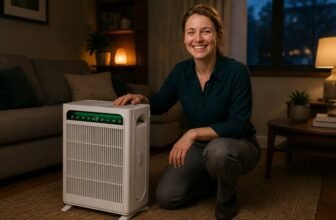
Placing an air purifier near an HVAC return vent is a con, not a pro. The return pulls your purifier’s clean air straight into the ductwork, which short circuits the filtration before it can mix into the room.
That cycling leaves your sensor reading dirty duct air, swinging wildly, and your room stays stale. Move the unit at least three feet away, keep the intake clear, and test with the blower on and off.
This article covers why that placement fails and where to put your purifier instead. Choose a model sized for your room and the pollutant you target.
Air Purify Highlights
Putting the purifier near a return vent pulls its clean air into the ductwork, so skip that spot.
Move the purifier three feet away from the return vent to steady its sensor readings.
Try placing the purifier near a supply vent instead, since that roughly doubles how far its clean air reaches.
Retest the purifier’s location with the HVAC fan on and off, because seasonal airflow shifts the results.
Return vents make the purifier’s sensor read duct air, which changes every time the heating or cooling cycles.
Why Return Vent Proximity Matters for Air Purifier Placement

The return vent pulls room air into the ductwork, so placing your purifier beside it means most of the cleaned air never reaches you. The purifier’s outlet stream can be drawn backward into the grille, and the unit’s sensor will sample duct air instead of room air, producing readings that shift with each HVAC cycle.
Position the purifier about an arm’s length from the grille, with the intake clear of obstructions. This gives the HEPA filter a chance to circulate air through your breathing zone rather than into the return.
Move the unit, run it, and observe whether the sensor readings stabilize. The fix takes a minute and makes your purifier’s airflow work for the room, not against it.
What Does Research Say About Purifier Efficiency Near Return Grilles?
Placing your purifier next to a return grille can shrink its effective cleaning range, while supply side placement can double the work area. A 2012 CFD simulation study showed that return vent placement reduced the purifier’s reach because the grille pulls air fast without guaranteeing room wide mixing.
Sensor readings also drift near a return grille, since the unit’s onboard meter may read duct air instead of room air and flip numbers with each HVAC cycle. Skip the return grille unless space forces it, and test two spots to trust the one that stabilizes readings.
When Return Vent Placement Causes Short-Circuiting of Purifier Airflow
A purifier placed beside a return vent will often short circuit its own airflow. The clean air it releases gets pulled straight back into the HVAC system before it can mix into the room.
This happens because the return grille draws air inward with strong suction, bending the purifier’s output away from the breathing zone. The filter may be working at full capacity, but the room stays stale and the purifier’s sensor reads recycled air instead of the actual room conditions.
- Purifier beside return: filtered air recirculates locally, leaving the room stale and confusing the sensor.
- Purifier near supply: clean air mixes widely, improving reach and reducing waste.
- Purifier in open zone: balanced draw lets the sensor sample room air more accurately.
Placement trade offs mean a spot that looks convenient, like beside the vent, can defeat the purpose of the unit. The EPA warns that competing air streams can push purifier output toward walls, furniture, or ductwork.
Move the purifier a few feet away from the return grille and clear of obstructions. Test it with the HVAC blower both on and off to confirm the improvement in airflow and sensor readings.
How to Test Air Purifier Placement Near Returns and Choose the Best Spot
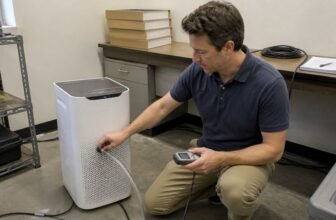
Run a quick two step test to find the best spot for your purifier. Start with the unit near the return vent, check the sensor with the HVAC off, then on, and watch for wide swings that indicate the vent is pulling dirty duct air past the intake.
Move the purifier three feet away, repeat the same sequence, and compare the results. Supply vents push air outward while returns pull it in, so placing the purifier near a supply register improves air mixing and filtration.
Adjust placement seasonally, because summer cooling creates a strong downdraft while winter heat rises gently. Choose a final location where the sensor stays stable, the intake remains clear, and the unit does not create a tripping hazard.
Park the purifier away from the return if the sensor remains calm there, as that spot supports consistent airflow and better particle capture. Keep the prefilter accessible for routine cleaning, and remember that filter replacement timing depends on usage and air quality rather than a fixed schedule.
Frequently Asked Questions
Can I Place a Purifier Directly Under a Return Vent?
Placing a purifier directly under a return vent is not advisable because the vent’s strong airflow can pull clean air away before it reaches the room. This creates bypass airflow, where the purifier’s output is immediately sucked into the duct, leaving the rest of the space untreated.
The return vent’s dominance also reduces the purifier’s reach, so effective room air cleaning is compromised. Instead, position the unit in an open area, several feet away from walls and the vent, to let it circulate air freely. Placement away from the vent gives you the best whole room coverage.
Does a Return Grille Reduce Purifier Efficiency Significantly?
A return grille’s pull can reduce purifier efficiency by causing filtered air to bypass the room, but the loss is usually moderate, not drastic. The real problem is placement near a strong draw, which accelerates filter loading as pollutants race past the media.
Simulations show that placing the purifier near supply vents works better than putting it close to a return. A nearby return is a variable hindrance, so position the unit to avoid direct airflow competition for the best results.
How Close Is Too Close to an HVAC Return?
Keep the purifier at least three feet from the return grille, because closer placement blocks airflow and confuses the particle sensor. That distance prevents dead zones where dirty air stagnates instead of reaching the unit.
Testing the unit several feet farther away usually shows clean air performance, as long as the room layout allows good circulation. The exact safe distance depends on your return vent size and fan speed, so start at three feet and move the unit if the sensor reads oddly. Aim for open floor space with no furniture blocking the intake or outlet.
Will Opening a Door Help Purifier Air Reach the Room?
Opening a door helps purifier air reach the next room by letting cleaned air mix with the room’s air. Airflow from the purifier pushes through the doorway, while the door’s draft can redirect that flow.
For best results, place the purifier so its output points toward the open doorway, not away from it. Detached room performance depends on the purifier’s placement relative to your HVAC system’s return and supply vents.
If the purifier sits far from the door, the HVAC draft may dominate and dilute its reach. Position it closer to the doorway to improve air exchange between spaces, but keep the door open wide enough for natural airflow.
Should I Turn off HVAC When Testing Purifier Placement?
Testing HVAC off first isolates airflow interference from vents and ducts, giving you a clear baseline for purifier placement. Turning off the system also prevents recirculated contaminants from skewing your results. Compare that baseline with HVAC running to see how your purifier performs under real world conditions.
Your final placement should work well with both modes active, since that matches normal daily use. If results differ sharply, adjust the purifier’s position and repeat the comparison. This dual test is the most reliable way to confirm placement works.
Rounding Up
Keep the purifier three to five feet from the return vent, with the airflow aimed into the room, not at the grille. This placement avoids the HVAC system pulling your cleaned air away before it spreads.
If the room is very small or the door is closed, moving the unit closer to the vent may be tempting, but the loss in coverage remains significant. Instead, run the HVAC fan continuously to help distribute the clean air without vacuuming it away.
Follow the manufacturer’s instructions for filter changes and unit placement limits. Your main condition is distance, so measure from the grille and prioritize open room airflow over convenience.