If dust, pollen, or pet dander keep showing up across your home, an in duct air purifier can help by filtering air as it moves through your existing HVAC system.
How well it works depends mainly on whether the unit matches your system’s airflow and capacity.
This article covers how these units connect to ductwork, what filters they use, installation considerations, and maintenance and cost tradeoffs to weigh.
Choosing a purifier that fits your home layout and the pollutants you want to reduce is a sensible next step.
Editorial Highlights
- In duct purifiers treat the whole house through your heating and cooling system, while portable units only reach one room.
- Some installs take 20 minutes at home, but others need a licensed HVAC or electrical professional.
- Check your system tonnage, which ranges from 1 to 5 tons, plus voltage and plenum fit before you buy.
- Read the maintenance details, since some units need periodic carbon or HEPA swaps while others list no schedule at all.
| APCO Carbon Cell Matrix HVAC UV Air Purifier |  | Most Effective | Technology Type: Activated carbon cell matrix + UV-C | Installation Type: In-duct (licensed contractor required) | UV Wavelength (if applicable): UV-C (unspecified wavelength) | SEARCH BEST PRICE | Read Our Analysis |
| Levoit Core 300 Air Purifier for Pets Quiet HEPA |  | Best Budget | Technology Type: HEPA filtration (portable) | Installation Type: Portable (plug-in) | UV Wavelength (if applicable): Not applicable (HEPA only) | SEARCH BEST PRICE | Read Our Analysis |
| WINIX 5510 Air Purifier for Large Rooms |  | Best Smart | Technology Type: True HEPA + carbon filter + pre-filter (portable) | Installation Type: Portable (plug-in) | UV Wavelength (if applicable): Not applicable (HEPA only) | SEARCH BEST PRICE | Read Our Analysis |
| Qualirey HVAC UV Light Air Purifier 26W |  | Easiest Installation | Technology Type: UV-C (253.7 nm) | Installation Type: In-duct (DIY) | UV Wavelength (if applicable): 253.7 nm | SEARCH BEST PRICE | Read Our Analysis |
| RGF REME Halo LED Whole Home in-Duct Kit with Air Switch |  | Advanced Technology | Technology Type: REME Halo LED technology | Installation Type: In-duct (licensed professional recommended) | UV Wavelength (if applicable): UV (unspecified wavelength) | SEARCH BEST PRICE | Read Our Analysis |
| Air Health Haven HVAC UV-C Air Purifier |  | DIY Friendly | Technology Type: UV-C (253.7 nm) | Installation Type: In-duct (DIY) | UV Wavelength (if applicable): 253.7 nm | SEARCH BEST PRICE | Read Our Analysis |
| VEVOR Air Scrubber 550 CFM 3-Stage Filtration |  | Highest Airflow | Technology Type: 3-stage filtration (pre-filter, carbon, HEPA) | Installation Type: Portable/standalone | UV Wavelength (if applicable): Not applicable (filtration only) | SEARCH BEST PRICE | Read Our Analysis |
| REKO R2000 UV Air Purifier for HVAC Ducts | 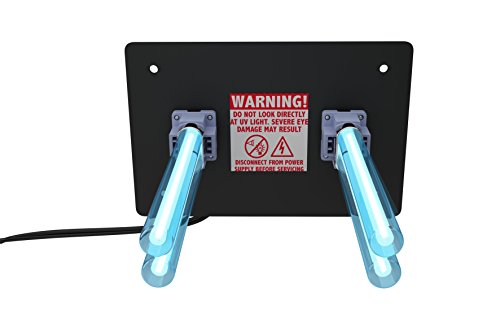 | Most Compact | Technology Type: UV-C (253.7 nm) | Installation Type: In-duct | UV Wavelength (if applicable): 253.7 nm | SEARCH BEST PRICE | Read Our Analysis |
| Air Health Haven Plus HVAC Air Purifier |  | Best All-Around | Technology Type: UV-C + Pro-Cell (PCO) technology | Installation Type: In-duct (DIY) | UV Wavelength (if applicable): 253.7 nm | SEARCH BEST PRICE | Read Our Analysis |
More Details on Our Top Picks
APCO Carbon Cell Matrix HVAC UV Air Purifier
The APCO Carbon Cell Matrix HVAC UV Air Purifier is worth considering if you want air cleaning for your whole home without placing a unit in every room. It installs in your air handler and ducts, so it works alongside the HVAC filter you already have.
Activated carbon cells trap odors and microbes as air moves through the system. The listing says the UV lamp helps control microbe buildup and biofilm on the cells and coils, which it says can help the system stay efficient.
This system suits homeowners with central heating and cooling who want odor and microbe control across the whole house. Its main strength is that it uses equipment you already own, so you do not need a separate purifier in each room.
The main drawback is installation. The system needs a licensed contractor, which adds cost and scheduling time. The listing does not give a price, so compare the installed cost with portable purifiers before you decide.
Unlike a portable purifier that pulls air through its own fan in one room, this system depends on your existing blower and ductwork. Airflow through your system is the detail to check, since it determines how much air passes the carbon cells.
The listed specifications are:
- Power input: 18 to 32 VAC
- Current draw: 0.68 amps
- One UV lamp
- Power cord included
Give these specifications to your contractor before the visit so they can confirm your electrical setup.
The listing says the UV lamp keeps the carbon cells working, but it does not say how often you should inspect or replace them. Ask your contractor how often the cells and your HVAC filter need attention, since the listing gives no maintenance schedule.
The carbon cells address odors and gases. The listing does not state a HEPA rating or CADR, so it does not say how much dust, pollen, or smoke the system removes. Particle removal depends on the HVAC filter you use, so choose that filter with care.
The listing does not include noise level or fan speed details, so ask your contractor how the system sounds during normal operation if a bedroom sits near the air handler. Choose this option if you want whole-home support and can manage the installation. Choose a portable unit with published CADR and HEPA ratings if you need clear particle removal for a single room.
- Technology Type:Activated carbon cell matrix + UV-C
- Installation Type:In-duct (licensed contractor required)
- UV Wavelength (if applicable):UV-C (unspecified wavelength)
- Power Source:Hardwired (18-32 VAC)
- Installation Time:Not specified (licensed contractor)
- Maintenance Requirements:Virtually maintenance-free (self-cleaning cells)
- Additional Feature:Self-cleaning carbon cells
- Additional Feature:NASA-trusted technology
- Additional Feature:Reduces biofilm efficiency loss
Levoit Core 300 Air Purifier for Pets Quiet HEPA
The Levoit Core 300 suits pet owners who want an affordable air purifier for a bedroom or home office. It is best for a small room where pet dander is the main concern.
Its key strength is its 143 CFM CADR, which measures how quickly the unit cleans the air in a room. According to the listed specs, it refreshes a 222 square foot space nearly five times per hour.
The HEPA filter catches 99.97 percent of particles down to 0.3 microns, which covers the particle sizes that often trigger sneezing. Because the product details focus on particle filtration, don’t expect it to address odors or gases.
Sleep Mode runs at a whisper quiet 24 dB and turns off the display lights, so the light and sound won’t disturb your sleep. This makes it a comfortable choice if you run the purifier all night in a bedroom.
Its main limitation is coverage. Since it is rated for a 222 square foot room, a large living room or open floor plan will need a unit with a higher CADR or a second purifier.
Maintenance is simple, but the filter matters. Use only official replacement filters, because the listing warns that knockoffs may damage the unit. The check filter light tells you when to replace the filter, so you don’t have to guess.
Day to day, the timer runs from 2 to 8 hours, which lets you set the purifier to run during sleep or work hours without adjusting it constantly.
- Technology Type:HEPA filtration (portable)
- Installation Type:Portable (plug-in)
- UV Wavelength (if applicable):Not applicable (HEPA only)
- Power Source:120V plug-in
- Installation Time:Not applicable (portable)
- Maintenance Requirements:Filter replacement (official filters required)
- Additional Feature:AHAM verified performance
- Additional Feature:QuietKEAP near-silent sleep mode
- Additional Feature:Display lights turn off
WINIX 5510 Air Purifier for Large Rooms
The WINIX 5510 suits a large room where you want cleaner air without installing ductwork. It treats one room at a time, so it fits a living room, open floor plan, or large bedroom best.
Measure your room against the 392 square foot AHAM verified rating, which is the coverage figure the unit is verified for. The 1,882 square foot figure describes how much space the unit can clear in one hour, so it signals strong airflow rather than a guarantee for a room that large.
The True HEPA filter captures 99.99% of particles down to 0.01 microns, including pollen, pet dander, and smoke. That makes it a practical choice for households with allergies or pets. A washable prefilter catches larger dust and hair first, which extends the life of the main filter.
The activated carbon filter handles a different job. It reduces VOCs and cooking odors, which are gases rather than particles, so it adds a layer the HEPA filter cannot provide. Compared with HEPA only models, this carbon stage makes the WINIX 5510 a better fit for kitchens and rooms where smells linger.
On its slow setting, the unit runs at 23.5 dB, which is quiet enough for a bedroom or late evening reading. Auto Mode uses the built in sensor to adjust fan speed as the air changes, so you rarely need to touch the controls. The supplied details do not list noise levels at higher fan speeds, so check those yourself before running it on high near where you sleep.
The app lets you monitor the unit from another room or while you are away. The LED indicator gives a quick status check without opening your phone. Plan for filter replacement over time, and budget for both the carbon and HEPA filters along with the unit.
Choose the WINIX 5510 if you need to clean a large room, you have allergies or pets, and you want a quiet unit with app control and automatic operation.
- Technology Type:True HEPA + carbon filter + pre-filter (portable)
- Installation Type:Portable (plug-in)
- UV Wavelength (if applicable):Not applicable (HEPA only)
- Power Source:120V plug-in
- Installation Time:Not applicable (portable)
- Maintenance Requirements:Filter replacement (pre-filter prolongs HEPA life)
- Additional Feature:Smart app remote control
- Additional Feature:Real-time LED air quality indicator
- Additional Feature:Auto mode adjusts fan speed
Qualirey HVAC UV Light Air Purifier 26W
The Qualirey HVAC UV Light Air Purifier 26W suits homeowners who want air treatment built into their heating and cooling system. It installs in about 15 minutes. You cut two holes, insert the base, and peel the aluminum strips.
The 26W bulb emits UVC light at 253.7 nm, and the product listing says this light kills mold and dust buildup in systems rated from 1 to 5 ton. The kit includes four bulbs, which the maker says lasts at least 16 months.
A green LED shows the unit is working. If no light appears, replace the bulb.
This model does not remove smoke or VOCs, so it will not clear cooking smoke or chemical fumes from your home. It is better matched to odors and musty smells that come from AC coils.
Avoid staring at the light, since UV exposure can harm your eyes.
Unlike a plug-in room purifier that you place on the floor, this unit works through your ductwork and treats air moving through the whole system. Choose it if you want an affordable, no-drilling option for musty coils and odors and you can handle a one-time installation.
- Technology Type:UV-C (253.7 nm)
- Installation Type:In-duct (DIY)
- UV Wavelength (if applicable):253.7 nm
- Power Source:Plug-in (4.6-foot wire)
- Installation Time:15 minutes or less
- Maintenance Requirements:Bulb replacement every 8-10 months
- Additional Feature:Includes two replacement bulbs
- Additional Feature:Green light bulb status indicator
- Additional Feature:15-minute installation time
RGF REME Halo LED Whole Home in-Duct Kit with Air Switch
The RGF REME Halo LED Whole Home In Duct Kit suits homeowners who want air cleaning for the entire house instead of a single room. You get the REME Halo LED unit and an air switch that starts the unit automatically when your HVAC system runs.
This kit fits people who want every room treated and who can arrange professional installation by a licensed electrician or HVAC professional. It is not a weekend project, so plan the time and cost before you order.
The main strength is convenience. The air switch handles startup, so you never have to turn the unit on by hand.
The unit uses your HVAC airflow to spread its cleaning agents through the house, so every room benefits. Compared with a portable purifier, the kit takes up no floor or table space in each room.
The biggest limitation is the lack of a direct warranty from RGF. You will need to contact your distributor for support, so ask about warranty length, repair terms, and service options before you buy.
The kit is described as quiet, but your overall noise level depends mostly on your existing HVAC system because the unit runs with it. Read the installation requirements and warranty terms carefully before you commit.
Skip this kit if you want a portable unit for one bedroom or prefer to install the system yourself.
- Technology Type:REME Halo LED technology
- Installation Type:In-duct (licensed professional recommended)
- UV Wavelength (if applicable):UV (unspecified wavelength)
- Power Source:Air switch activation
- Installation Time:Not specified (professional recommended)
- Maintenance Requirements:Not specified
- Additional Feature:Air switch activation included
- Additional Feature:Professional installation recommended
- Additional Feature:No manufacturer warranty provided
Air Health Haven HVAC UV-C Air Purifier
The Air Health Haven suits do it yourself homeowners who want UVC germ control built into a central heating and cooling system. It mounts in the supply plenum beside the A coil, where it treats air as it moves through the ductwork.
The unit uses 253.7 nm UVC light to target bacteria, viruses, mold, and fungi. Installation takes about 20 minutes, so a handy homeowner can mount it without hiring an HVAC professional.
It is EPA registered and produces no ozone, so you avoid trading one indoor air concern for another.
The main limitation is the lamp. It lasts only about 90 days, so plan on buying and swapping replacement lamps roughly four times a year.
The unit carries a 10 year warranty, but the lamp wears out far sooner, so budget for it as an ongoing cost.
Unlike a portable room purifier, this model works on the air moving through your whole duct system. It is also compact, which helps when space near the air handler is tight.
- Technology Type:UV-C (253.7 nm)
- Installation Type:In-duct (DIY)
- UV Wavelength (if applicable):253.7 nm
- Power Source:Hardwired
- Installation Time:20 minutes
- Maintenance Requirements:Lamp warranty 90 days
- Additional Feature:EPA registration included
- Additional Feature:Duct board mounting parts included
- Additional Feature:10-year limited unit warranty
VEVOR Air Scrubber 550 CFM 3-Stage Filtration
The VEVOR 550 CFM air scrubber suits people who need to clean the air in a large work area after a renovation or restoration project. The listing states it covers 5,500 cubic feet.
It pulls air through three filtration stages: a MERV 10 prefilter, an activated carbon stage, and an H13 HEPA filter. According to the listing, the HEPA stage traps 99.97% of particles down to 0.3 microns, which covers dust and smoke particles.
The carbon stage handles gases and odors, so it addresses paint fumes and smoke smells that a particle filter alone would not capture. The listing does not give a separate rating for gas removal, so treat this as a general carbon function rather than a measured result.
At 35 pounds, the unit is heavy, but the foldable handle makes it easier to move from room to room. No assembly is needed, so you can plug it in and start running it right away.
A circuit breaker and timer help protect the unit from overheating during long runs. You can also link up to three units together for a combined 1,650 CFM, which suits a whole floor or an open space larger than one unit can cover.
The listing does not state the noise level, power consumption, or fan speeds, so check those details before running it in a bedroom or home office. It is also more unit than a small room needs. Before you buy, look up the filter replacement schedule for each stage, since the listing does not specify how often to replace them.
Choose this scrubber if you need strong airflow for a large area and want particle and odor filtration in one unit. Confirm the noise level and filter costs first so you know whether it fits your room and budget.
- Technology Type:3-stage filtration (pre-filter, carbon, HEPA)
- Installation Type:Portable/standalone
- UV Wavelength (if applicable):Not applicable (filtration only)
- Power Source:Plug-in (copper motor)
- Installation Time:No assembly required
- Maintenance Requirements:Filter replacement indicator light
- Additional Feature:Daisy chain up to 3 units
- Additional Feature:Foldable handle for portability
- Additional Feature:Circuit breaker overheat protection
REKO R2000 UV Air Purifier for HVAC Ducts
The REKO R2000 is a UV unit that mounts in your ductwork, so it treats air across the whole house rather than in one room. It suits homeowners with a central air system who want to avoid a floor unit in every room.
This model is best for households that already run central air and want to treat the air moving through the ducts. Its 8 x 8 x 9 inch body is compact, so it can fit near the air handler without taking up much closet space. The 253.7 nm UV light is its main strength, and the manufacturer says it zaps microbes as air passes through.
The listing describes only UV light, with no HEPA filter or activated carbon, so this unit does not capture dust, pollen, or smoke. Plan to keep your system’s existing filter in place and replace it on schedule. The listing also omits CADR, airflow rating, and noise level, so you cannot compare its performance with room purifiers on those numbers.
Key details from the listing:
- Size: 8 x 8 x 9 inches, black finish
- Power: 120V with a 9 foot cord
- Bulbs: European-made
- Registration: EPA registration number 96373 FL 1
Compared with standalone room purifiers, this model needs no floor or tabletop space. The listing describes installation as mounting the unit and plugging it in, which keeps setup simple for a homeowner comfortable working near the ductwork. Confirm that a 120V outlet is within the cord’s reach before you buy.
If your priority is a compact unit that works with your existing ducts, the R2000 deserves a look. If you need an air purifier for a bedroom or help with pet dander, choose a room unit with a HEPA filter, since this model’s listing does not describe particle filtration.
- Technology Type:UV-C (253.7 nm)
- Installation Type:In-duct
- UV Wavelength (if applicable):253.7 nm
- Power Source:120V plug-in (9-foot cord)
- Installation Time:Not specified
- Maintenance Requirements:Not specified
- Additional Feature:Bulbs made in Europe
- Additional Feature:EPA Est number registered
- Additional Feature:9-foot power cord length
Air Health Haven Plus HVAC Air Purifier
For most homeowners with a central heating and cooling system, the Air Health Haven Plus is the one to beat. It installs inside your HVAC system, so it cleans the air moving through the whole house rather than one room.
Its 16 inch, 30 watt UV lamp targets bacteria, mold, and viruses as air passes through. Pro Cell Technology handles a different job: it breaks down VOCs, the chemical gases released by fresh paint or new carpet.
Because it does not produce ozone, it adds no extra irritant to the air you breathe. The product lists carbon filters and UV light but no HEPA filter, so if dust or pollen is your main concern, check the filtration details before you buy.
Installation takes about 15 minutes and works on metal and duct board. The kit includes permanent carbon filters, a hole saw, and mounting hardware, so you have what you need in the box.
The unit carries a 10 year warranty, but the UV lamp is covered for only 90 days. Plan to check the lamp after the first three months, because replacing it after that falls to you.
Compared with a portable purifier you carry from room to room, this model stays put in your ductwork and treats air throughout the house. The tradeoff is that you cannot move it to a bedroom. At under $400, it suits a moderate budget for a whole house solution.
- Technology Type:UV-C + Pro-Cell (PCO) technology
- Installation Type:In-duct (DIY)
- UV Wavelength (if applicable):253.7 nm
- Power Source:Hardwired
- Installation Time:15 minutes
- Maintenance Requirements:Permanent self-cleaning carbon filters
- Additional Feature:Pro-Cell VOC reduction technology
- Additional Feature:Permanent self-cleaning carbon filters
- Additional Feature:Hole saw mounting hardware included
Factors to Consider When Choosing In-Duct Air Purifiers

Start by matching the purifier to your HVAC system, since the fit between the two determines how well the unit works. Check three things before you buy: the filtration technology, the UVC light, and the airflow capacity.
Confirm that the UVC light is strong enough to affect microorganisms in the airstream without damaging nearby ductwork. Make sure the airflow capacity suits your system so the unit does not restrict airflow through the ducts.
If you are on a budget or renting, look for a simple model that fits into existing ductwork. That kind of model avoids the cost and complexity of a custom installation.
Filtration Technology
When the unit is mounted in the duct, its filters clean the air for the whole house, so the filter stack determines which particles and gases reach the people breathing it. Each stage handles a different job, so no single technology covers everything.
- A HEPA filter traps 99.97% of particles at 0.3 microns, which includes dust, pollen, and pet dander. Many systems add a MERV 10 prefilter to catch larger particles first, which reduces the load on the main filter and can extend its life.
- UV-C light at 253.7 nm is aimed at bacteria, viruses, and mold in the air moving through the duct. Its effect depends on lamp strength and how long the air stays in its path, so it supplements filtration rather than replacing it. UV-C light may also help keep photocatalytic oxidation (PCO) cells cleaner, which helps them continue breaking down captured material.
- Activated carbon adsorbs odors and volatile organic compounds (VOCs), the gases released by paint, carpet, and cleaning supplies. HEPA filters do not capture these gases, so carbon fills a gap the other stages leave open. Carbon has a limited capacity, so it needs filter replacement over time.
You do not need every technology in the stack. Start with the problem you notice most, such as odors or fine dust, and choose the stage that addresses it.
HVAC System Compatibility
Compatibility comes first when you choose an air purifier for the whole house, because a unit that does not fit your HVAC system cannot deliver its benefits. Check the physical size, power requirements, mounting location, and system tonnage before you compare features.
- Dimensions: Compact units measure 8 inches by 8 inches by 9 inches, which suits tight plenums. Measure your duct access before you commit to a specification sheet.
- Power: Some units require 120 volt power, while others run on low voltage, 18 to 32 VAC. Professional wiring is required to meet local codes.
- Placement: Install the unit near the evaporator coil in the supply plenum to help keep the coil clean and support airflow.
- Tonnage: Many UV units pair only with systems rated from 1 to 5 tons. If the system is oversized, the unit may heat the air without purifying it.
Matching the tonnage and voltage to the unit is what makes the installation work. Without that match, the purifier will not do its job, and the money spent on it is largely wasted.
Installation Requirements
Once the tonnage and voltage match, the next step is installation. Most units require cutting one or two holes in the plenum, which is a manageable task for a handy homeowner.
A 26W UV model includes a template, aluminum strips, and hardware, so installation takes 15 minutes. Other models that a homeowner can install take about 20 minutes.
Some models require a licensed HVAC or electrical professional. Installing those units yourself can void the warranty.
Place the unit near the A-coil or supply plenum to help keep the coil clean. Power can come from a standard 120V plug or a low voltage 18 to 32 VAC supply, and the cords reach up to nine feet.
Choose a DIY installation if you feel confident in your skills, and hire a professional if you do not. Either way, careful planning of the cuts helps protect the ductwork.
UV-C Light Intensity
A UVC lamp inactivates microbes only when it delivers the right wavelength and enough energy over time. Germicidal lamps are designed to emit at 253.7 nanometers, the wavelength that damages the DNA of microbes.
Both intensity and exposure time matter because the total dose determines the result. Higher lamp wattage generally produces stronger output, but faster airflow gives microbes less time under the light, so the kill rate drops.
A dose of about 400 J/m² is often cited as enough to neutralize many airborne bacteria and viruses, though results depend on the lamp, the airflow, and the exposure. Lamp output weakens with hours of use, so replace bulbs on a regular schedule to maintain performance. Balance lamp intensity against the air speed in your duct, and treat bulb replacement as part of routine maintenance.
Airflow Capacity & Coverage
UVC light intensity matters for microbes, but the air moving past the lamp decides whether it treats your whole house or only a small area. Airflow capacity, measured in cubic feet per minute (CFM), is the most useful measure of that movement.
A unit pushing 550 CFM handles roughly 5,500 cubic feet, which suits a 2,000 square foot home with high ceilings. Compare the rating with the volume of the rooms you plan to treat before you decide whether it fits.
Match the coverage to the square footage of the space you want to clean. A purifier rated for 392 square feet cycles that space four times per hour, and larger rooms need proportionally more airflow.
Your HVAC blower does most of the work in a ducted system. Static pressure and duct size control how much air actually moves, so they matter alongside the purifier’s own fan.
- Aim for 4.8 air changes per hour in a 222 square foot room, which is a solid target.
- Avoid pushing CFM too high through a narrow duct, because that creates turbulence noise.
Size the airflow to your ducts first, since the duct system sets the limits for the whole installation. A unit whose airflow fits your ducts and room size avoids turbulence noise and moves air through the room as intended.
Ongoing Maintenance Needs
The real cost of an air purifier often shows up after installation, in its upkeep. Knowing what the unit demands over time helps you plan both your time and your budget.
UVC lamps typically need replacement every 8 to 10 months, and the indicator light tells you when that time arrives. Lamp warranties run short, such as 90 days, so budget for replacement lamps.
The core unit often carries a warranty of 10 years, which makes it your long-term anchor for costs. Use that coverage to plan for the years ahead.
Washable prefilters need periodic cleaning. Cleaning them prevents airflow restriction and protects the HEPA media, and the task takes little effort.
Some units use permanent carbon filters that clean themselves, so routine filter swaps are not needed. This option suits anyone who wants the least maintenance.
When you compare units, look for washable prefilters and a core warranty of 10 years. These two features help keep costs down and airflow steady without adding hours of upkeep.
Safety & Certifications
Three things matter when you trust a machine to clean your home’s air: safety, proof of performance, and certifications that carry weight. Independent testers verify both performance and electrical safety, so look for one of these marks on the label:
- AHAM Verifide
- UL
- ETL
- CARB
If a unit claims to kill biological contaminants, it should carry an EPA registration number. Check the box for that number, because it shows the claim has been registered with the agency.
Confirm that the unit produces zero ozone. Treat ionizing generators as a health hazard, and avoid any unit that uses ionization to clean the air.
Check that the 120V rating and amp specifications match your home’s wiring, or the unit may trip or blow a breaker. Require overheat protection and a built-in circuit breaker. Hire a licensed contractor for installation, and leave any ductwork to professionals.
Frequently Asked Questions
How Often Should I Replace the UV Bulb?
How Often Should I Replace the UV Bulb?
Replace the UV bulb every 12 months, even if it still glows. The bulb loses its power to kill germs after a year, so do not wait for it to burn out.
Set a recurring reminder so the swap happens on time. Keeping the bulb current helps your purifier keep the air cleaner, and the manufacturer’s instructions list the correct bulb type and replacement steps.
Can In-Duct Purifiers Remove Odors From Cooking?
Can In Duct Purifiers Remove Odors From Cooking?
Yes, in duct purifiers with activated carbon or catalytic filters can reduce cooking odors such as fish, garlic, and grease. These filters trap odor molecules as air moves through the ductwork, which lowers the smell in your home.
They reduce odors rather than erase them entirely. Expect a noticeable drop in cooking smells, not a complete absence of them.
Will These Systems Increase My Electricity Bill Significantly?
Will These Systems Increase My Electricity Bill Significantly?
No, an air purifier will not significantly increase your electricity bill. These systems draw modest power, often less than a standard light bulb.
Your bill might rise a few dollars each month, so expect a small change rather than a spike. In return, you gain cleaner air without a large added cost.
Do In-Duct Purifiers Produce Harmful Ozone?
Do In Duct Purifiers Produce Harmful Ozone?
No, most in duct purifiers do not produce ozone. They use a HEPA filter or activated carbon to capture particles and gases instead.
Look for an “ozone free” certification on the product, and avoid ionizing models if you are sensitive to ozone, since they may emit traces. For guidance on your own exposure, follow the manufacturer’s instructions or ask a qualified clinician.
Are They Compatible With All HVAC System Sizes?
Are They Compatible With All HVAC System Sizes?
No, they do not fit every HVAC system. Most units match standard duct sizes, but your system may not use one.
Measure your exact duct dimensions and check your HVAC specifications first. Buying without these measurements can waste your money.
Before finalizing your air purifier selection, it is vital to calculate your room's cubic volume. Empirical CADR measurements prove that filter media density dictates fine PM2.5 capture speed.
If you need step-by-step diagnostic advice, consult our field testing in Levoit Core 400S vs Coway Airmega 250: Shootout. Additionally, learn how to prevent common airflow issues in Blueair Blue Pure 211+ Review: 350 CADR Blower Test.
Rounding Up
Start by identifying what is polluting your air before you buy any equipment. Pollutant type matters, because dust, smoke, cooking fumes, and mold call for different fixes.
Duct size, airflow, and filter condition also change what a system can do, so check them against the manufacturer’s specifications. Follow the manufacturer’s instructions for filter replacement, electrical connections, and any ionizer or UV feature.
If anyone in the home has breathing problems, talk with a qualified doctor before relying on air cleaning.