Wondering if washing a true HEPA filter can save you money? No, you cannot wash a true HEPA filter, and water will permanently damage its delicate fibers.
That damage widens the gaps between fibers, letting dust, pollen, and pet allergens pass through far more easily. Moisture also invites mold growth, which can then circulate back into your living space.
This article explains why water ruins the filter, why vacuuming offers little help, and what to do instead. Plan to replace that filter yearly and protect it with a clean prefilter.
Choose an air purifier that fits your room size and targets your main pollutant for the best results.
Air Purify Highlights
- Washing a true HEPA filter ruins it because water widens the gaps between fibers, letting dust pass through.
- You should replace your true HEPA filter once a year instead of cleaning it, since vacuuming barely removes trapped particles.
- A single wash drops particle capture from around ninety five percent to about seventy three percent, so your air gets dirtier.
- Wet fibers inside the purifier can grow mold, which then releases spores straight into the air you breathe.
- Only e HEPA filters can handle water, while true HEPA media warps and collapses when you rinse it.
Washing a HEPA Filter: Why Water Ruins the Fibers

True HEPA filters use non woven fabric fibers that swell and warp when washed, permanently stretching the gaps between fibers so dust can pass through. A dirty HEPA filter should be replaced instead of rinsed, because wet fibers also create a mold risk when they do not dry quickly inside the purifier.
Water damage is not repairable, and the filter loses its ability to capture fine particles after just one wash. Replacing a spent HEPA filter costs far less than dealing with degraded air quality or mold spores in your living space.
Keep the filter dry and swap it out when it is clogged. Your sinuses will stay clear, and the purifier will keep doing its job.
Lab Tests: Washed HEPA Filters Drop to 72–74% Efficiency
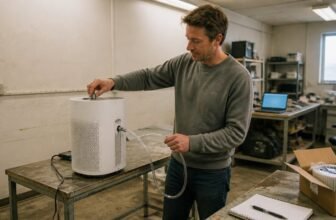
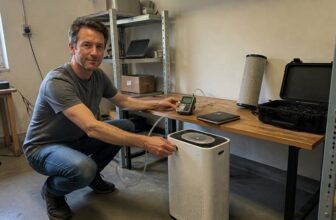
Lab tests by Smart Air and Milan Antonic measured washed HEPA filters with particle counters and found a consistent drop in efficiency. Smart Air filters, scrubbed once, fell from 93–95% to 72–74% on 0.3 micron capture, while Antonic’s three used filters, washed with baking soda, landed at 72%, 73%, and 74%.
That single wash cycle cost 15–20% of the filter’s particle removal ability. The mold risk adds to the problem because damp fibers can breed spores that the purifier then blows into the room.
- Filter source: Cigarette smoke, before wash 93%, after wash 74%.
- Filter source: Industrial dust, before wash 95%, after wash 73%.
- Filter source: Pet household, before wash 85%, after wash 72%.
Washing a true HEPA filter does not restore it, it permanently reduces filtration performance. The practical takeaway for an air purifier owner is to replace the HEPA filter rather than attempt a wash cycle.
When Can You Actually Wash a Filter? (Hint: Only e-HEPA)
Only e-HEPA filters can be washed with water. True HEPA filters use paper like fibers that collapse when damp, while e-HEPA filters use plastic and metal in an electrostatic design that tolerates rinsing.
For e-HEPA cleaning, soak the filter in lukewarm water with neutral detergent if it is filthy. Rinse it afterward and dry it completely in shade for at least twelve hours, since direct sun warps the frame.
Real HEPA filters should never get wet. Replacing a true HEPA filter is less costly than dealing with mold growth inside a purifier, so check the label and trust the material before deciding on maintenance.
Vacuuming Won’t Save Your HEPA: Do This Instead
Vacuuming a clogged HEPA filter barely improves its performance, so skip the hose and plan to replace the filter instead. Tests on eight dirty filters showed that vacuuming lifted particle capture by less than one percent and airflow gains stayed under ten percent, with a few filters performing slightly worse afterward.
The suction only removes surface dust, not the embedded particles that block the filter media. Replace cheap filters rather than spending time on a method that does not work.
Check the prefilter regularly, since that washable layer catches larger debris and keeps the HEPA filter cleaner for longer. If you notice dust masks appearing on store shelves, that is a sign outdoor air quality is poor, so swap in a fresh filter to maintain airflow.
Schedule one filter replacement per year and treat it like changing a battery, marking the calendar so it does not get forgotten. Vacuuming is for carpets, not for HEPA filter maintenance.
Frequently Asked Questions
How Often Should HEPA Filters Be Replaced?
Filter lifespan typically spans 6 to 12 months, depending on your usage and indoor air quality. Heavily polluted environments, such as homes with smokers or pets, will require more frequent replacement to keep airflow strong.
Washing a HEPA filter will damage its fibers and destroy efficiency, so replacement remains the safer option. Check your filter indicator or inspect the media monthly. Replace it when the media looks gray or when you notice reduced airflow from the unit.
Can Washing a HEPA Filter Void the Warranty?
Washing a true HEPA filter voids the warranty because manufacturer terms explicitly forbid it. The wash also damages the delicate fibers, so the filter cannot capture particles as intended.
That structural damage feeds the myth that washing extends filter life. Replacement is the only reliable option for maintaining clean air, while washing risks poor filtration and warranty loss. Always follow the manufacturer’s instructions for care and replacement.
Does Baking Soda Damage HEPA Filters Further?
A stitch in time saves nine? Not quite. Yes, baking soda particles can physically abrade the filter media, but their bigger risk is clogging the pores of an already damaged HEPA filter. This blocks airflow and forces the motor to work harder, which can cut efficiency further and shorten the unit’s life.
Replacement is the only safe fix for a washed HEPA filter. Follow the manufacturer’s instructions for disposal and install a new filter to restore proper filtration. Washing a HEPA filter voids its effectiveness, so do not attempt any other cleaning method.
What Signs Indicate a HEPA Filter Needs Replacement?
Decreased airflow, visible dust bypass, worsening allergy symptoms, noticeable odor, increased noise, and discolored media signal replacement. These indicators reflect structural degradation, bypass gaps, or contamination, which means the filter can no longer trap particles effectively.
A clogged or damaged HEPA filter stops capturing allergens and lets dust re enter your room. Check the filter indicator light if your unit has one, or inspect the media for gray or dark patches.
Turn off the purifier before handling the old filter and seal it in a bag for disposal. Replace it with a new HEPA filter that matches your model to restore clean airflow and lower noise.
Are Blue HEPA Filters More Water-Resistant Than White?
The shade holds no shield. Color does not determine water resistance. Blue and white HEPA filter media share identical wet degradation.
Both surrender to structural ruin when soaked. Water exposure collapses the fibers and destroys filtration performance. Never wash a HEPA filter, regardless of its color. Replace it when the indicator signals, or per the manufacturer’s instructions for your model.
Rounding Up
Check the manufacturer’s instructions before attempting any cleaning on your filter. Washing a true HEPA filter will collapse its internal structure, so dry methods are the only safe option for routine maintenance.
Vacuuming can extend the filter’s life slightly, but only if the filter is not visibly damaged or clogged. Heavier pollution, like smoke or construction dust, will shorten the replacement interval, so follow the product manual for timing.
If you notice airflow dropping or odors returning, replace the filter rather than risk damage. Always defer to the included guidance for your specific unit, as designs vary by model.