Is your main worry dust, pollen, pet dander, smoke, or lingering odors? The answer on which purifier works best depends heavily on your room size and your primary pollutant.
This article explains how long a well built unit can keep performing effectively, and what to expect for noise and ozone output over time.
It also covers real world upkeep considerations and compares key performance factors to help you decide.
Choose a model sized for your space and the specific particles you want to remove.
Air Purify Highlights
Five years of continuous running left this air purifier performing about the same as day one.
You can replace the filter every two years instead of yearly and still remove 88 percent of dust and smoke.
Keep the fan on top speed to clear a large room’s smoke in roughly half an hour.
The ionizer adds almost no ozone, so it stays safe for daily use around your family.
Budget around 50 dollars a year for new filters to keep that steady cleaning going.
Why the Coway Mighty Still Wins After 5 Years

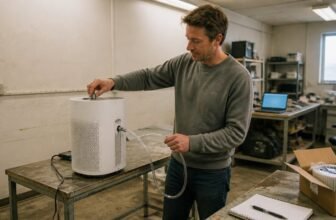
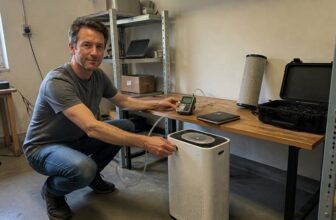
Five years of continuous lab testing, about 43,800 hours of operation, shows the Coway AP-1512HH still clears a room faster than most newer models. Long term durability is a verified fact here: the unit ran with two year old filters, one year past their stated lifespan, and cut particulate pollution by 88% in twenty minutes.
Filter maintenance follows a simple schedule: replace the activated carbon every six months and the particle filter yearly. That works out to roughly $50 per year in filters plus electricity, for a five year total near $577 including the initial $250 purchase.
The ionizer adds about three minutes of cleaning speed, a marginal benefit that is not worth emphasizing. What matters is steady, predictable performance over time, which makes this unit a practical choice for anyone who wants a purifier that keeps working beyond the typical upgrade cycle.
Smoke Test Results and CADR Ratings: What the Numbers Mean
The Mighty clears smoke quickly, removing incense smoke from a 728 cubic foot room in 26 minutes at top speed. This clean air delivery rate of 233.6 CFM for smoke translates to 4.8 air changes per hour in a 362 square foot space, with particulate pollution reduced by 88% within 20 minutes.
The ionizer only cut three minutes from that clearing time, so it offers little practical benefit. Rely on the fan and filter instead of the ionizer for everyday smoke and kitchen fume removal.
Noise and Energy Costs: What 5 Years of Testing Shows
Noise and power draw remain the Mighty’s most dated traits, yet neither becomes a serious drawback. Decibel trends stayed consistent across five years, with low speeds near silent and top speed reaching a noticeable 60.1 dB, similar to a loud conversation rather than a jet engine.
Standby power drain is negligible at 0.3 watts, while Eco mode consumes 3.5 watts. Running the unit 24/7 at top speed costs about $83.64 per year in electricity, plus filter replacements, totaling $123.63 annually.
- Speed 1: 3.7W, near silent at 38.9 dB
- Speed 2: 8.7W, library friendly at 44.4 dB
- Speed 3: 75.3W, a hefty jump for maximum cleaning
For most homes, speed 2 offers the best balance of noise and energy use. The Mighty is neither the quietest nor the cheapest option, but its combined costs stay reasonable for the cleaning performance it delivers.
Is the Ionizer Safe? Ozone Output and Filter Lifespan
Ozone output from the ionizer is negligible, with lab tests recording 9 ppb, far below California’s 50 ppb limit. The ionizer’s benefit is modest, reducing clearing time from 29 to 26 minutes, so its safety is not a concern for typical rooms.
Filter lifespan remains practical, with the activated carbon unit lasting six months and the HEPA filter lasting twelve months. Replacement costs roughly $40 yearly, and performance stayed strong even when filters ran past their prime.
Ozone exposure is negligible, so ionization does not pose a risk in normal use. Stick to the replacement schedule and the purifier continues to operate effectively without issue.
How the Coway Mighty Compares to Winix and Levoit in 2025
Three capable rivals keep the leading model from resting on its record, and the 2025 comparison comes down to speed versus silence versus savings. One competitor clears a 728 cubic foot room in 23 minutes, two minutes quicker, yet its 0 ppb ozone output edges out the leader’s 9 ppb, though both stay far under California’s 50 ppb limit. Another model matches that pace but hums quieter on low, a win for bedroom dwellers.
Market positioning splits cleanly here. The first unit offers the best overall balance with proven five year durability, while the second costs less upfront with similar clean air delivery rate and slightly faster room clearing. The third model provides quieter low speeds and sleek design, but its long term filter track record is weaker.
For value comparison, the leader’s $0.77 per CADR cfm beats both rivals. If you prize silence, pick the third unit; if speed matters more, choose the second. But total cost of ownership still favors the leader, and your wallet will forgive its 9 ppb output.
Frequently Asked Questions
Can I Paint the Exterior Without Affecting Performance?
Yes, you can paint the exterior, but the outcome depends entirely on the model’s design and where you apply the paint. Coating the air intake or exhaust vents can block airflow and cause the motor to overheat. Paint on the particle sensor or control panel may also stop the unit from reading the air correctly.
Any such modification typically voids the warranty, which leaves you unprotected against future defects unrelated to your paint job. Always check the manufacturer’s instructions before painting to see if the unit is rated for custom finishes. If you need the purifier to work reliably, avoid painting any vented surface and stick to the original factory finish. For specific guidance on your model, consult the official manual or contact the manufacturer directly.
Does It Work in Rooms With Cathedral Ceilings?
Yes. Cathedral ceilings do not cause problems, because warm air naturally rises and mixes in the open space. The bigger factor is airflow disruption from furniture, not ceiling height.
Room volume and fan speed matter more than the shape of the ceiling, since larger volumes need more air movement to stay clean. If you notice warm air collecting near the peak, run the purifier on a higher fan speed to encourage mixing. Place the unit where furniture and curtains cannot block its air intake and outlet.
How Often Should I Clean the Pre-Filter?
Rinse the prefilter monthly to keep airflow strong and filtration efficient. That routine prevents dust from clogging the intake, which also extends the life of the main filter.
For most homes, a monthly rinse works well. If you have heavy shedding pets or live on a dusty street, check it every two weeks instead.
Always unplug the unit before removing the prefilter, and rinse it with plain water only. Let it dry completely before reinstalling, as wet filters can trap mold or reduce airflow.
Is It Safe to Run Near Pets or Birds?
Is It Safe to Run Near Pets or Birds?
Yes, the unit is safe for pets and birds, as it emits negligible ozone and poses minimal toxicity risk. Keep the air intake clear of feathers or fur to prevent blockages. Regularly check the vents for buildup to maintain proper airflow. If you notice any unusual behavior from your pet, consult your veterinarian. Follow the manufacturer’s guidance for safe placement around animals. Blocked airflow can reduce performance, so position the device where pets cannot cover the intake. This simple precaution keeps both the unit and your companions safe.
Can I Use It in a Windowless Basement?
Yes, it can operate in a windowless basement. The unit will filter particles, but it does not solve airflow dead zones or carbon dioxide buildup.
To maintain healthy air, you need supplementary ventilation for gas exchange, such as an open door or a mechanical vent. Without that, oxygen levels can drop and stale air lingers, even with the purifier running.
Place the unit where its air intake and outlet stay clear, and run it continuously for best particle removal. For true air quality in a sealed space, pair filtration with fresh air intake.
Prior to purchasing a high-CADR room purifier, it is vital to calculate your room's cubic volume. Particle counter data demonstrates that filter media density dictates fine PM2.5 capture speed.
If you need step-by-step diagnostic advice, review our lab benchmarks in Inertial Impaction and Interception in HEPA Media. Additionally, learn how to prevent common airflow issues in Mechanical HEPA vs Electrostatic Media: Lab Tests.
Rounding Up
Choose a model with a CADR that matches your room size, and run it continuously for the best results. The advice changes if you are sensitive to noise, since sleep mode lowers the fan speed and reduces cleaning power. If the unit includes an ionizer, check the manufacturer’s instructions to confirm ozone output stays within official safety limits. For persistent symptoms linked to poor air, consult a qualified medical provider instead of relying on the device alone. Keep the filter clean and replace it as directed to maintain airflow and performance. Your main condition is matching the device output to the space you actually use.