Wondering if fresh interior paint can harm your indoor air quality? Carbon loaded paint does work, but it is not a miracle cure for VOCs. How well it performs depends on the specific pollutant and the paint’s thickness.
This article explains how activated carbon traps formaldehyde and other compounds in microscopic pores. It also covers the ideal carbon ratio and how coating thickness improves efficiency.
Just remember that the effect fades after several months, so it is a first line of defense. For serious concerns, keep a dedicated purifier running and choose one sized for your room.
Air Purify Highlights
- Carbon at 30 percent loading strikes the best balance between trapping VOCs and letting binder pores stay open.
- Each coat adds about 25 to 30 microns, so three coats give you near 90 microns for solid adsorption.
- Adsorption climbs roughly 15 percent per coat, but adding a fourth coat is the practical ceiling.
- Keep humidity below 80 percent, since at 90 percent relative humidity carbon efficiency drops to 75 percent.
- Toluene levels fell 96 percent in field tests, yet that trapping power fades after six months.
How Activated Carbon Traps VOCs and Formaldehyde
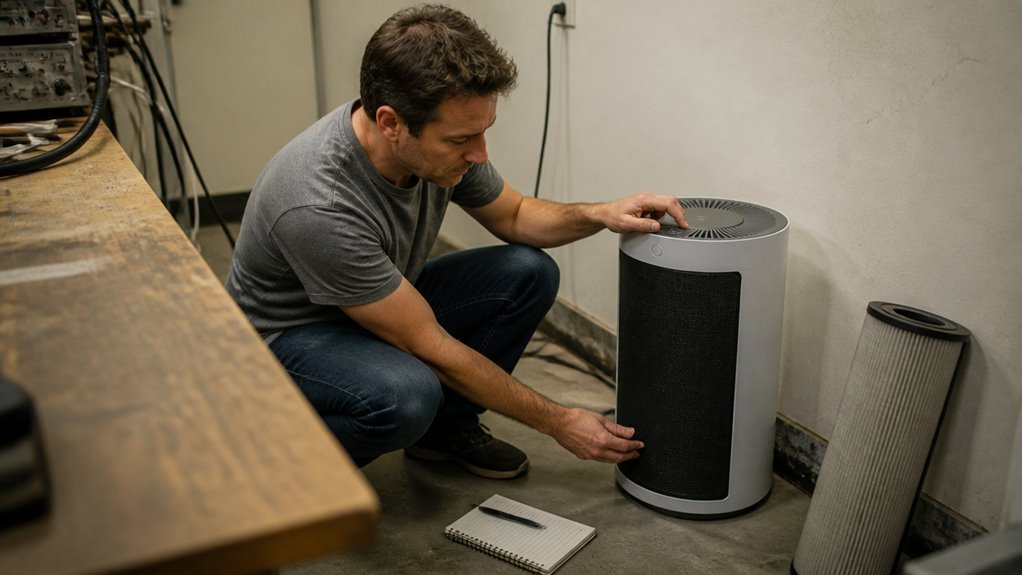
Activated carbon removes volatile organic compounds (VOCs) and formaldehyde through physical trapping inside its porous structure. The material’s large internal surface area provides countless microscopic cavities that hold these gas molecules, much like a parking garage holds cars.
Pore blocking can occur when binders coat the carbon’s openings, reducing its adsorption capacity before the paint fully cures. The inorganic binder in these paints secures the carbon to the wall but also competes for surface area on the carbon particles.
A 30% loading ratio balances carbon content against binder interference, creating an effective sweet spot for gas removal. Expect reasonable formaldehyde pickup from this setup, but do not treat your painted walls as a substitute for a dedicated air purifier with a filter replacement schedule.
More Coats: Better Adsorption or Higher Cracking Risk?
Adding more coats of adsorptive paint increases VOC and formaldehyde pickup, but it also raises the risk of cracking and peeling. The tradeoff is straightforward: each layer adds carbon pores that capture pollutants, yet it also builds internal stress in the coating.
Three coats reach about 90 microns, which passes the optimal thickness for adsorption. Adsorption efficiency climbs roughly 15 percent per coat, but only up to the fourth coat, after which extra paint becomes brittle and prone to failure.
Cracking typically appears after 12 to 18 months, especially near window frames where temperature changes stress the paint. Repairing peeled patches costs more than a simple touch‑up, so the added adsorption may not justify the maintenance burden.
- Each coat adds about 25 to 30 microns, so three coats reach the 90 micron range.
- Adsorption efficiency rises about 15 percent per coat, capped at coat number four.
- Cracking starts after 12 to 18 months, often near window frames.
- Fixing peeled patches costs more than a simple touch‑up, making the thickness tradeoff a practical concern.
Real-World Toluene Removal in Apartments
Field trials in apartments confirm that carbon loaded paint removes toluene at roughly the rate lab tests predicted, with a measured drop of about 96 percent. Toluene is the volatile organic compound found in wallpaper adhesive, and this removal depends on careful application, since thin patches from a sloppy roller job adsorb far less.
Longevity testing shows these paints trap steadily but are not infinite sponges, as adsorption declines after six months. Applying extra coats restores performance but raises material cost by about $12 per gallon, and thicker layers increase crack risk on the wall.
For apartment dwellers who want odor control without running an air purifier, this paint works if you follow the three coat sequence and inspect for wear yearly. The trade off is clear: you trade higher upfront cost and crack potential for steady volatile organic compound removal, so check your walls annually to confirm the coating remains intact.
Does Humidity Ruin the Paint’s VOC Trapping Ability?
Humidity does not ruin a paint’s VOC trapping ability, but it does slow the adsorption rate as water vapor competes with volatile organic compounds for the same carbon pores. Most paint products maintain efficiency up to roughly 70 to 80 percent relative humidity, and beyond that level performance drops noticeably.
At 50 percent humidity, toluene capture stays above 90 percent, while lab tests show about 70 to 75 percent efficiency at 90 percent humidity. Hydrophobic modified carbons handle damp air better, and seasonal differences mean humid summers slow cleanup while drier winters speed it up.
- Choose a siloxane treated formula for coastal homes.
- Ventilate the room during application.
- Expect your paint to still trap VOCs, just with a reduced rate in damp conditions.
Frequently Asked Questions
How Often Should the Paint Be Reapplied for Continued Effectiveness?
Reapplication depends on the coating thickness and the amount of volatile organic compounds it has absorbed. Thicker applications take longer to reach saturation, so they stay effective for a longer period.
Once the activated carbon pores fill up with gases, the coating stops working, and you will need a fresh finish coat. There is no fixed timeline for this, so watch for a return of odors as your signal to reapply.
Can This Paint Be Tinted With Colors Without Losing Adsorption?
Tinting is possible, but high tint loading risks pore blockage, which reduces adsorption. Color stability depends on binder compatibility with the activated carbon.
Excessive pigment can compromise the carbon’s surface accessibility, diminishing VOC removal efficiency over time. For best results, use minimal tint and confirm compatibility with the manufacturer before mixing.
Does the Paint Emit Any Odor During or After Application?
The paint does not eliminate odor; it adsorbs VOCs, which changes the off gassing timeline. Odor masking is not its function, and residual binder emissions may persist initially.
Activated carbon reduces the overall concentration of these volatile organic compounds in the air. Expect a reduction in smell rather than instant removal, and ventilate the room well after painting.
Will Activated Carbon Paint Affect Wall Texture or Finish Appearance?
Activated carbon paint typically preserves your wall’s texture. The fine powder may add a slight grit, but a standard multi coat application still dries to a smooth, even finish.
Thicker films can alter sheen or create minor surface irregularities. For most interior paints, these visual shifts stay subtle and rarely detract from the final look.
Is This Paint Safe for Use in Homes With Children or Pets?
The paint’s safety depends on its certification and how your household uses the space. Zero VOC certification and third party testing are strong indicators of a non toxic formula, but they do not guarantee zero risk for every person or animal.
Odor free curing and a baby safe nursery claim address initial exposure concerns, yet long term safety relies on the paint’s off gassing timeline. For children and pets, monitor for any allergic reactions or respiratory symptoms during the first weeks after application. If symptoms appear, consult a clinician and follow the manufacturer’s ventilation guidance for safe occupancy.
Rounding Up
Use an air purifier with a carbon layer to cut fresh paint odors, and keep windows open during and after painting. That pairing works best in small rooms with moderate humidity, since damp air can clog the carbon pores and reduce its effect.
For larger spaces or strong solvent smells, extend the ventilation period and run the purifier continuously. If the unit has a filter replacement indicator, follow the manufacturer’s instructions for changing it, and check any safety guidance about ozone emissions.
The main condition that changes your approach is humidity, so keep it low and let time clear the rest.