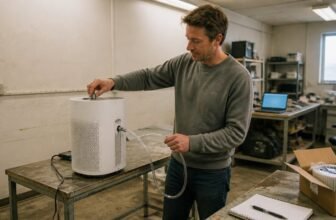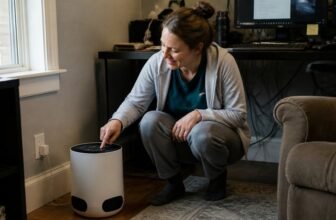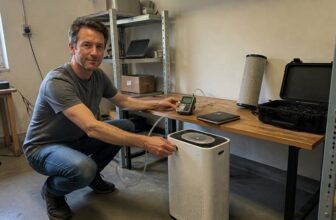
Wondering if scented candles are sabotaging your indoor air quality? Yes, they can release far more fine soot particles than unscented versions, with fragrance oils often causing incomplete combustion.
The impact depends heavily on the candle’s wax and scent load. A heavily perfumed soy candle can outperform a lightly scented palm one in pollutant output.
This guide covers the soot and VOC spikes from candle burning, plus the practical habits that reduce exposure. It also explains how an air purifier with HEPA and activated carbon filters helps.
Trim those wicks, keep burns short, and ventilate the room. Choose a purifier matched to your room size and the specific pollutant you are targeting.
Air Purify Highlights
- Scented paraffin candles create far more soot than unscented ones because fragrance additives drive the smoke.
- Put a HEPA filter in the room to catch soot particles, and activated carbon to pull out fragrance vapors.
- Choose spice scented candles over floral or fresh ones to lower the volatile chemical load indoors.
- Burning a heavily scented paraffin candle daily can push indoor air past World Health Organization safety limits.
- Open a window or run an air fan while burning scented candles to help clear the soot and smells.
Why Scented Candles Emit More Soot Than Unscented Ones

The extra soot from scented candles comes from the fragrance oils, not the wax. Those oils, which make up only about 5 percent of the candle, get drawn into the wick and break down into sticky residues under heat.
This residue clogs the wick and starves the flame of fuel, causing sputtering and incomplete combustion. A scented candle can release up to 3,100 micrograms of soot per minute compared to 83 for an unscented one.
Think of it like adding syrup to a gas tank. The scent smells pleasant, but the wick cannot burn it cleanly, so you get smoky emissions instead of a steady flame.
If you want cleaner indoor air, choose unscented candles or rely on an air purifier with a HEPA filter and activated carbon to capture fine particles and odors. Skipping the scented varieties reduces soot and the volatile organic compounds they release.
Are Scented Candles a Health Risk? The Data on BaP and Acrolein
Scented candles pose a health risk mainly through long term exposure to specific combustion by products, not through occasional use. Benzo[a]pyrene (BaP) and acrolein can exceed World Health Organization indoor exposure limits when candles burn routinely, especially with heavily scented paraffin wax.
BaP levels rise notably with spice or floral scented candles compared to unscented wax. Acrolein, a lung irritant, appears in high soot burns but stays undetected in cleaner burning tests.
Acute risks from a single candle in a ventilated room remain low because the exposure limits assume daily use. Fragrance labels rarely list the additives that drive these emissions, so you cannot predict the output from the label alone.
Burn scented candles sparingly and keep the room ventilated. Treat heavy scented candles as occasional items rather than daily staples, and consider an air purifier with activated carbon if you burn them often.
How Fragrance Burns: VOCS and Co₂ From Scented Candles
Fragrance is the main driver of a candle’s chemical emissions, not just its appeal. A scented paraffin candle released about 14,388 micrograms of volatile organic compounds (VOCs, airborne chemicals) per hour, compared to only 70 for an unscented version, a two hundred fold increase.
Fragrance molecules burn hotter and less cleanly than plain wax, so the pleasant scent comes with more combustion byproducts, including carbon dioxide and other particulate matter. An air purifier with a HEPA filter and an activated carbon layer can help capture some of these VOCs and fine particles, though its effectiveness depends on the room volume and the purifier’s clean air delivery rate.
VOC Emission Rates
Scented candles chemically remix the air around them, and measured VOC emission rates show the effect plainly. Fragrance molecules evaporate fast from the molten wax pool, then hit the flame and break into volatile organic compounds that you breathe.
Unscented paraffin releases about 70 µg/h of total VOCs, while a fruit scented paraffin jumps to 14,388 µg/h, a two hundredfold increase. Lighter scent compounds leave the pool quicker than heavier ones, which skews the mix of what reaches your airway.
Wax type changes the output, with palm wax plus floral scent at 4,490 µg/h compared to paraffin’s 10,218 µg/h. Floral and fresh scents dominate VOC output, while spice scents produce less.
If you are scent obsessed, expect a VOC surge with any fragrant candle. Choosing palm wax instead of paraffin softens that surge, and using an air purifier with activated carbon can help adsorb some of the released volatile organic compounds.
Combustion By-Product Output
Burning scented candles releases far more volatile organic compounds than burning unscented paraffin, with measurements showing over 10,000 µg/h of VOCs compared to 70 µg/h. The flame decomposes fragrance molecules rather than simply evaporating them, producing fine, diesel-like soot particles and potential benzene exposure, especially during the first hour when ultrafine particle spikes are highest.
Ventilation helps but does not fully solve the problem, since cracking a window measurably cuts concentrations while leaving residual risk. The practical takeaway is that unscented candles with adequate airflow, or an air purifier with activated carbon for VOC and odor removal, reduce exposure compared to heavily scented options.
A HEPA filter captures fine particles from candle soot, while activated carbon addresses the gas phase VOCs that a HEPA filter cannot. Room size and clean air delivery rate matter when choosing an air purifier for this purpose, since a unit sized for the room will cycle air more effectively during and after burning.
If you burn candles at all, choose unscented varieties and keep ventilation active, because the first hour of burn time drives the highest ultrafine particle output. Scented candles effectively act as a room freshener that also generates combustion byproducts, so less fragrance means less chemical load in your indoor air.
Palm, Paraffin, Soy, or Stearin: Which Wax Emits Least?
For plain, unscented candles, the wax type barely matters because palm, paraffin, soy, and stearin all release nearly identical emissions. The real difference appears when fragrance is added, as scented candles produce substantially more soot and volatile organic compounds, or VOCs, than their unscented counterparts. If you want cleaner indoor air, skip the fragrance and choose any base wax that is affordable, since the scent drives the additional pollution, not the wax itself. Filtration devices such as an air purifier with a HEPA filter and activated carbon can help manage these VOCs and fine particles, but reducing candle emissions at the source is the simplest step.
Comparison of Base Waxes
Unscented palm, paraffin, soy, and stearin candles produce similar emission profiles once lit, so the base wax has little practical effect on indoor air quality. A chamber test with 24 experiments grouped all unscented fuels together statistically, showing no clear winner among them.
Fragrance, not the wax, is the main driver of emission variability in candles. Paraffin may be cheapest, but its soot output overlaps with soy and palm, while soy’s fine particle rate mirrors paraffin’s numbers.
Stearin burns stiff and looks clean, yet its emission data offers no advantage over the others. Choose an unscented candle in any wax that fits your mold, since the air purifier’s HEPA filter and activated carbon layer will handle the fine particles and odors that do appear.
Softer Scented Wax Output
Fragrance, not the wax base, determines what you breathe from a scented candle. Unscented palm, paraffin, soy, and stearin emit similarly low levels of volatile organic compounds, but adding scent changes the picture dramatically.
Paraffin with fruit fragrance released 14,388 µg/h of VOCs in testing, while palm with floral fragrance released 4,490 µg/h. A cheap soy candle with heavy perfume can outpace a premium palm candle with light scent in emissions.
Choose lightly fragranced candles in any wax type to reduce your VOC exposure. This remains combustion, so ventilation and an activated carbon filter will help more than switching waxes alone.
Scented Candle Soot: Size, Carbon Content, and Measurement
Soot from scented candles consists of solid carbon particles measuring 0.045 to 0.2 micrometers, a size range comparable to diesel exhaust. Elemental carbon content varies from 6% to 66%, with a median of 32%, which matters for indoor air quality.
Scented candle soot particles, sized like diesel exhaust, contain 6% to 66% elemental carbon, impacting indoor air.
Chamber testing detected soot from scented candles in 63% of tests, compared to 45% for unscented candles, indicating that fragrance promotes incomplete combustion. Soot sampling showed emission rates from 20 to 3,100 µg/min per wick, depending on wax type and scent formulation.
PM2.5 emissions follow a similar pattern, with paraffin wax plus fragrance producing 299 µg/h versus 124 µg/h for unscented paraffin. Fragrance multiplies soot output, often in ways that are difficult to predict from the candle label.
For air purifier selection, this variability means a HEPA filter with a high clean air delivery rate (CADR) for fine particles is a practical choice. Activated carbon filters can address volatile organic compounds from fragrance, but they do not capture soot particles that the HEPA filter handles.
How to Reduce Soot and Fragrance By-Products at Home
Fragrance makes combustion messier, but you can reduce soot and volatile organic compounds with simple habits. Trim wicks to ¼ inch before every burn, because long flames pull more fragrance into the flame and create by products.
Mind candle placement by keeping flames away from drafts and corners, which disturb the burn and increase incomplete combustion. No method is perfect, but testing shows trimmed, stable burns cut soot spikes by nearly half.
- Wick trimming: high soot reduction, moderate volatile organic compound impact.
- Candle placement: moderate soot reduction, low volatile organic compound impact.
- Burn time up to 4 hours: high soot reduction, moderate volatile organic compound impact.
- Ventilation after burn: low soot reduction, high volatile organic compound impact.
Burn shorter, trim smarter, and let fresh air do the scrubbing. Your nose stays happy and your lungs stay calmer.
Frequently Asked Questions
How Often Should I Trim the Wick to Reduce Soot?
Trim the wick to ¼ inch before each burn to reduce soot. Longer wicks cause incomplete combustion, which raises particulate emissions into your air.
Keep flame height low and steady by centering the wick and removing any mushroomed carbon. This simple habit cuts smoke before it reaches your filter.
Check the manufacturer’s instructions for your candle type, as some waxes behave differently. Regular wick trims are the most effective control for keeping your indoor air cleaner.
Can Candle Colorants Affect Soot and VOC Emissions?
The effect of candle colorants on soot and volatile organic compounds is real but typically minor. Dye chemistry can influence combustion byproducts, yet fragrance and wax composition play a far larger role in determining emissions.
Most colorants don’t drastically change soot output, especially when the wick is trimmed properly. For cleaner burning, focus on using high quality wax and avoiding heavily fragranced candles. If you’re sensitive to indoor pollutants, a purifier with both a HEPA filter and activated carbon can help manage any byproducts.
Do Essential Oil Candles Emit Different By-Products Than Synthetic?
Essential oil sourcing changes the emission profile, yet fragrance oxidation pathways matter more than the oil’s origin. Both natural and synthetic candles release similar combustion by products, so the scent chemistry drives the variability, not the plant source.
If you are sensitive to indoor pollutants, focus on ventilation and clean burn habits rather than switching candle types. Trim the wick and keep the room aired out to reduce particle and gas exposure. For persistent irritation, consult a clinician about your symptoms.
How Does Room Ventilation Affect Candle Emission Concentrations?
Room ventilation controls candle emission concentrations through the air exchange rate. A higher air exchange rate dilutes pollutants more quickly, lowering indoor soot and VOC levels. A lower rate allows these emissions to accumulate over time, especially in tightly sealed rooms.
The practical fix is increasing fresh air intake while you burn candles. Open a window or use an exhaust fan to boost dilution.
For continuous protection, pair ventilation with a HEPA purifier to capture smoke particles. An activated carbon layer will also help adsorb VOC gases that ventilation alone leaves behind.
Are Beeswax Candles Significantly Safer Than the Tested Waxes?
Beeswax purity influences emissions, but no studied wax has proven safest overall. The real driver of soot and volatile organic compounds is fragrance, not the wax base itself, and that affects scent throw too.
Detached testing without direct comparisons cannot confirm that beeswax is significantly safer. For a clear answer, look for studies that burn multiple wax types under identical conditions, including unscented versions.
Rounding Up
Start by placing the purifier where you spend the most time, and run it on a higher fan setting during activity.
That advice changes if the room is larger than the purifier’s rated coverage, so check the manufacturer’s guidance for maximum space.
If you use a washable prefilter, clean it as often as the instructions specify, or the main filter will clog sooner.
For any unit with an ionizer or ozone feature, follow the official safety warnings about placement and continuous use.
The condition that matters most is airflow, so keep doors and windows closed while the unit operates.