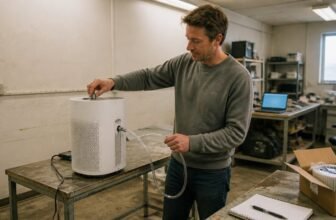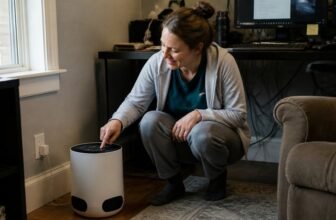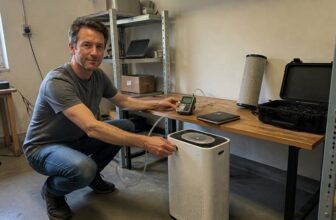
If your air purifier has stopped working after a filter change, a loose front panel is often the culprit. A tiny gap in the cover can trip a safety interlock, cutting power to the unit.
The fix depends on whether the magnetic sensor is properly aligned. This article covers how to reseat the front cover, confirm the filter wrap is removed, and check the magnet.
Choose an air purifier that matches your room size and the specific pollutants you want to address.
Air Purify Highlights
- Closed front panel alignment lets the magnetic interlock cut power even when the motor works.
- Seat the cover magnet flat on the recessed sensor near the bottom edge, two inches left of the latch.
- Close the top cover first, then the front panel, because the reverse order leaves the unit dark.
- Pull the plastic wrap off a new filter completely, since crinkled film blocks the cover from sitting flush.
- Listen for the firm click of a properly aligned cover, or flip the magnet to an N52 disc.
Why Your Coway Airmega Won’t Turn On After a Filter Change

After a filter change, a Coway Airmega that stays dark usually has a misaligned front cover, not a broken motor or circuit board. The cover must seat perfectly to trigger the magnetic interlock; even a millimeter gap keeps power blocked.
Check the wall outlet with a lamp, then look for a reset button on the side, as some models include one. Confirm the new filter’s plastic wrap is fully removed, since a crinkled corner can jam the cover.
Press firmly and evenly on both top corners to reseat the cover, and if the unit still stays off, reinstall the filter and cover from scratch. Nine times out of ten, this resolves the issue and restores normal airflow operation.
How the Front Panel Safety Switch Works
The front panel safety switch uses a small magnet in the cover to trip a sensor on the main unit, confirming the panel is shut before power flows. That sensor reads magnetic field strength, not just presence, so the magnet must sit close and aligned for the unit to start.
Over time, sensor calibration can drift slightly, but that is rare. More often, the magnet shifts out of its slot during a filter swap, leaving the unit convinced the door is ajar.
The result is a dead machine that is actually fine. Check the magnet slot first, align the cover firmly, and you will likely hear a satisfying click as the safety switch resumes its quiet job.
The Magnet Fell Out? That’s Why Power Is Blocked
The missing magnet inside the front cover is the usual reason an Airmega refuses to power on after a filter change. The sensor inside the unit detects the magnetic field from that small rectangle, and when it falls out, the safety interlock assumes the panel is open.
Check the recessed slot on the cover first, because the magnet often lands nearby during a wipe down with a damp cloth. Without a magnetic field to trigger the sensor, the unit will not start even if the motor and wiring are fine.
Look for the magnet in the slot, on the floor, or stuck to the side of the filter housing. Reinsert it into the cover’s recessed slot, and the Airmega should power up normally.
Coway Airmega Magnet Fix: Use Any Strong Household Magnet
Any strong household magnet will wake a dead Airmega, since the safety sensor only reacts to magnetic pull rather than the original plastic part. A thick fridge magnet or a small neodymium craft magnet, both under five dollars at a hardware store, fits the slot or aligns with the sensor on the main unit. Drop the magnet in, snap the cover shut, and test the power button; if it clicks on, the machine runs normally.
Magnet Type Matters
Scavenging the kitchen for a replacement magnet feels oddly like performing minor surgery with a butter knife, but it works. Any strong magnet can fool the sensor, yet magnet strength matters because the unit’s reed switch needs enough pull to close its internal contacts.
A flimsy fridge flake won’t cut it, so choose a neodymium craft magnet under a dollar each for reliable pull. A 10‑mm disc or small bar shape fits the original slot without jamming.
Check sensor polarity first, though a magnet’s north or south end rarely matters here. Some switches prefer one side, so test before seating the magnet permanently.
Nine out of ten failures stem from weak magnets. Grab a 3‑pack of N52 discs, plop one in, and hear that satisfying click.
- Neodymium craft magnets, under a dollar each, offer reliable pull.
- A 10‑mm disc or small bar shape fits the original slot without jamming.
- Check sensor polarity first; a magnet’s north or south end rarely matters here, but some switches prefer one side.
Bigger isn’t better; just strong and snug. A snug fit prevents rattling during fan operation, and that click confirms the switch closed cleanly.
Sensor Location Guide
The sensor’s hiding spot is simpler than the manual makes it seem. On the main body, just behind where the front panel latches, a small magnetic reed switch sits recessed near the bottom edge, roughly two inches left of the center latch point.
That switch does not care about magnet polarity, so any strong household magnet placed within a half inch of that recess triggers the closed signal. Coway never offered sensor replacement for this interlock, which makes the switch a convenient workaround.
Check that the front cover’s rectangular slot lines up with the recessed area before sticking a magnet near it. No soldering or parts hunting is needed, and the Airmega returns to normal operation once the magnet is in place.
Install and Test
A missing magnet should not force you to replace an entire air purifier. Any strong household magnet can serve as a drop in replacement for the safety interlock, because the sensor only reacts to magnetic field strength rather than to a specific brand.
Place a small neodymium or thick fridge magnet into the front panel slot, then snap the cover closed and test power. If the unit starts, the repair is complete without adjusting sensor calibration, which is only necessary if the new magnet trips the safety switch too early.
Use a flat, nickel plated magnet roughly 10 by 5 millimeters to match the original footprint. Confirm the magnet sits flush against the sensor’s plastic housing, because any gap breaks the signal.
If the purifier still refuses to start, flip the magnet over to test the opposite polarity. For a few dollars in craft magnets, you avoid replacing a machine that otherwise works fine.
300/400 Series: Both Side Covers Must Engage This Switch
Before powering on a 300 or 400 series Airmega, both side covers must fully engage the interlock switch near the front of the unit. This switch requires that each cover sit flush, with its magnet pressing squarely against the sensor; a weak, misaligned, or missing magnet on either cover will keep the switch unengaged.
If the machine will not start, reseat both covers and listen for two distinct clicks. Check for a warped cover or a stray filter edge blocking the seat, then try power again.
Run These 3 Checks Before You Call Coway Support
Before calling support, run three quick checks that resolve most dead unit situations. Each takes about ninety seconds, and any one of them could save you from a lengthy hold time with an agent who will likely ask you to do them anyway.
Start with the magnet seating check. Open the front panel and confirm the magnetic sensor aligns with its counterpart on the frame, since a misseated magnet stops the motor from starting.
Next perform the filter wrapping test. Remove the filter and verify the prefilter and HEPA filter edges sit flat against the gasket, because a folded seam lets air bypass the media and trips the airflow error.
Finish with the cover alignment order. Close the top cover first, then the front panel, and press each latch until it clicks, since reversed closing order leaves the safety interlock engaged and keeps the unit dark.
Magnet Seating Check
If your Coway Airmega refuses to power on and the outlet works, check the magnet behind the front cover. That magnet acts as a safety switch, and a loose or flipped magnet can signal an open panel.
Flip the magnet over and re seat it to test polarity, since the sensor only detects presence, not orientation. If a reversed magnet still fails, test the field strength with a stronger fridge magnet to confirm the original is too weak.
Make sure the magnet sits flush in its slot, not tilted, because a cockeyed magnet reduces effective field strength. A quick magnet swap often fixes the issue without a support call.
Filter Wrapping Test
Run the plastic wrap test first on any new filter that leaves your purifier dead. The protective film around a Max2 filter is meant to be removed, not left in place.
If the film stays on, the filter sits slightly proud and bumps the front cover off its magnetic catch. The unit then refuses to power up, convinced the panel is open.
Do the airflow blockage check next. Hold the filter up to a lamp; light should pass through both sides.
No light means you have a wrapping problem. Peel off the film, reinstall with the green side inward, and snap the cover flush.
This is a thirty second fix with no tools, just a guilty memory of your own oversight. Run both checks before calling support; odds are you will win.
Cover Alignment Order
On most Coway Airmega units, cover alignment follows a strict order because the dual side covers trigger a central interlock. If either cover sits wrong, the unit stays dead, so check these three things before calling support.
Seat the bottom hooks first. The cover’s lower tabs must catch the chassis before the top clicks, or the interlock positioning fails.
Press both covers simultaneously. Closing one side fully, then the other, can misalign the internal actuator, so snap them together like a slow clap.
Look for pinched prefilters. A folded edge juts out, blocking the cover alignment and leaving a gap the sensor notices.
Fix the order, and the magnet sensor clears. Proper cover alignment is free, while a support call costs your afternoon.
Frequently Asked Questions
Can a Magnet From a Fridge Door Permanently Damage Electronics?
A fridge magnet cannot permanently damage electronics. Its static magnetic field strength is too low to alter internal components.
Rapid movement near sensitive parts could induce electromagnetic interference, causing temporary glitches only. These glitches vanish once the magnet stops moving, so no lasting harm occurs. For confident handling, keep magnets away from open devices while powered on. For any unusual behavior, consult the device manufacturer’s guidance.
Which Side of a Neodymium Magnet Faces the Sensor?
The sensor detects the presence of a magnetic field, not its polarity. Either pole of the neodymium magnet triggers the sensor as long as the field is strong enough. The sensor’s role is simply to register that a magnet is near, so orientation does not matter. Only the distance between the magnet and the sensor affects the reading. Place the magnet close enough, and the sensor will respond regardless of which side faces it.
Will a Metal Washer Trick the Safety Sensor Instead of a Magnet?
No, a metal washer will not activate the sensor. Magnetic bypass requires ferromagnetic material, not mere conductivity.
Sensor spoofing demands an actual magnetic field, which a washer lacks. The safety interlock stays engaged, so the purifier will not run without its proper filter door.
Check your manufacturer’s manual for the correct bypass method, if any exists. Do not rely on improvised parts to override safety features, as this protects you and the device.
Does the Interlock Fail if One Cover Is Only Slightly Loose?
Yes, the interlock is absolute, so even a cover loose by a few millimeters will stop the machine. That small gap takes the sensor outside the reed switch range, and the unit reads it as an open panel.
The system will not power on until the cover sits perfectly flush. Press the cover evenly around all edges until you feel it lock into place, then power the unit on again.
How Do I Test the Sensor Before Reattaching the Front Panel?
Use a multimeter in continuity mode and place its probes on the sensor’s two terminals. A functional reed switch or hall effect sensor will show a closed circuit when no magnet is near it, then open the circuit as you bring a magnet close. That change confirms magnetic activation works correctly.
If the reading stays constant or does not respond to the magnet, the sensor is faulty and needs replacing. This simple test also verifies the wiring and connections before you reattach the front panel. With a confirmed toggle, you can reassemble knowing the sensor will trigger automatic mode correctly.
Rounding Up
Start by checking the front panel interlock on both side covers before doing anything else, since a missing magnet is the most common cause of a blank screen. This advice changes if your model has a different panel design, so confirm both covers engage together or the power will stay blocked. For any electrical or safety concern, follow the manufacturer’s instructions or official guidance for your unit. If the switch still fails after verifying the magnet and panel, then contact support. The main condition that changes this step is a broken switch, which requires a service visit.